Ministry of Time Book Review for Vector

“In times of uncertainty, what we can imagine ahead of us matters.”

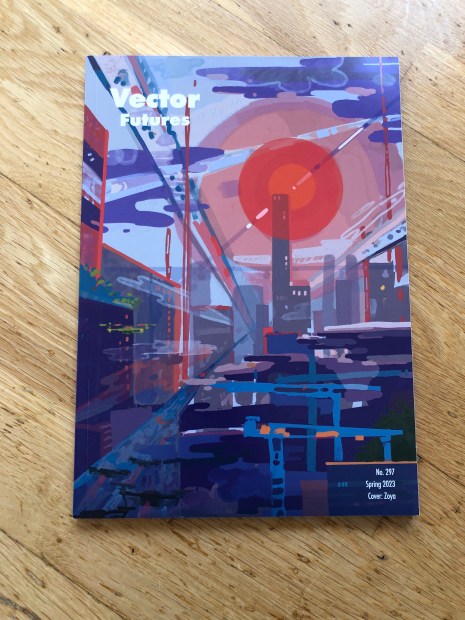
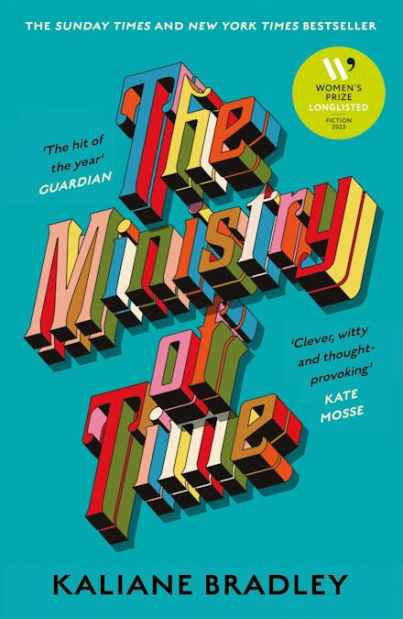
I write on Kaliane Bradley’s wonderful novel The Ministry of Time for the British Science Fiction Association’s journal Vector, and consider the book’s wider implications for public imagination in a turbulent era.

“Time travel in science fiction has, itself, a history and prehistory, a present, and presumably a future. It has the potential for new and emergent ideas of temporality – scientific, poetic, popular, expert – to succeed those currently held by researchers, philosophers, artists, authors, critics, and the general public of the day…Perhaps Bradley’s novel will also, in times to come, show itself to be one of the works that opened the door onto a new era of popular time travel fiction. This new era is one which, however fraught, creates new opportunities for us to face up to the uncertainties around us.”

Read “Eternally Displaced Persons? Territorial Bodies and The Ministry of Time” in Vector online, here.

Time, Space, and Unbelonging: An Online Conversation with Kay Sohini, 27th October

“They say that time heals. But in my experience, grief slows down time. It interrupts the directional, linear way we perceive time.”

What special relationship does the comics medium have to time? How do comics-making and comics-reading affect our own experience of time? And what might the future hold for comics?

On 27th October, I’ll be joining researcher and comics creator Kay Sohini for “Time, Space, and Unbelonging”, a one-hour conversation which forms part of the 2024 Thinking Through Drawing event.

This year, the theme of Thinking Through Drawing is “Marking Time”: find out more about my session with Kay, and the wider event, which includes online and in-person gatherings, here: https://www.thinkingthroughdrawing.org/ttd-24-marking-time.html

Peat Hub Ireland: 2050 Scenarios

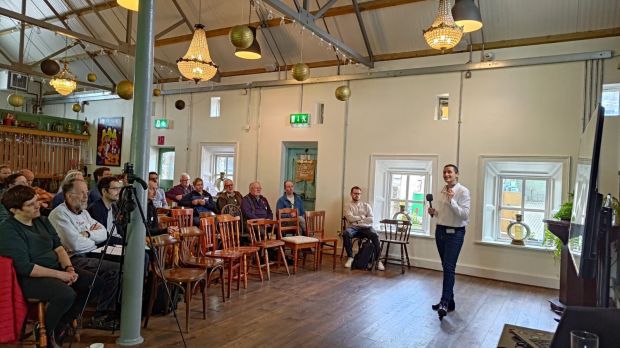
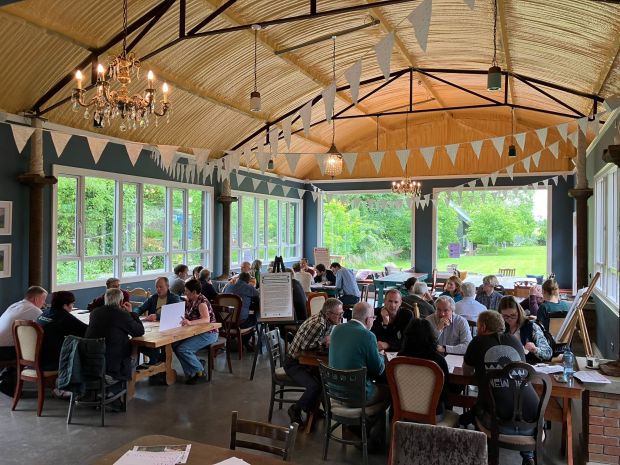
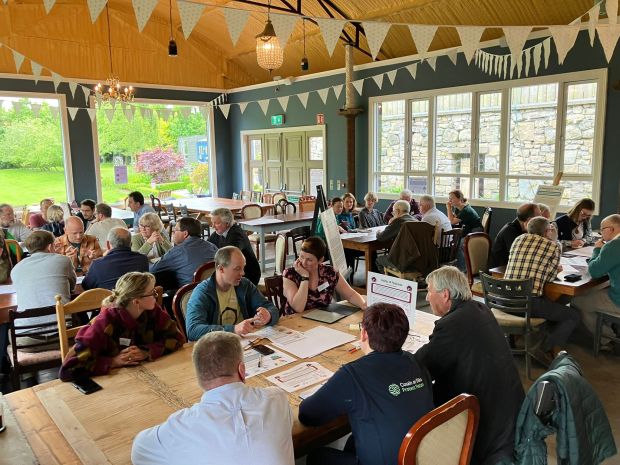
I’m just back from collaborating with the Peat Hub Ireland team on a scenarios workshop which invited participants from across the communities and institutions involved in Irish peatlands management to explore three visions of the world in 2050.

Historians, scientists, community members, officials, archaeologists, educators, researchers, activists, and businesspeople all gathered to find new ways to think about sustainability and custodianship, suitable for times of turbulence and unpredictability.

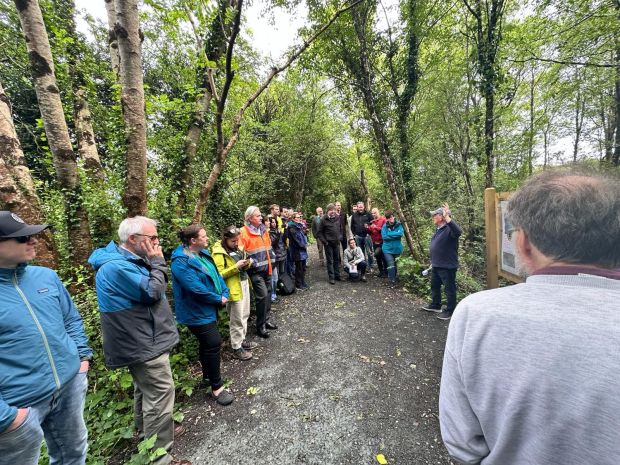
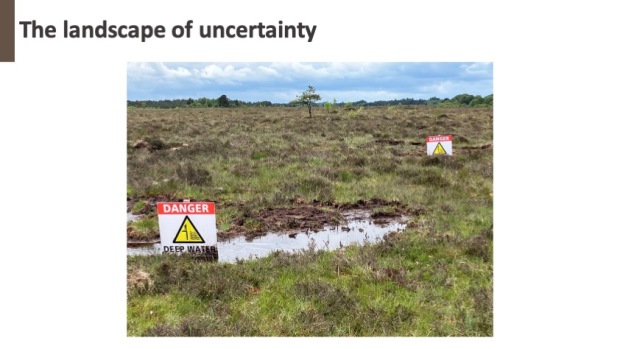
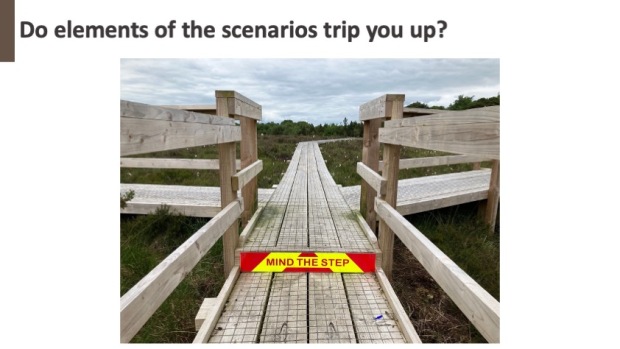
It was quite unique to run a scenarios day incorporating a two-hour break for a lunchtime country walk – but being out on the bog gave us a shared experience of the landscape whose future we were exploring, and some useful metaphors for dealing with conditions of uncertainty.

Our work built on the scenario elements of the Horizon Europe-funded IMAJINE project, which were led by the University of Galway’s Marie Mahon and myself. Peat Hub Ireland’s Florence Renou-Wilson, David Wilson, and Kate Flood worked with me to develop IMAJINE materials into a fresh set of scenarios for the world of peatlands management in 2050. We were supported in delivering the workshop by colleagues including Elena Aitova and Liz Bruton.

You can find out more about Peat Hub Ireland at their website – and there’s an account of the day from the Department of the Environment, Climate, and Communications’ Dave Dodd here. Stay tuned for more about the scenarios, too.
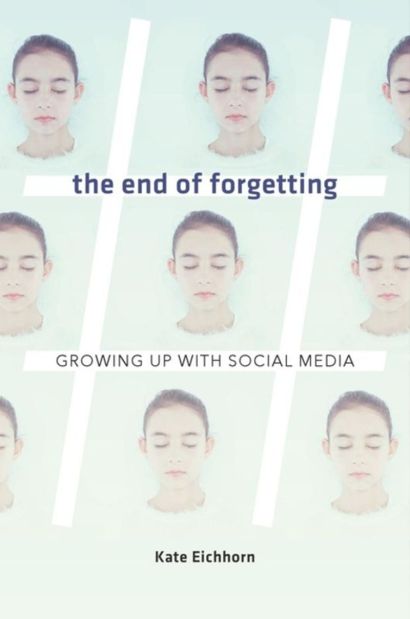
“What’s after archives?”: Kate Eichhorn and the End of Forgetting

I’m proud to present a Q&A transcript with the New School for Social Research’s Professor Kate Eichhorn, author of The End of Forgettting.

We spoke earlier this year to discuss who gets to tell their own story in the age of social media, what are the consequences to such stories being shared, and what power do we have to forget or be forgotten in this new digital era? This conversation formed the basis for an instalment of “Scripturient”, my column in Information Professional magazine, but now you can read a Q&A expanding on that text, below.

Matt: When did the idea for The End of Forgetting coalesce?

Kate: Prior to working on this book, I had been thinking about and writing about archives for many years. There was a moment when I literally asked myself, what’s after archives? I immediately thought, it’s forgetting. But all of my colleagues who work in archives were very quick to remind me that the archive and forgetting are inextricably linked. So, this book was a kind of natural extension of my earlier work on archives. But the book, while not a personal book, is informed by personal circumstances. On the one hand, when I started working on the book, my kids were maybe 11 and 13, so I was certainly thinking about the tween girls and their relationship to social media. As a parent, I also started to think about how different my life would have been had I been on social media when I was their age. I am almost certain that I would have either said or done things I would have regretted and that there would have been consequences. 

Read more

“How I use the dream”: 5 reflections on strategy + reperception

What do I do? I help people think through big decisions, individually or collectively, when situations are uncertain.

It’s strategy, not therapy, but there’s kinship between the two.

Learning about “what goes on within and between us”, the psychology of individuals and groups, nourishes the work – and you can find that nourishment in unexpected places.

Sometimes it’s pretty conventional: a journal article, a course at the Tavistock, formal professional gatherings such as a group relations conference.

Sometimes learning seems to find its way to you: a challenging event in your personal life yields a nugget of wisdom, a conversation with a musician provides an unexpected metaphor, or maybe you get an unexpectedly helpful book recommendation from a chatty shop assistant. (That’s how I first encountered the work of Irvin Yalom).

Sometimes you can learn a lot just from getting stuck in a transit strike.

As Ellen Ramvi puts it, “learning is getting involved in what one doesn’t know” — and there’s plenty of ways to get there.

Read more

Romancing the Gothic: Climate, Justice, and the Strategic Sublime

I’m very pleased to be joining the Romancing the Gothic lecture series for a session on “Climate, Justice, and the Strategic Sublime: Scenarios as Gothic Genre”.

The lecture, which will take place at 10am BST on Sunday 21st May, with a repeat at 7pm BST the same day, forms part of the “EcoHorror, Nature and the Gothic” lecture season.

Register for the 10am BST session on Eventbrite here.

Register for the 7pm BST session on Eventbrite here.

“Facing The Strategic Sublime” for BSFA Vector

“Facing The Strategic Sublime: Scenario Planning as Gothic Narrative”, my piece with Marie Mahon, is in the latest issue of the British Science Fiction Association’s Vector magazine.

You can read the article below as a PDF download, or at the Vector website.

Wilfred Bion’s DAZED AND CONFUSED

There’s been a feeling lately of things coming full circle for me.

There’s been a period in which the links between the scenario work I do today and the art of moviemaking, which obsessed me as a kid, became very evident – you can see some of this in my recent writing on Decision to Leave, Burden of Dreams, and The Limey.

And I found myself training as a group facilitator at the Tavistock and Portman NHS Trust, a specialist mental health organization in the UK.

This is a journey I probably should have seen coming ever since a colleague, Steffen Krüger, sat down with me after a scenario planning workshop which had left Post-It notes strewn across a number of whiteboards, and showed me the strangely resonant cover of the psychoanalyst Wilfred Bion’s book Experiences in Groups.

Read more

IMAJINE: Visions of the Rural in a Globalised World

In the latest response to the IMAJINE scenarios for the future of European inequality, Professor Esther Peeren of the University of Amsterdam explores the representation of the rural in each scenario, relating these visions back to concerns and challenges in the present day.

Drawing on Donna Haraway’s work, she reminds us that, “Rather than seeking to predict the future or escape from the present, these are ways of ‘staying with the trouble’ in the present, for the future.”

Esther highlights “the dangers inherent to the fantasy of the rural idyll as an isolated paradise shaped by a homogenous community, as well as underlining that such isolated worlds are not exclusive to the rural but may also exist in urban areas and online”; and she reminds us that even when the urban-rural divide seems to be overcome, its inequalities can be displaced “to the global and even interplanetary scale”.

Find Esther Peeren’s response to the IMAJINE scenarios here.

The full IMAJINE scenario set can be found here.

The RURALIMAGINATIONS project “Imagining the Rural in a Globalised World”, which Esther heads, can be found here.