New article: Uncertainty, agency, and the future context of internet governance

Uncertainty, agency, and the future context of internet governance: a foresightful conversation” is an article I co-wrote for the Journal of Internet Technology and Politics with colleagues Lucia Vesnic-Alujevic, Sophie Mitchell, Zoe Hawkins, and Cho Khong.

We explore how the structures, dynamics, and value of internet governance may play out in different scenarios – and the implications for the situations and decisions we face today.

Photo by panumas nikhomkhai on Pexels.com

Right Here, Right Now Global Youth Climate Summit

I’m pleased to be delivering two sessions as part of the University of Oxford’s contribution to the Right Here Right Now Global Youth Climate Summit, a 24-hour virtual event presented by UN Human Rights and the Saïd Business School.

The online gathering brings together students and educators from across the world to share ideas about embedding climate action at the heart of education systems.

Find out more at the Saïd Business School website or register for the 24-hour livestream here.

'Dreaming Spires', by Flickr User JJBullock - Copyright JJ Bullock 2010
‘Dreaming Spires’, by Flickr User JJBullock – Copyright JJ Bullock 2010

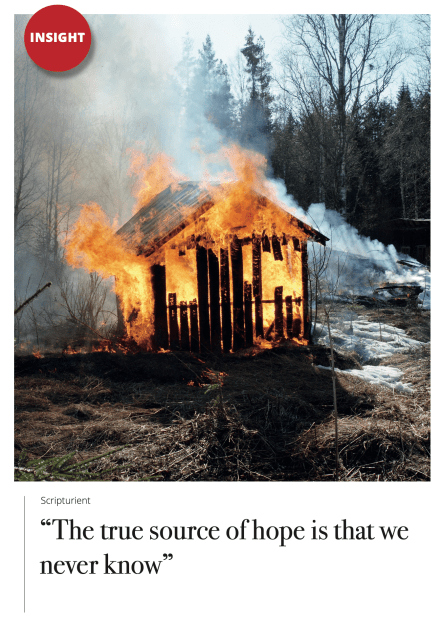
“The True Source of Hope Is That We Never Know”: Scripturient x Design by Fire, with Brett Milligan

The latest edition of Scripturient, my quarterly column for Information Professional magazine, is out now and can be downloaded here.

In it, I interview UC Davis’s Brett Milligan, who together with Emily Schlickman is the author of Design by Fire, a new book exploring our relationship to wildfires.

A transcript from the interview underpinning my column can be read below.

Matt: What was your first ever encounter with fire in nature?

Brett: It would have been the hearth at home, or campfires; my dad took me, sometimes the whole family, camping a lot as a kid and would be very clear about taking care to extinguish it properly. I wasn’t exposed to wildfires until my time in California, decades later, and my first close-up experience with a large wildfire, the smoke, the immediacy of it, came with the LNU (Sonoma-Lake-Napa Unit) complex fires a few years back.

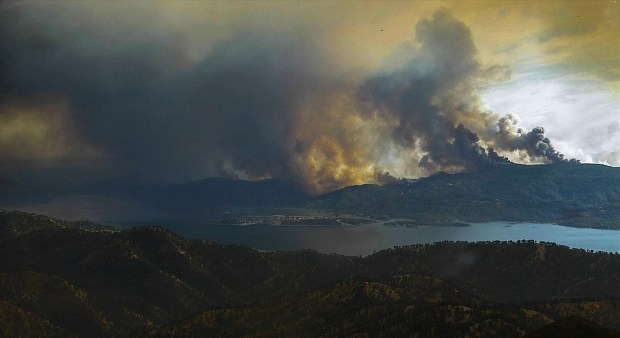
By Dripwoods – Taken of the LNU Hennessey Fire, CC BY-SA 4.0, https://commons.wikimedia.org/w/index.php?curid=93869076
Read more

Peat Hub Ireland: 2050 Scenarios

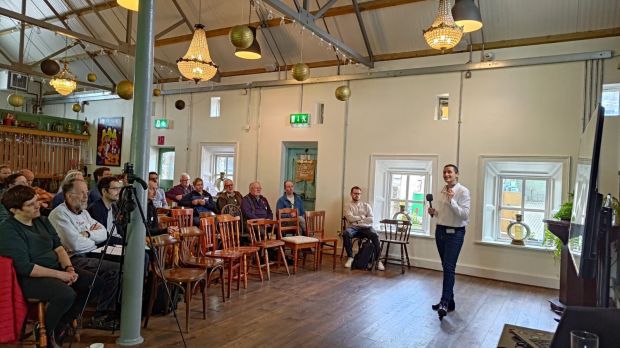
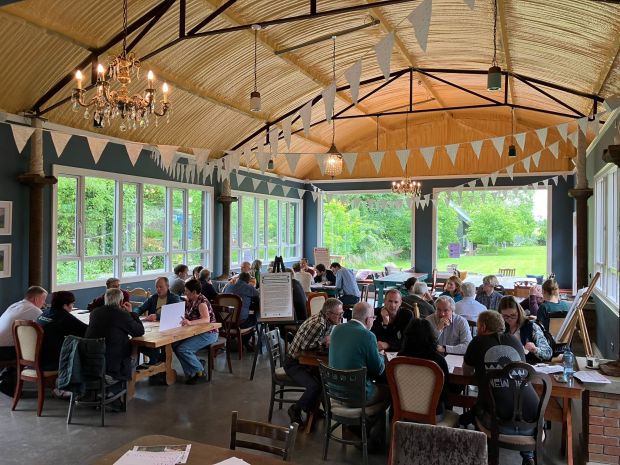
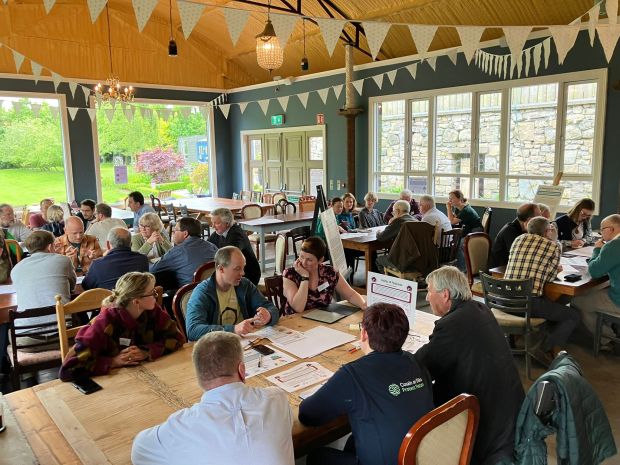
I’m just back from collaborating with the Peat Hub Ireland team on a scenarios workshop which invited participants from across the communities and institutions involved in Irish peatlands management to explore three visions of the world in 2050.

Historians, scientists, community members, officials, archaeologists, educators, researchers, activists, and businesspeople all gathered to find new ways to think about sustainability and custodianship, suitable for times of turbulence and unpredictability.

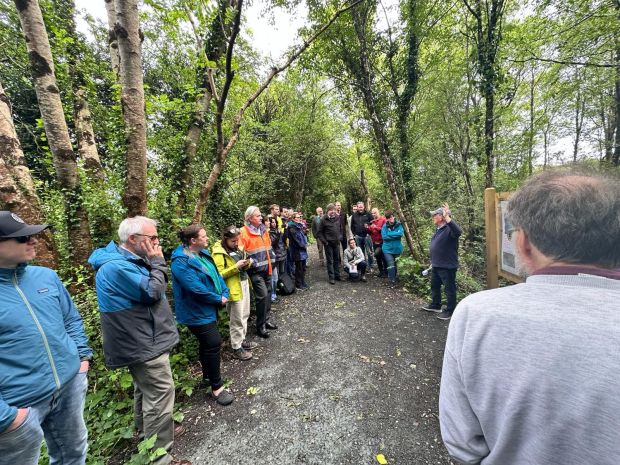
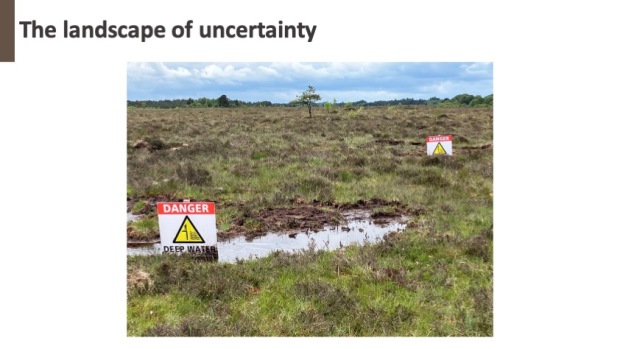
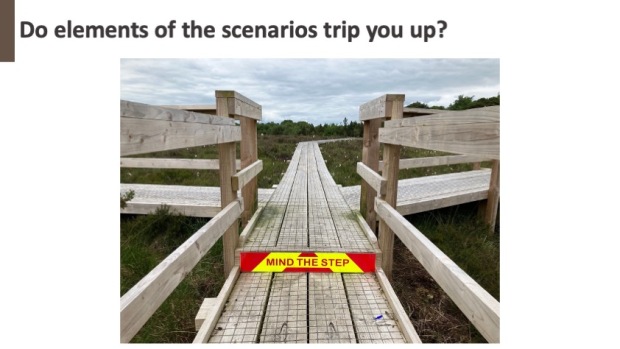
It was quite unique to run a scenarios day incorporating a two-hour break for a lunchtime country walk – but being out on the bog gave us a shared experience of the landscape whose future we were exploring, and some useful metaphors for dealing with conditions of uncertainty.

Our work built on the scenario elements of the Horizon Europe-funded IMAJINE project, which were led by the University of Galway’s Marie Mahon and myself. Peat Hub Ireland’s Florence Renou-Wilson, David Wilson, and Kate Flood worked with me to develop IMAJINE materials into a fresh set of scenarios for the world of peatlands management in 2050. We were supported in delivering the workshop by colleagues including Elena Aitova and Liz Bruton.

You can find out more about Peat Hub Ireland at their website – and there’s an account of the day from the Department of the Environment, Climate, and Communications’ Dave Dodd here. Stay tuned for more about the scenarios, too.

Reading Public Library: Scenarios to inform resilient strategy

“The flexibility of the plan in part helps us to present our goals and efforts, because those goals and efforts can reshape as real world events interfere with business as usual…It really leaves room for creativity and the flexibility to adjust to the real world.”

Melissa Adams, executive director of Pennsylvania’s Reading Public Library, interviewed by Nancy K. Herther of the University of Minnesota, explains how a COVID-era scenario planning process informs robust and resilient strategy for her organisation and community.

“Another advantage was experienced during the transition between executive directors. The plan was decidedly not the prior executive director’s plan, it was the organization as a whole body’s plan. This made it easier for me, as the incoming executive director, to keep the plan moving forward…the article we co-authored has helped me really take ownership of this strategic plan.”

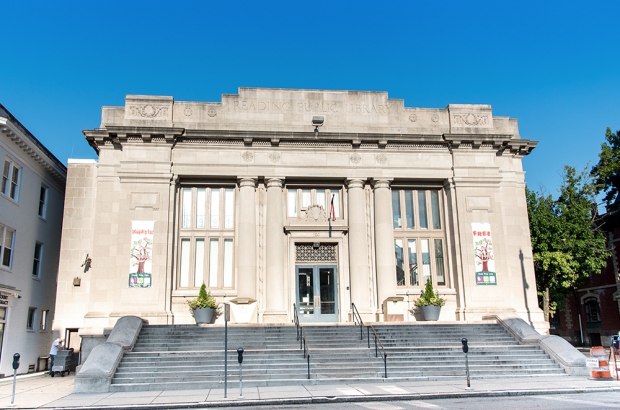
Reading Public Library, Pennsylvania

Human-Land Podcast: Spatial Justice and Realms of Citizenship

I joined the Swedish University of Agricultural Sciences’ Human-Land podcast to talk about social justice and foresight in spatial planning, and their links to environmental psychology.

As environmental psychologists explore the relationship between human beings and their environments – including how humans shape those environments and are shaped by them in turn – foresight work allows us to explore how that relationship might change in times to come, and how our ideas of what is fair or just in terms of access to different environments might also evolve.

Host Hannah Arnett and I spoke about the IMAJINE scenarios project and the possiblity of an approach to questions of space and justice that brings together a range of disciplines and perspectives on the common ground of the unwritten future.

You can listen to the episode now on Spotify and Soundcloud.

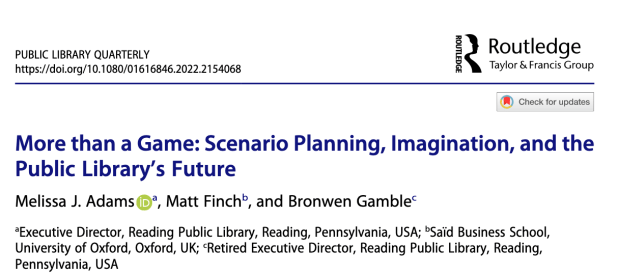
More than a Game: Scenario Planning, Imagination, and the Public Library’s Future

For Public Libraries Quarterly, Bronwen Gamble and Melissa Adams of the Reading Public Library co-wrote an article with me on our scenario planning journey through a leadership transition in the depths of the COVID-19 pandemic.

More than a Game: Scenario Planning, Imagination, and the Public Library’s Future” explores the use of frugal, online scenario planning methods during the pandemic and the benefits of a scenarios process in times of leadership transition.

It builds on Dale Leorke and Danielle Wyatt’s notion, expressed in their book The Library as Playground, of the library as “a space and institutional order innately imbued with playful qualities” to consider how libraries may be the perfect hosts for scenario processes which “play with expectations, hopes, fears, and desires, in a strategically consequential game of ‘What if?'”

Find out more about “frugal” scenario planning on the Oxford model from Rafael Ramirez and Trudi Lang at Saïd Business School, University of Oxford here.

Everyday resilience: Rural communities as agents of change

I’m very pleased to have played a small part in this work on the future of Irish peatlands: geographers Kate Flood, Marie Mahon, and John McDonagh of the University of Galway have published a new article on “Everyday resilience: Rural communities as agents of change in peatland social-ecological systems“.

Their project included “Bog Scenarios” developed frugally with local communities. These used the past, present, and future of the peatlands to explore change through time including past events at the site; how the bog is currently changing; and hopes for the future.

Read more in the Journal of Rural Studies.

Community map of Abbeyleix Bog reflecting local knowledge and experiences

Preservation for All: Whose Future?

“We need to meet this inflection point with a more expansive imagination of what conservation work could be…The tools of the conservator can remind us of the fundamental human need for creativity, most especially under difficult or dehumanising conditions.”

In this short video for America’s National Gallery of Art, Sanchita Balachandran of The Johns Hopkins University speaks about “preservation for all” and strategising under TUNA conditions of turbulence, uncertainty, novelty, and ambiguity.

PUSH SUMMIT Podcast with Rowan Drury, Malin Leth, Anders Mildner

Altitude Meetings’ PUSH Summit on climate and democracy is currently taking place in the Swedish city of Malmö and online.

I joined sustainability consultant Rowan Drury, Malin Leth from Håll Sverige Rent – the Keep Sweden Tidy organisation, and Altitude’s own Anders Mildner to discuss issues of system change, futures thinking, strategy, and sustainability.

You can listen to the half-hour podcast here and watch my short online presentation to PUSH SUMMIT here.