In the Library of Last Resort

I wrote a little while back about the need for escapism in these trying times, and to help with that I’ve released a short “choose-your-own” text game.

There’s songs and robots, plenty to read, a world to explore and a mystery to be solved when you visit The Library of Last Resort.

Photograph of a long corridor of bookshelve apparently stretching off endlessly into a white light at the vanishing point
Picture by Flickr user Rich Grundy – CC BY 2.0

I got the idea a couple of years back, when I was exploring the idea of interactive nonfiction and games where there was the opportunity for the player to surprise the author.

In an earlier incarnation, The Library of Last Resort benefited from the editing of the brilliant Adalya Nash Hussein, and advice from Gersande La Flèche & Rob Sherman. It uses Gersande’s code to create the in-game inventory.

It’s not polished, and I welcome feedback, but hopefully it will provide you with an escape when you need one. And maybe, just maybe, you’ll find a way to surprise me with my own game…

You can play The Library of Last Resort here, or check out my previous interactive piece, A Tear in Flatland.

Our feral future: working on the crises you did(n’t) see coming

Over the last few weeks, on and offline, I’ve been having a lot of conversations about “preparing for the future you didn’t see coming”.

The foresight approaches which I favour tend to avoid predicting the future. Instead, I work with clients to highlight the futures you didn’t anticipate, either because you had a strategic blindspot or because you chose to ignore them.

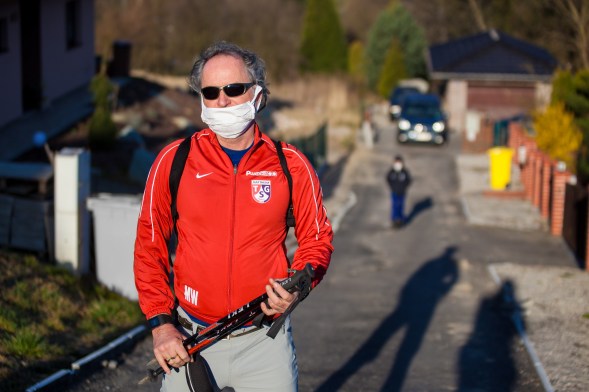
Man with protective mask
Man with protective mask by Wikipedia user Tadeáš Bednarz – CC BY-SA 4.0

Was the pandemic one of the futures we couldn’t see coming, or one which we chose not to? And since its arrival, have our responses been based on what is really unfolding, or on mental models which we had previously constructed? Read more

You’ll Need To Get Away

We’ve been holed up in the apartment for a few weeks now, and work has been quite busy. (Institutions become keen on planning for uncertainty when they suddenly realise they’re smack in the middle of an uncertainty they hadn’t anticipated or prepared for).

Every week or so I’ve posted something on this site to help guide people in their pandemic decision-making: short pieces on thinking rigorously about the future and being kind to your future selves, scenario planning webinars, conversations with people trying to find a way through the current crisis.

That’s great and good, but work isn’t all we’re on this Earth for. I’m grateful that friends and relatives remain in good health, and that our household seems able to cope with lockdown conditions without people driving one another up the wall – and mindful that for many, things will already be much harder.

Still, however comfortable your quarantine, you’ll need to get away somehow. Options for escape and retreat can become quite limited under current circumstances. Normally I’d be out hiking the cliffs and forests if I needed to get away from a stressful situation, but with that option denied, instead I’m reading even more than usual.

And if you need an escape, if you’re stuck within your own four walls and spending hours of your day at the desk of an improvised home office: here’s the getaway you were looking for.

Rogue Male | AM Heath Literary Agents

Read more

Real Time – Webinar with R. David Lankes

Today I spoke with leading US information professional R. David Lankes about foresight, strategy, and coping with uncertainty beyond immediate short-term crisis response.

David created one of the first 100 web sites ever, plus the first web presence for CNN, the Discovery Channel, and the U.S. Department of Education. We spoke about what he foresaw at the beginning of the Internet age, the surprises which emerged along the way, and how we might learn from the past when the future is uncertain and unlikely to repeat what went before.

You can watch the YouTube video below, or read more at the Librarians.Support website.

Campbelltown Library Island: Preparing for challenge and crisis

The Library Island immersive training tool was released last year as a free PDF download and has since been taken up by organisations around the world.

Earlier this year, Paula Pfoeffer of the Community Connections team at Campbelltown City Council in Australia ran a modified version of Library Island with her colleagues.

Council workers visited a make-believe island nation to explore responses to uncertain and challenging situations – from climate change events to social unrest, government budget cuts, and the need to meet demands for recognition and justice for the whole community.

Below, Paula explains how the event was run, what the outcomes were, and how it has fed Campbelltown’s response to the Australian bushfire crisis and the emerging COVID-19 pandemic.

It was just another day on Uluibau Island……

In the towns of Juschester, Becstone and Pfefferville, the collections were being maintained and programs and services were being offered to the community. Life was pretty good for the staff that worked at the combined library and child care centre facility.

Then a climate change event happened and there were increasing demands for recognition and justice from the island’s indigenous population. Then the desperate people speaking a language that no-one seemed to recognise migrated to the City. And then the Ministry began to make ominous noises about cutting library budgets……

This slideshow requires JavaScript.

Read more

Planning for Uncertainty with R. David Lankes

Next Tuesday, 24th March, at 9am US Eastern Time, I’ll be chatting with American library maven R. David Lankes about how we can plan for the “New Normal” which awaits on the far side of the current pandemic.

R. David Lankes

We’ll talk about foresight, coping with risk and uncertainty, and finding prudent ways to anticipate the world we’ll inhabit during the COVID-19 crisis and beyond.

Participants are welcome to participate in the online chat during our discussion; find out more and join in via the link at David’s website.

Which of your future selves are you going to help out?

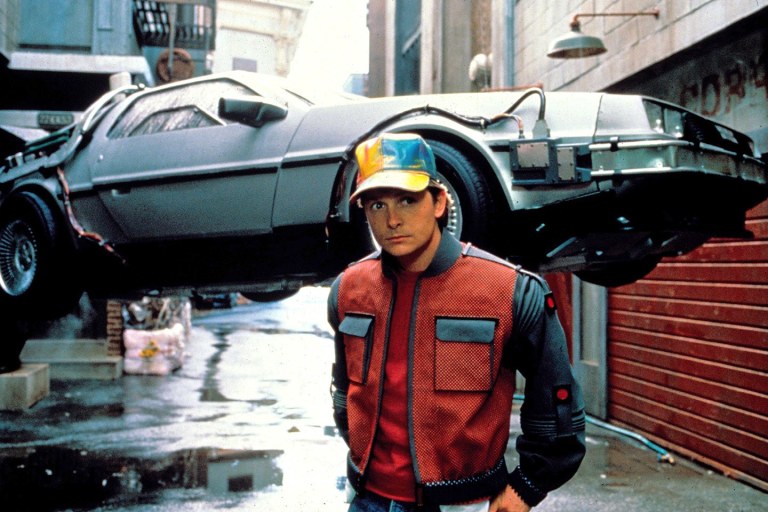
back-to-the-future-ii-01

Do you ready the pot for tomorrow’s coffee before you go to bed at night?
Do you go to a yoga class so that you’ll stay fit, strong, and flexible over time?
Do you put money aside to cover your next tax bill?

Foresight is a complex business. At the organisational level, a lot of thought and work goes into finding tools and techniques which help people prepare for times which haven’t arrived yet.

Yet, like all the most important topics, foresight is also terribly simple. It’s about finding answers to the questions “What’s coming next?” and “What should I do about it?”

Sometimes that’s as simple as prudently taking actions which will benefit your future self – like prepping that coffee pot before you go to bed.

When you do this, it’s like your present self is helping out your future self.

When you arrive in the future, you’ll be able to look back and feel glad that your past self made an effort on your behalf.

No-one knows for sure what the future holds, so we’re always taking bets, more or less informed, on what will await us. (Chances are high you’ll need coffee in the morning, and the kettle will still be there to let you make it).

When we address more complex future issues, individually or as an organisation, we have to take more complex bets about the future circumstances which await. Read more

Thinking Seriously About How Things Change

In a situation like the one we find ourselves currently in, there’s bound to be a lot of speculation.

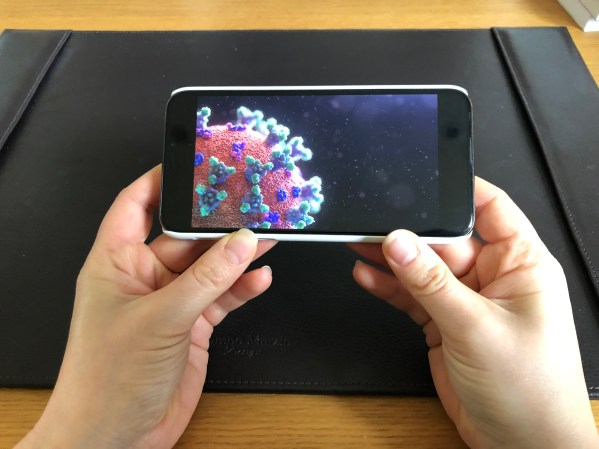
Whether you’re now quarantined at home or still going in to your workplace, the chances are that you’re scrolling your digital device for the latest updates and information.
IMG_9659

Among all the other information you’ll have to sift, there will be articles, columns, and features asking whether the pandemic will permanently transform our way of life. Slate suggests that “thanks to the coronavirus, the future may arrive earlier than expected“; the Guardian warns that “life may never be ‘normal’ again“; New York magazine is already certain that “we can’t go back to the way things used to be“.

On Twitter today, I watched a thread of futurists roll by, “brainstorming about medium-long term scenarios” of COVID-19, offering what boiled down to a series of “what-if” questions.

But this is where I think we have to be more disciplined about how we approach the future.

One of the joys of looking at what comes next is that no-one knows for sure. The best efforts of the human race across history have failed to give us either crystal balls or time machines. Evidence, by definition, cannot be gathered from events which haven’t happened yet, so any predictive model involves a degree of faith that the future will be like the past in certain respects.

As a result, there’s a danger that we mistake the future for either a projected dot on a graph, or an intuition shaped by our hopes and fears. In fact, it’s a place we’re going to have to live, as rich and complex and contradictory as the present, and it’s totally inaccessible to us, right up until it arrives.

The word “scenarios” gets bandied around a lot in these circumstances, by people who really mean either “contingencies” or “speculations”. But scenarios aren’t daydreams, dystopias, projected data points, or simple “what ifs”.

Scenarios are methodically constructed by a group of stakeholders to locate the futures which lie outside of current assumptions. They’re not predictions and don’t expect to successfully locate the one future which will actually come to pass. A good scenario can be wild and unlikely, as long as it helps you to notice something you had previously ignored about what lies ahead.

This slideshow requires JavaScript.

Scenarios have to be plausible – meaning that they challenge assumptions but are useful to inform decision-making. That means that, while they may incorporate some wild or unexpected circumstances, you’re not likely to spend much time scenario planning for the rise of Atlantis or the arrival of flying saucers from the great beyond.

Scenarios, as used on the Oxford Scenario Planning Approach at the Saïd Business School, actually have a pretty tight definition:

A small set
of manufactured possible future contexts
of something
for someone
for a purpose
with a pre-specified usable interface
and used.

This means:

  • we construct possible futures for a specific context, user, and purpose;
  • we only construct enough futures to usefully inform decision-making;
  • we attend, in advance, to how the user will receive and incorporate the scenarios into their work;
  • and the scenario engagement is only truly successful if the scenarios are used – that is to say, if they inform the decision which needs to be made.

This is why a lot of a scenario planner’s work happens in advance of the event at which possible future contexts will be created and discussed – because it is vitally important to define and understand the decision which the scenarios are meant to inform, and the context in which this decision will be made.

It is also why scenario planners must work hard in the latter stages of the process, once the future contexts have been created: the future stories and visions must inform the present-day decision which needs to be made.

As the great scenario planner Pierre Wack noted, in his work, articulating the scenarios – the future visions or stories themselves – was a small proportion of the time spent with executives. Once the scenarios had been presented to leaders, the rest of the time focussed on understanding and exploring the factors. The stories of the future themselves can be discarded once they have opened users’ eyes to the issues which lay outside of their previous framing.

So, as the pandemic sweeps the globe and you start to ponder what happens next – for you, your community, your organisation, your nation, the whole global order – don’t get too caught up in speculation and punditry; and certainly don’t mistake them for useful scenarios.

If you find yourself in quarantine, eager to think about what comes next, you could take pen and paper and begin to think about your strategic blindspots through a “back of the napkin” activity like Arrows of Time.

You could read some of the serious scenario planning literature or read an interview with an accomplished scenario practitioner.

Or you could get in touch for a chat.