auDA Future of the Internet Scenarios Launch, 7 May 2024

How might global Internet governance change in times to come? What uncertainties surround our networked world, and how might they play out in ways that challenge the assumptions underpinning “business as usual” today?

Together with Australia’s auDA and a wide range of international stakeholders, I’ve worked to develop a set of scenarios for the future of the Internet in 2044.

They invite all of us who work with digital technologies to consider plausible, challenging, and relevant futures that offer fresh vantage points on the issues we face today.

Join auDA’s CEO Rosemary Sinclair AM, myself, and the team next month for the launch of these scenarios online. 7th May, 1pm AEST – with a recording to follow.

The View from Fourth Place

The concept of practising failure perhaps prompts us to discover our inner dweeb, to be underachievers, to fall short, to get distracted, to take a detour, to find a limit, to lose our way, to forget, to avoid mastery, and, with Walter Benjamin, to recognise that “empathy with the victor inevitably benefits the rulers.”

– Judith Halberstam, The Queer Art of Failure

It’s a funny thing, foresight work.

You help people to build pictures of the future context for a given entity or issue — but you’re not saying what you think is going to happen.

We’re not in the prediction business, nor even that of saying what we want the future to be.

Instead, we’re looking at ways in which today’s uncertainties might play out over time, challenging current assumptions and expectations, even current hopes and fears.

The scenarios we create together can offer unique vantage points on the issues of the here-and-now: manufactured hindsight. You know, as a scenario user or learner, that you’ve done a good job if you see something strategically useful which you couldn’t see at the outset of your work.

That sense of going beyond what you could already perceive, or conceive, is sometimes called the “a-ha” moment: a realisation, not always comfortable, that things could be otherwise.

This is why scenarios should be built with people, not for them. Re-perception of our current situation comes as much from the process as the end product; you can’t outsource the thinking that lets you see the world anew.

Still, as my Oxford colleague Gerard Drenth points out, there’s a danger of “So what?”

The work can’t just be interesting, it has to be useful.

Some people think that what’s useful is to “get it right” – to correctly forecast what the future will bring.

But the job is not merely to guess what happens next. Rather, it’s to see what we’re missing in our understanding of what’s already around us, right here and now.

Read more

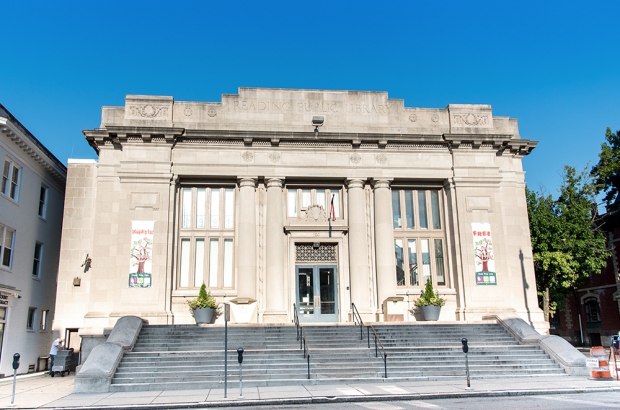
Reading Public Library: Scenarios to inform resilient strategy

“The flexibility of the plan in part helps us to present our goals and efforts, because those goals and efforts can reshape as real world events interfere with business as usual…It really leaves room for creativity and the flexibility to adjust to the real world.”

Melissa Adams, executive director of Pennsylvania’s Reading Public Library, interviewed by Nancy K. Herther of the University of Minnesota, explains how a COVID-era scenario planning process informs robust and resilient strategy for her organisation and community.

“Another advantage was experienced during the transition between executive directors. The plan was decidedly not the prior executive director’s plan, it was the organization as a whole body’s plan. This made it easier for me, as the incoming executive director, to keep the plan moving forward…the article we co-authored has helped me really take ownership of this strategic plan.”

Reading Public Library, Pennsylvania

“What’s after archives?”: Kate Eichhorn and the End of Forgetting

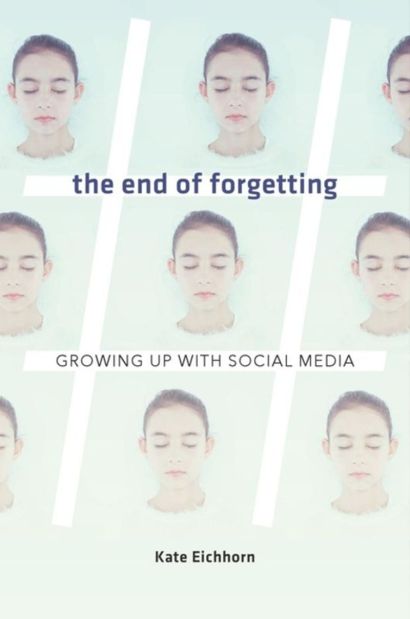
I’m proud to present a Q&A transcript with the New School for Social Research’s Professor Kate Eichhorn, author of The End of Forgettting.

We spoke earlier this year to discuss who gets to tell their own story in the age of social media, what are the consequences to such stories being shared, and what power do we have to forget or be forgotten in this new digital era? This conversation formed the basis for an instalment of “Scripturient”, my column in Information Professional magazine, but now you can read a Q&A expanding on that text, below.

Matt: When did the idea for The End of Forgetting coalesce?

Kate: Prior to working on this book, I had been thinking about and writing about archives for many years. There was a moment when I literally asked myself, what’s after archives? I immediately thought, it’s forgetting. But all of my colleagues who work in archives were very quick to remind me that the archive and forgetting are inextricably linked. So, this book was a kind of natural extension of my earlier work on archives. But the book, while not a personal book, is informed by personal circumstances. On the one hand, when I started working on the book, my kids were maybe 11 and 13, so I was certainly thinking about the tween girls and their relationship to social media. As a parent, I also started to think about how different my life would have been had I been on social media when I was their age. I am almost certain that I would have either said or done things I would have regretted and that there would have been consequences. 

Read more

BMJ Medical Humanities Podcast: Scenario Planning, Healthcare, and the Humanities with Professor Matthew Molineux

Years ago, casting around for a way to explore “applied medical humanities”, I read Matthew Molineux’s essay “A Labour in Vain”, a kind of intellectual history of occupational therapy which spoke directly to the fraught, pragmatic question of what good we really do, when we strive to help others. It’s one of my all-time favourite pieces of scholarly writing and you can find it as a free PDF download from publishers Wiley here.

Working with Matthew in a collaboration between Griffith University and State Library of Queensland, I got to know him not just as a great writer, but a colleague and a friend. Combining a creative hands-on approach to occuaptional therapy education with foresight and psychodynamic work, we took Griffith students to distant futures — all in the service of exploring occupational therapists’ role in a changing world.

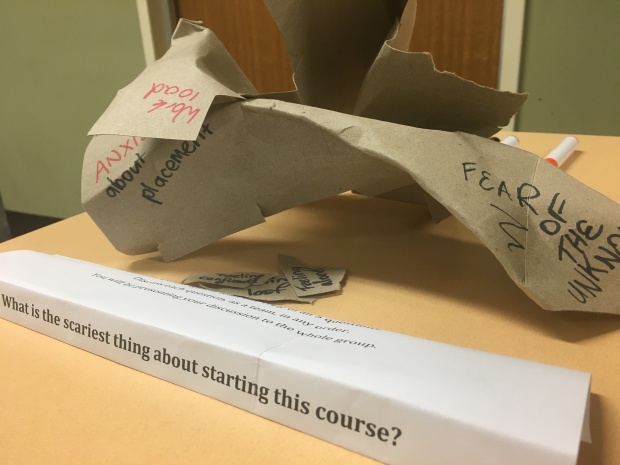
Toys, cake, and cardboard were just some of the materials which were brought into the work, which included a challenge to produce an edible presentation. The students were resourceful, empathetic, creative, good-humoured – exemplfying the best characteristics of their profession.

Now for The BMJ’s Medical Humanities podcast, Matthew and I join hosts Cristina Hanganu-Bresch and Brandy Schillace to explore scenario planning, healthcare, art, foresight, and the humanities.

Scripturient: The End of Forgetting

The latest installment of my “Scripturient” column for Information Professional magazine features the New School’s Kate Eichhorn, author of The End of Forgetting.

Together, we discussed: Who gets to tell their own story in the age of social media? What are the consequences of such stories being shared? 

How will digital media transform the ways we remember and are remembered, now and in times to come?

Will old deeds, old relationships, and our own former selves become inescapable thanks to new technologies and the capitalist frameworks in which they are deployed?

Read more in “Owning your own story” (PDF download).

Book Chapter: Scenarios as a device for forming common futures

“Scenarios as a device for forming common futures”, the chapter I co-authored with UCL’s Richard Sandford for the volume Building the Post-Pandemic University, can now be read for free online.

We argue that:

Universities need to develop ways of creating their own narratives of the future, in order to anticipate what lies ahead and recognise possibilities for change.

By developing their own capacity to imagine possible futures, rather than working with future narratives designed outside the university, institutions will be better placed to recognise their distinctive and heterogeneous character, to be clear about their particular orientation to the future and potential contribution to its development, and to strengthen the university community through this shared process.

You can find our discussion of scenarios, foresight, and universities’ particular situation as complex, internally diverse “engines of the future”, at Elgar Online.

'Dreaming Spires', by Flickr User JJBullock - Copyright JJ Bullock 2010
‘Dreaming Spires’, by Flickr User JJBullock – Copyright JJ Bullock 2010

Scripturient: Data Ethicist Sam Nutt, London Office of Technology and Innovation

“People want to discover the future together, and that future, for us, is always a shared one.”

From the pages of Information Professional magazine, my most recent “Scripturient” column, featuring Sam Nutt of the London Office of Technology & Innovation (LOTI) on “doing data ethically” – going beyond research and compliance to help “practically discover what the values are which should be driving how we use data: not my values, but those of the organisation, of the city, and of the residents we serve.”

Scenario Planning Blog at BMJ Medical Humanities

“Though it’s just a trick of the calendar, as the new year begins our thoughts inevitably turn to the future. Yet we cannot gather data from events that haven’t happened yet, and forecasts drawing on precedent can flounder when situations are unstable.”

For the BMJ Medical Humanities blog, I cover a few scenario planning basics as we make our way into 2024.

Jay Huang from Pleasanton, USA – Low Fog Sunrise @Golden Gate Bridge, CC BY 2.0.

Useful perturbance: 2024 from the corner of your eye

The Council on Foreign Relations (CFR) has just released its Preventive Priorities Survey 2024, a useful document which “evaluates ongoing and potential conflicts based on their likelihood of occurring in the coming year and their impact on U.S. interests”.

Launched in 2008 during the post-9/11 era of the “global war on terror”, the survey polls foreign policy experts to rate a set of contingencies proposed by the CFR, based on a call for suggestions on social media.

Reading the report is a useful way of “standing on the shoulders of foreign policy giants”, but also a reminder that, by looking only where the giants turn their heads, we may end up sharing their blindspots.

As the economist Frank Knight argued, probabilistic forecasting depends on making analogies to past events: we calculate risk in a given situation by modelling that situation based on past experience. However, Peter Scoblic reminds us, analogy may be an unreliable guide in the messy worlds of business and geopolitics – especially because comparing current situations to past ones can trigger biases which will then be hard to shift.

Why is this a problem?

Read more