Best #FyreFestival Ever: From Melbourne to Library Island

1. #FyreFestival

So you may have been watching accounts of the Fyre Festival’s collapse on social media.

The much-hyped “luxury music retreat”, taking place on the Bahamas’ Exuma Islands, charged thousands of dollars for tickets. On arrival, festivalgoers found themselves stranded in emergency-relief tents, their luggage confiscated and dumped in a shipping container. By the end of the first day, the organisers had cancelled the event and attendees were struggling to leave the island.

One of the event producers gleefully noted that she hadn’t been made to sign a nondisclosure agreement and gave an account of what she saw as the festival’s inevitable downfall to New York magazine.

Festival organiser Billy McFarland told Rolling Stone:

The Exumas didn’t have a really great infrastructure – there wasn’t a great way to get guests in here – we were a little bit ambitious. There wasn’t water or sewage. It was almost like we tried building a city out of nothing and it took almost all of our personal resources to make this happen, and everything we had, to make this festival go on.

All of which reminds me of a wet weekend in Melbourne.

2. Chance, skill, and disaster

Over the past fifteen months, I’ve been working with health practitioners, librarians, and other professionals on ways to incorporate play and storytelling in their training and development.

As research for this, I took part in a game of Best Festival Ever at Arts House Melbourne in July last year.

Best Festival Ever, subtitled How To Manage A Disaster, is a participatory theatre presentation devised by Boho Interactive. Attendees take on the role of event producers faced with bringing a festival together at the last possible minute, dealing with sponsors, talent, merch booths, caterers, and bathrooms – as well as a party-hungry horde of festivalgoers.

By playing a series of simple games of chance or skill, the players collaboratively contribute to the success or failure of the festival as a whole – firstly as it’s being organised, and then in the latter stages of the game, improvising a response to catastrophic events.

Boho’s team originally created the game to explore environmental science through interactive theatre. The result is a lively event which examines whether our decision-making processes are well-equipped to deal with natural and man-made systems. Playing the game and attempting to run the “Best Festival Ever” forces us to confront the way we approach complex systems with more serious real-world consequences – such as the environment we live in.

If you get a chance to play this one day, you really should.

3. The Road to Library Island

It’s not hard to see how a game of Best Festival Ever – which only takes a couple of hours to play – might have sharpened the thinking of Fyre Festival’s organisers. Playing a frantic game against the clock to see if a festival’s Portaloos get cleaned is a marvellous way of focussing your attention on infrastructure. And a little time playing in the sandbox gives you the chance to prepare for the future – not just for what you hope or expect to happen, but also the catastrophic collapse of the systems you have in place.

library island

Libraries have proved resilient in these kinds of catastrophic scenarios, perhaps because of their strong connections to the community they serve. Whether it’s Scott Bonner’s team keeping their library open during the 2014 Ferguson riots, or Christchurch Libraries’ work during the earthquakes which struck their city in Aotearoa/New Zealand, libraries have some pretty great success stories to share from times of disaster.

So we spent last year working on a professional development session called Library Island. Our game uses this kind of play-based scenario to explore national strategies for public libraries, the problems of day-to-day library operations, and the challenges that arise when unexpected pressures are placed on the system.

Already Library Island has led to new communications and strategic approaches at the State Library of Queensland, and we’ll be taking the game to both the NLS8 and LIANZA conferences later this year. You can read more about Library Island, and this approach to professional development, in the current issue of Library Life.

In the meanwhile, why not pass some time with the Schadenfreude-heavy story of #FyreFestival on social media?

Want my job? Five tips for the budding Creative in Residence

Jane Cowell, who hired me as Creative in Residence at the State Library of Queensland 2016-2017, has five reasons why your organisation should create such a role over at her Medium account.
Finchcreative

In turn, I wanted to share five tips for people who might want to take on a role like mine.

1. Be passionate
Your job is to make good use of the unexplored gaps in an institution’s existing procedures; to be opportunistic, inventive, and positive about the merits of innovation. Like a catalyst in chemistry, your presence reduces the energy required for new reactions to happen. Your passion for the role and personal commitment to constructively challenge the status quo will play a large part in determining your ultimate success.

Human Library books from the State Library of Queensland

Human Library at State Library of Queensland

That might mean midnight phone calls across timezones to pick Canadians’ brains about Human Library projects; or driving a State Library web team to devise, develop, and then share the code behind an online comic maker. Caring enough to go that extra mile is a huge part of this role.

2. It’s not about you
I always remind my clients that your pay grade doesn’t determine how creative you are; it just reflects your responsibilities. Great ideas can come from anywhere in an organisation and we need a diversity of perspectives, from client-facing staff to policymakers, ancillary workers, and digital specialists, when we help our organisation respond to changing circumstances. A Creative-in-Residence role is also about paying attention, brokering partnerships, and supporting others in putting forward proposals like the FaceSwap Lab pitched by a State Library project officer.

I always made a point of spending time with as many different work units as possible in the State Library. I wanted to hear new ideas, spot potential innovators, understand both the organisation’s pressure points and also its areas of opportunity. I also put in the hard yards serving others, spending time on the set-up and pack-down for events both on- and off-site, or supporting project officers with some of their routine duties.

I spent one of my first weekends in Brisbane setting up and demounting gazebos for a partnership event involving our Indigenous team kuril dhagun and Brisbane’s rugby league stars, the Broncos. It was invaluable in getting to know the team, seeing exactly what services we offered, and showing that I wasn’t just going to waft around in a cushy role making others do the onerous stuff.

3. Be tenacious
Change is rarely straightforward, and bureaucracies aren’t always comfortable with creative or messy pursuits – yet a degree of messiness is necessary if we’re to avoid merely repeating the outcomes of the past. Institutions often seek out my skills because they have discovered the path to change is rarely smooth. As an outsider, you will face people who say, “But we’ve always done things this way” and “What’s the point of playing about with the status quo?” Their concerns need to be listened to and respected, but you must also be tenacious enough to serve as a role model when the going gets tough and the process of change starts to bite.

Remember, too, that some teams will already regard themselves as innovators or even feel that it is impossible to improve on their existing offer. They may not welcome the attention of a critical friend. Again, patient listening reaps enormous rewards. Common ground almost always exists: don’t give up on the quest to find it. Initiatives like the multi-team task forces established by State Library’s CEO Vicki McDonald in 2017 helped with this, encouraging staff members from across work units to collaborate for a specific strategic goal.

4. Allow yourself to be surprised
Given that your job is to serve the organisation, the best ideas and collaborations could come from anywhere – see point two above. One of the most satisfying parts of this role is the element of surprise.

cd6vrx4uiaautd_

Australian TV icon Bernard King

When I joined the State Library of Queensland, I’d rarely worked with archivists or conservators. I figured they’d be timid souls, fond of procedure and loath to change or respond nimbly to events. Yet when I located the forgotten final interviews of gay Australian celebrity Bernard King, not only did our Queensland Memory team move swiftly  to acquire them from their owner in Sydney, they also agreed to fast-track the process as a gesture of LGBTQ solidarity in the wake of the 2016 Orlando shooting.

Their conservator colleagues, whose job is to look after our physical collections, also proved to be more playful than I had expected: they are scientifically minded problem solvers with a stronger future focus than almost any other division, always mindful of how later generations will encounter the objects in their charge. They were also keen to share their expertise through public engagement events like Fun Palaces. Working with these teams proved to be an unexpected delight during my residency.

5. Tell stories
Stories turn data into something we can relate to. Stories underpin the mission and vision statements which steer an organisation, and they also help individual work units to align with that overarching vision. Stories give human context to managerial edicts and they help management to understand the concerns and experiences of staff, users, and stakeholders. As case studies, stories help others to see what is possible; but better still, when you let people tell their own stories through role-play activities like Library Island, fabulous new ideas are brought to light.

Ultimately, what makes a Creative-in-Residence role different from an Artist-in-Residence or Writer-in-Residence is that your creative work focusses on the empowerment of the institution itself; you achieve this by listening closely to all its parts, and then helping that organisation to re-tell the story of what it does in ways which make a lasting practical impact.

Who can be a Creative-in-Residence?
Creatives in this role can be drawn from the ranks of your own staff, or brought in as outsiders – both options have their benefits and drawbacks. Residencies can be long, like mine – initially twelve months, then extended twice – or they can be short “tours of duty”. I’d love to see people experiment with these short stints as a way of bringing regional and marginal voices into the heart of major institutions.

In this role, you’ll work harder than you ever thought possible, catalysing change with little more than your wits, a phone, a computer, and a desk. But you’ll also be free: free to innovate, experiment, explore, inspire, and genuinely make a difference to the lasting business of change. It’s a lot of fun. You should give it a go.

Why hire a Creative in Residence?

Jane Cowell of State Library of Queensland has not one, but five answers for you over at Medium.

Jane hired me back in January 2016 for a residency intended to develop staff, challenge convention, engage the wider community, and showcase the organisation’s creative practice. Now, more than a year later, we’re looking back on a successful stint embracing libraries, communities, and partner organisations across Australia’s Sunshine State.

Read more about creative residencies over at Jane Cowell’s Medium account.

A Quick Chat About The Digital Future

In my final week with the State Library of Queensland, I managed to squeeze in a short discussion about what digital technologies might mean for communities in rural and regional Australia.

I spoke with Donna Hancox of Queensland University of Technology and Tyler Wellensiek, who works on coding & robotics initiatives for the State Library of Queensland.

Check it out:

Work with me in 2018

Does your organisation need help telling the story of what you’re about? What you’re doing? What you have to offer? Do you want to change that story for the better?

I have extensive experience in working with institutions and communities, identifying their accomplishments, their goals, their current ways of working – and then helping them to find new, effective approaches. I listen and observe, then work with you to plan and execute the changes we have agreed on.

I help people and organisations – from publishers and media productions to healthcare providers and state bodies – to create new programmes and partnerships.

Would you like to strengthen your digital and physical offers? Your strategic vision? Or the way you explain to outsiders your history and mission?

Could your organisation benefit from professional development sessions that are unique, playful, and effective?

By listening to staff, clients, and stakeholders, I spot opportunities to make a difference and tell stories which help to shape and sustain innovation.

For the remainder of 2017, I’ll be working on community engagement with the University of Southern Queensland, after an extended stint as Creative-in-Residence at the State Library of Queensland.

You can read more at www.mechanicaldolphin.com/about – which gives you an outline of what I can do for you.

Take a look, and drop me a line if you’d like to work with me next year.

What’s next

From May, I’ll be joining the University of Southern Queensland for six months supporting “proactive, strategic, and sustainable engagement with key stakeholders and communities internal and external to USQ.”

Working with Professor Helen Partridge and her fab team in USQ’s Scholarly Information and Learning Services division, I’ll be acting as a coach and catalyst to raise awareness, understanding, and capacity in maintaining a sustainable community engagement program.

I visited USQ last year to talk about community engagement, healthcare, storytelling, digital media, and what really listening to people and technology in Australia might entail.

This new adventure is going to be cracking good fun – but there’s still a few more exciting things to come out of my extended residency with the State Library of Queensland, so watch this space.

Curiosity vs The Post-Truth World

Among my weekend reads was Tim Harford’s Financial Times piece “The Problem with Facts“.

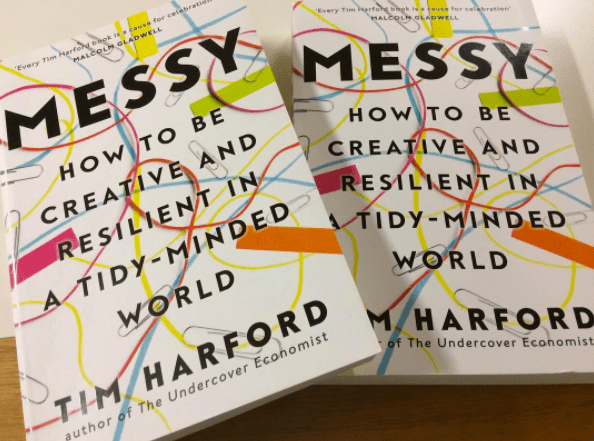
We’re big Harford fans around these parts, not just for his podcast More or Less but also his book Messy, which I’ve been inflicting on various colleagues and friends around Australia.

Screen Shot 2017-03-12 at 21.19.28

In the FT piece, Harford takes us back from the fake news and false claims of political debate in the age of Trump and Brexit to the history of “doubt manufacture” in the 20th century, and the tobacco industry’s attempts to blur the links between smoking and cancer.

He examines the limits of fact-checking as a response or a rebuke to those who cloud public discourse with lies.

He tells us that scientific literacy is not necessarily the answer, that it “can actually widen the gap between different political tribes on issues such as climate change — that is, well-informed liberals and well-informed conservatives are further apart in their views than liberals and conservatives who know little about the science.”

Harford goes on to outline a paper “Scientific Curiosity and Political Information Processing” by Dan Kahan, Asheley Landrum, Katie Carpenter, Laura Helft and Kathleen Hall Jamieson.

Those authors argue that it is worth exploring further whether a person’s curiosity about science can counteract our tendency to view the world through the lens of political bias.

Their initial findings prompt them to explore whether

individuals who have an appetite to be surprised by scientific information—who find it pleasurable to discover that the world does not work as they expected—do not turn this feature of their personality off when they engage political information but rather indulge it in that setting as well, exposing themselves more readily to information that defies their expectations about facts on contested issues. The result is that these citizens, unlike their less curious counterparts, react more open mindedly and respond more uniformly across the political spectrum to the best available evidence.

As Harford puts it, “Curiosity is the seed from which sensible democratic decisions can grow. It seems to be one of the only cures for politically motivated reasoning but it’s also, into the bargain, the cure for a society where most people just don’t pay attention to the news because they find it boring or confusing.”

All of this is great news for those of us working at the odd intersection of knowledge and culture, where communities meet institutions like galleries, museums, libraries, universities, and healthcare providers.

I’ve been worrying for a while now, even with events as warm and cuddly as the annual Fun Palace celebrations of art and science, about the times we choose to take scientific claims on faith.

I worry too about what part libraries have to play in the battle against fake news and egregiously false claims in the media. Is the library a trusted dispenser of facts and information? A repository of the truth? Or, rather, a safe place for you to indulge your curiosity, to wander as you see fit through all the contested claims and different visions of human knowledge and culture?

Harford’s take on that research paper returns us to the notion of each individual’s curiosity and exploration as the basis of scientific endeavour and the quest for truth. It returns us not to blind faith in science or reliance on fact checkers, but a sense that we must always actively challenge and revise our beliefs.

It reminds me why, in the last few years, we’ve allowed kids to sketch time-travelling creepy crawlies from a steampunk world to encourage scientific observation; why we spent last week in the Aussie town of Bundaberg to help rural writers speculate  about the future of society; why we’ve been training health professionals using far-fetched and fantastic case studies like the Immortal Sock Monkey. It’s because these activities each became a matter of curiosity and wonder, rather than a mere transfer of facts from a person in authority. Curiosity and wonder might just be the best antiseptic for the spread of fake news.

If the formal research into scientific curiosity proves fruitful, it could guide and nuance our attempts to encourage  a world where people are free to learn, explore, create, and play as they wish to, not just in accordance with curriculums and constraints.

It wouldn’t just be about science, either. For isn’t art, too, a matter of curiosity about materials, expression, and representation? And don’t those of us who find ourselves on colonised lands need, as Columbia anthropologist Beth Povinelli has been arguing, to become more curious, too, about Indigenous ways of knowing and understanding the world?

This is a difficult moment for those of us who value the truth in public life and wish to push back against those who maliciously sow doubt and deliberate misinformation. But Tim Harford’s article reminds us that there are ways forward for those of us unwilling to embrace a post-truth world  – and that, wonderfully, those ways might even be incredibly exciting, incredibly adventurous, and incredibly good fun.

Visions from Bundaberg

Last weekend I was the guest artist at “Dispatches from Bundy”, a writing workshop in the Queensland town of Bundaberg.

Working with staff from Creative Regions and Queensland University of Technology, our team took a group of local writers and storytellers through a two-day session aimed at engaging with stories from the past, exploring visions of the future, and nurturing regional literature.

One of our activities saw participants creating science fiction stories and postcards from future worlds. We stitched these stories into a timeline of future history stretching a thousand years hence.

Check out the result via YouTube, incorporating images by Peter Miller aka Scribbletronics and music from Disasteradio.

Lake Mac GLAM

I’ll be speaking at the inaugural Lake Mac GLAM Symposium for museum, gallery, library, arts, and culture professionals in Lake Macquarie, New South Wales next month.

Lake Mac Glam logo

On 10th April, join me and other GLAMourpusses from across Victoria, Queensland, and New South Wales to look at trends, challenges, and opportunities for Australia’s cultural sector.

Find out more & get your tickets here.

Social Media Training at the Queensland Country Women’s Association

It’s a busy old month here in Brisbane…

qcwa-cup-and-saucer-1920sl

Hot on the heels of a robot-training, cocktail-mixing event for librarians in Moreton Bay, I’ll be joining forces with my colleague Lyn Thompson to deliver three hours of training for the Queensland Country Women’s Assosciation (QCWA), the largest women’s group in Queensland.

Since 1922, the QCWA has helped women from across the state to celebrate their friendship and interests while supporting opportunities to make a difference in the fields of health, education, and the broader community.

Lyn and I will be teaming up on Saturday to deliver social media training for QCWA members across the regions, helping them make the most of the digital age.