How can we explore or shape the future of higher education when the times are so turbulent and uncertain?
The forthcoming “Digital Technology and the Post-Pandemic University” conference explores the new realities faced by higher education, and the part digital technology will play in those realities. I’ll be presenting a short paper on the use of scenario planning to explore future contexts for digitalised education.
As part of the OECD’s Government After Shock project, I’m working with a team from their Observatory of Public Sector Innovation, interviewing public sector leaders & practitioners for a podcast series exploring their perspective on the crises of 2020, and the implications for the future of government worldwide.
This week, Petra Nilsson Andersen of the Norwegian Digitalisation Agency joins me for a brief chat about COVID’s test of the Nordic social model, how to balance the physical & digital, and what 2020 teaches us about preparing for future crises.
As part of the OECD’s Government After Shock project, I’m working with a team from their Observatory of Public Sector Innovation, interviewing public sector leaders & practitioners for a podcast series exploring their perspective on the crises of 2020, and implications for the future of government worldwide.
“The body’s reaction under critical incident stress has almost nothing to do with how you think rationally. Instead it has almost everything to do with ingrained responses, be they trained ones or instinctive ones. The amygdala will choose. It has the chemical authority to override your conscious thoughts and decisions. It also has the chemical authority to enforce its decision despite your conscious will.”
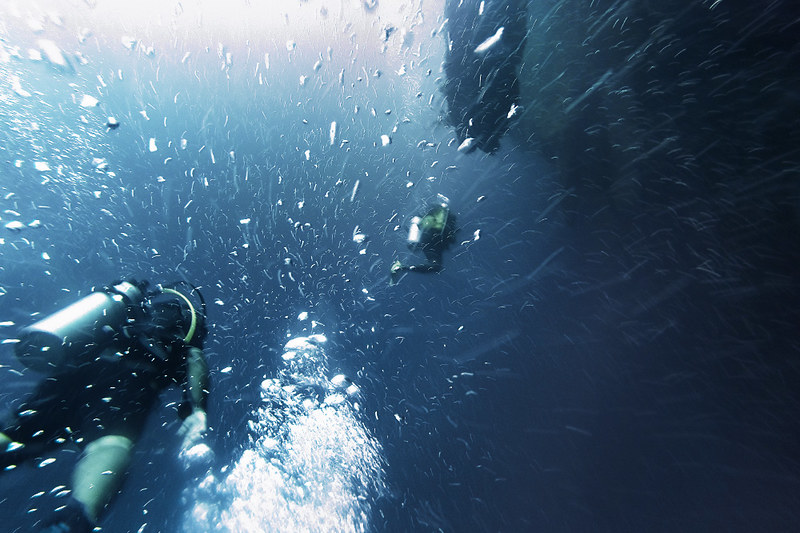
Guthrie gives the example of scuba divers who drown despite having full oxygen tanks; in a moment of crisis, the amygdala reacted by driving them to clear their airways, spitting out their breathing tube despite the diver being consciously aware that they were underwater.
“Deeply ingrained reactions are far more likely than conscious decisions,” Guthrie writes. “And don’t even get me started on how much training you have to do to override and replace your body’s instinctive responses with new ones. Regardless, you won’t be selecting an option from a menu of choices calmly and rationally like you do in the training hall. Your body is going to pick its own response in a maelstrom[.]”
Organizations aren’t precisely like organisms, and the way we think when we work collectively isn’t quite like the dramatic individual encounters which trigger our adrenal glands. Often an organizational crisis is measured in hours, days, or weeks, rather than seconds and minutes. It will involve discussion, policy, and procedure, with a pace and structure quite different from the amygdala prompting an unreasoned – and possibly counterproductive – survival response.
Still, organizations can go into a panic just as much as individuals can, and when they do so, they may start making harmful or counterproductive decisions. Significant among the situations which trigger such panic are “feral futures“. In these situations, we think we have tamed the environment we are operating in, but misunderstand what is going on, and our action based on false premises or data in fact makes things gravely worse. Read more →
I’ll be talking with Canada’s Rebecca Jones as part of the “Nexter” webinar series next month.
This slideshow requires JavaScript.
We’ll be discussing questions of leadership for information professionals in these times of strategic uncertainty. How do we rethink community access to information, knowledge, and culture through the COVID era and beyond?
Over the last few weeks, I’ve been speaking and exchanging e-mails with the philosopher of science Jerome Ravetz, one of the originators of the notion of Post-Normal Science. This is an approach to science which addresses the wider social context in which scientists and their institutions operate, intended to serve in situations where high-stakes decisions must be made and the environment is characterised by deep uncertainty.
Given that definition, what could be more “post-normal” than our experience of 2020? Jerome and I had a long chat which covered the pandemic and our response to it, warring traditions of folk and elite science, philosophy, gender, science fiction, truth & reconciliation, and electoral politics.
Matt: So, what does an exponent of post-normal science make of the current pandemic?
Jerry:
For a while, the uncertainties and complexities diagnosed by the post-normal science approach have been coming in from the margins, until right now they’re almost in the mainstream of thought and discussion. Once that happens, it will open new possibilities – and new problems. Read more →
I recently had the opportunity to speak with Steve Thomas of the American library podcast Circulating Ideas and Ian Anstice of the UK’s Public Libraries News. Both conversations were released online this week.
Ian asked me some questions about the COVID-19 pandemic, libraries’ response to it, and what might be on the horizon for our societies and the institutions that serve them.
Like any good foresight practitioner, I sought to offer questions of my own, and provocations more than prophecy. We discussed resilience, anticipation, and both the dangers and opportunities that organisations face during a prolonged, indefinite season of turbulence and uncertainty. I think the points will be useful for people outside of the library and information sector. You can read our conversation at the Public Libraries News site.
Great piece on library futures @DrMattFinch Yes! Let's "find new ways to measure and communicate the difference libraries make to their communities and…(enable) previously marginalized voices and communities to be heard and recognized." https://t.co/8GYzPBw5NV
To keep the conversation moving forward, Katherine and I had a short discussion about libraries’ experience of crisis over the past year.
Matt: In terms of our interest in coping with crises and turbulent situations, in understanding the part libraries have to play in these huge upsets: what has been learned?
Katherine:
So much has happened, both personally and professionally, and is continuing to happen, and taking a breath to look back is almost overwhelming.
The fiction of normality has just been exposed by the coronavirus pandemic, so why are we constantly talking of a New Normal?
Normality was only ever a comfort blanket, and one which didn’t even stretch to cover all of those in our society who needed it.
How will we change through, and allow ourselves to be changed by, the crises of 2020 – and those future crises that surely await?
I’m so grateful to Spain’s Ministry of Culture and Sport, and the “Laboratorios Bibliotecarios” team, for hosting this discussion, and tolerating my imperfect Spanish in a really lively debate with Laia Sánchez Casals, Alicia Sellés Carot, Diego Gracia Sancho, and Javier Perez Iglesias.
How are you spending your days under lockdown or restricted movement? Which parts of your routine have changed? What’s working for you and what’s not?
How do you perceive time – have days begun to run into one?
Are work and home life still easy to separate? Do you have to fit your job around childcare and homeschooling? Do you notice when the weekends arrive?
Draw Your Day is a short activity using a pen, paper, and some basic shapes to help you examine and rethink the ways you’re spending time during lockdown.
It’s based on a tried and tested activity from workshops I’ve run around the world, derived in turn from a task set for students by the comics scholar Nick Sousanis. It’s quick, and it’s fun.
If you’ve got something to make a mark with, and something to make a mark on, and you’re curious about your relationship to time during lockdown, you can watch the activity and take part on YouTube; the whole thing takes about half an hour.



 matt finch / mechanical dolphin
