“The Futures You Didn’t See Coming” at CIL & IL Connect Conference, 23rd September

On September 23rd, at 09:30 AM Eastern Time, I’ll be joining Erik Boekesteijn at the online CIL & IL Connect 2020 conference for a quick chat about foresight and futures for information professionals, their institutions, and the communities they serve. Erik is running a daily interview strand with a range of information professionals and their allies as part of the event.

You can see more about the session, “The Futures You Didn’t See Coming”, at the CIL & IL webpage, and find out more about the whole conference in the video below:

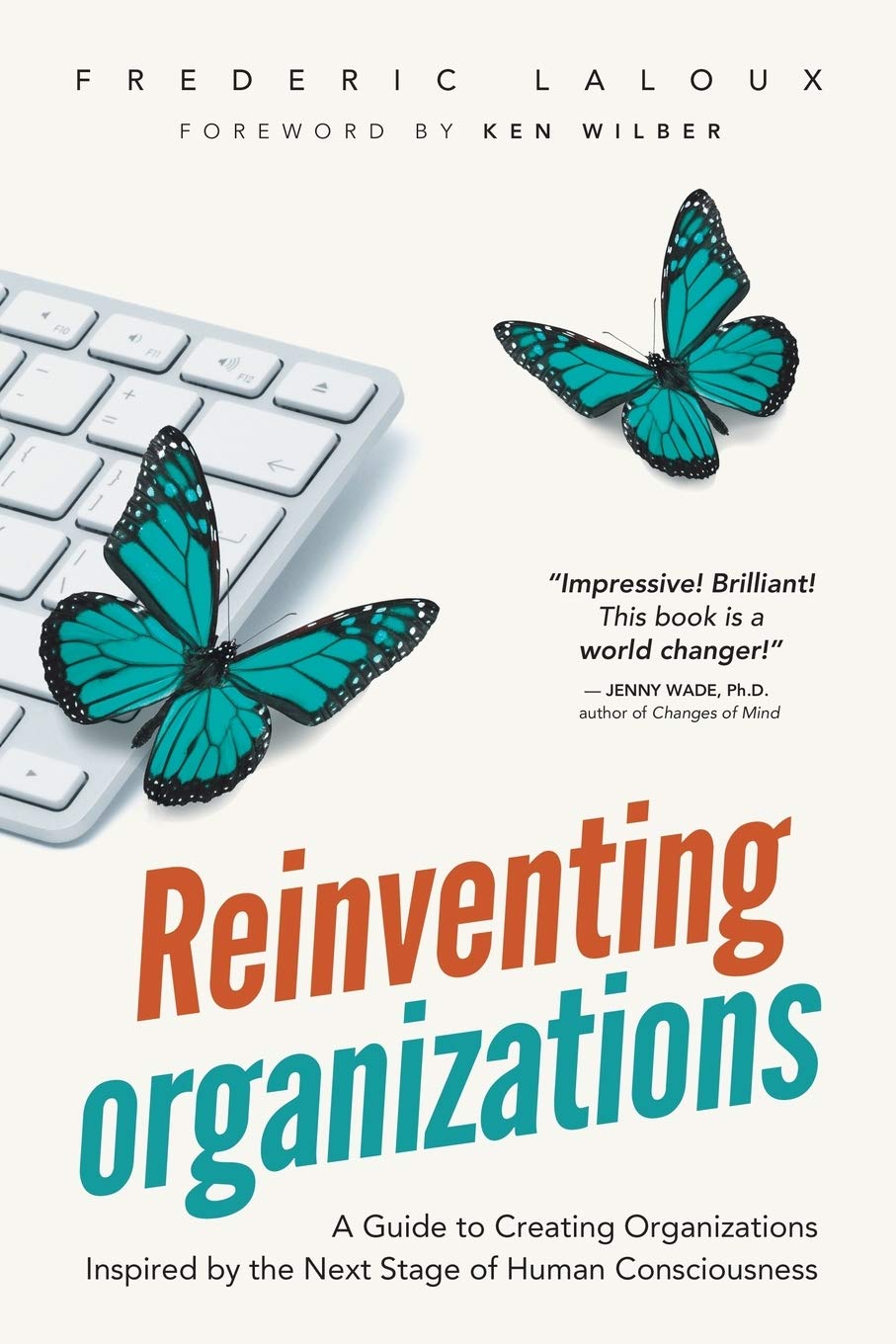
After Frederic Laloux: Reinventing Information Organizations

“Something is broken in today’s organizations…The pain we feel is the pain of something old that is dying…while something new is waiting to be born.”

Frederic Laloux, Reinventing Organizations

So much of organizational life is onerous and frustrating these days. For many of us, the day job is characterised by aggravation and a sense of soullessness: a “cold, mechanical approach” which trades agency and responsibility for box-checking accountability and loss of control.

Reinventing Organizations: A Guide to Creating Organizations ...

That’s what Frederic Laloux argues in his 2014 book Reinventing Organizations, which explores alternative models for those institutions and businesses willing to dissolve hierarchies and pursue new management paradigms.

Laloux’s case studies include the Dutch healthcare organization Buurtzorg, which delivers community care in leaderless self-organizing teams of ten to twelve nurses, and FAVI, a French automotive supplier which has divided itself into self-managing “mini-factories” whose teams operate without executive management. These businesses and institutions, Laloux argues, resemble living systems more than the organisations of old. They are evolving beyond previous, rigid ways of bringing people together to achieve a goal: the army, the university, the corporation…even the organized crime syndicate.

Laloux presents a practical vision for a world where “no one is the boss of anyone else”, and our organizations begin to take on an organic character.

The approach is intended to work across many sectors, with examples including highly regulated industries such as the energy industry and food processing. I thought I’d spend some time thinking about what it would mean for information organisations – archives, libraries, and other entities which create, store, share, and manage information – to explore Laloux’s approach. What would it take for us to reinvent the Information Organization? Read more

“Nexter” Webinar with Canadian information professionals, August 13th

I’ll be talking with Canada’s Rebecca Jones as part of the “Nexter” webinar series next month.

This slideshow requires JavaScript.

We’ll be discussing questions of leadership for information professionals in these times of strategic uncertainty. How do we rethink community access to information, knowledge, and culture through the COVID era and beyond?
 

Psychodynamic literacy? New column for Information Professional

“Group dynamics are ‘like an iceberg – you see some of the relationship on the surface and then there is also everything beneath the water. There are the explicit, seen, and formal aspects; then all that is implicit, unseen, unspoken, and even unconscious.'”

The second instalment of “Scripturient”, my new quarterly column for Information Professional magazine, is out now.

Iceberg_in_the_Arctic_with_its_underside_exposed
Iceberg in the Arctic, by Wikipedia user AWeith – CC BY-SA 4.0

In this series, I’m looking at how we can push the boundaries of literacy in the 21st century, to encompass new areas of representation. What does it mean to read the future? To read risks? To read the forces that underpin our relationships and drive us psychologically? To read the signs and signals which exist in the natural world?

The latest instalment explores questions of “psychodynamic literacy”. If we were better at reading the forces that shape our relationships, could we rewrite them to get better, happier outcomes?

I talked to two expert practitioners, a leadership coach and a mediator, to find out more. Find out what they had to say in the article (PDF download).

Getting Your Head Around Post-Normal Science

Something of a long read on the blog today. I first came across Jerome Ravetz’s work in his 2011 piece on feral futures co-written with Rafael Ramírez in the journal Futures. In that piece, the authors argue that complex, uncertain issues such as environmental disasters can be made worse by conventional risk-based thinking. I think through some of the ways in which this is important for us to consider in 2020 in this blog, “Our feral future: working on the crises you did(n’t) see coming.

I find Ravetz’s approach thought-provoking, pragmatic, and deeply relevant to the present moment. It attends to questions of uncertainty and emphasises that science itself is situated within complex social, political, cultural, and economic contexts. Especially when we find ourselves being told that, for example, decisions on quarantine and lockdown measures are being “guided by the science” under contested circumstances, it’s worth getting your head around the idea of “post-normal science.”

Today, I want to go through some of the key points articulated in Ravetz’s 2006 No-Nonsense Guide to Science and the updated 2020 version of his landmark 1993 essay with Silvio O. Funtowicz, “Science for the Post-Normal Age“. Check those texts out, if you want to go deeper.

Defenders of the Truth
Climate Marchers, by Wikipedia user Mark Dixon CC BY-SA 2.0

Post-normal science is a way of rethinking science for situations – and eras – in which facts are uncertain, values are in dispute, the stakes are high, and decisions are urgent. It recognises that the social and political dimensions of science cannot be sidelined, isolated, or ignored.

The increasingly complex systems of today’s world are threatened by environmental catastrophe, pollution, and other incidents, like the COVID-19 outbreak, which are exacerbated by the technologies sustaining our way of life.

Science must therefore find new ways to cope with contradiction, uncertainty, and an ever-wider political conversation featuring a wide range of perspectives. It must now address the problems of a global system which itself was based on science.

Why “post-normal”?
Read more

Real Time – Webinar with R. David Lankes

Today I spoke with leading US information professional R. David Lankes about foresight, strategy, and coping with uncertainty beyond immediate short-term crisis response.

David created one of the first 100 web sites ever, plus the first web presence for CNN, the Discovery Channel, and the U.S. Department of Education. We spoke about what he foresaw at the beginning of the Internet age, the surprises which emerged along the way, and how we might learn from the past when the future is uncertain and unlikely to repeat what went before.

You can watch the YouTube video below, or read more at the Librarians.Support website.

Webinar: Intro to Scenario Planning for Information Professionals

On 18th March, at 12.30pm Greenwich Mean Time, you can join me for a webinar organised by the UK’s Chartered Institute of Librarians and Information Professionals.

We’ll be talking about scenario planning and foresight techniques which participants can employ in their organisations:

How can we prepare for an uncertain future? What part does good foresight play in resilience, organisational effectiveness, and community cohesion? If we can’t gather evidence from events which haven’t happened yet, and we don’t have a crystal ball to foretell what comes next, how can we complement evidence-based practice with sound strategic judgement?

This lively participatory session will introduce you to scenario planning, a method which allows us to examine the future by exploring the contexts which would most challenge our current assumptions – then deciding how to act in the present, based on what we have discovered.

Participants will learn the fundamentals of scenario planning and experiment with practical foresight tasks which can be immediately used after the session, across teams and organisations both large and small.

Find out more and book your place at the event’s homepage.

Risk literacy and futures literacy: New column

The first instalment of “Scripturient”, my new quarterly column for Information Professional magazine, is out now.

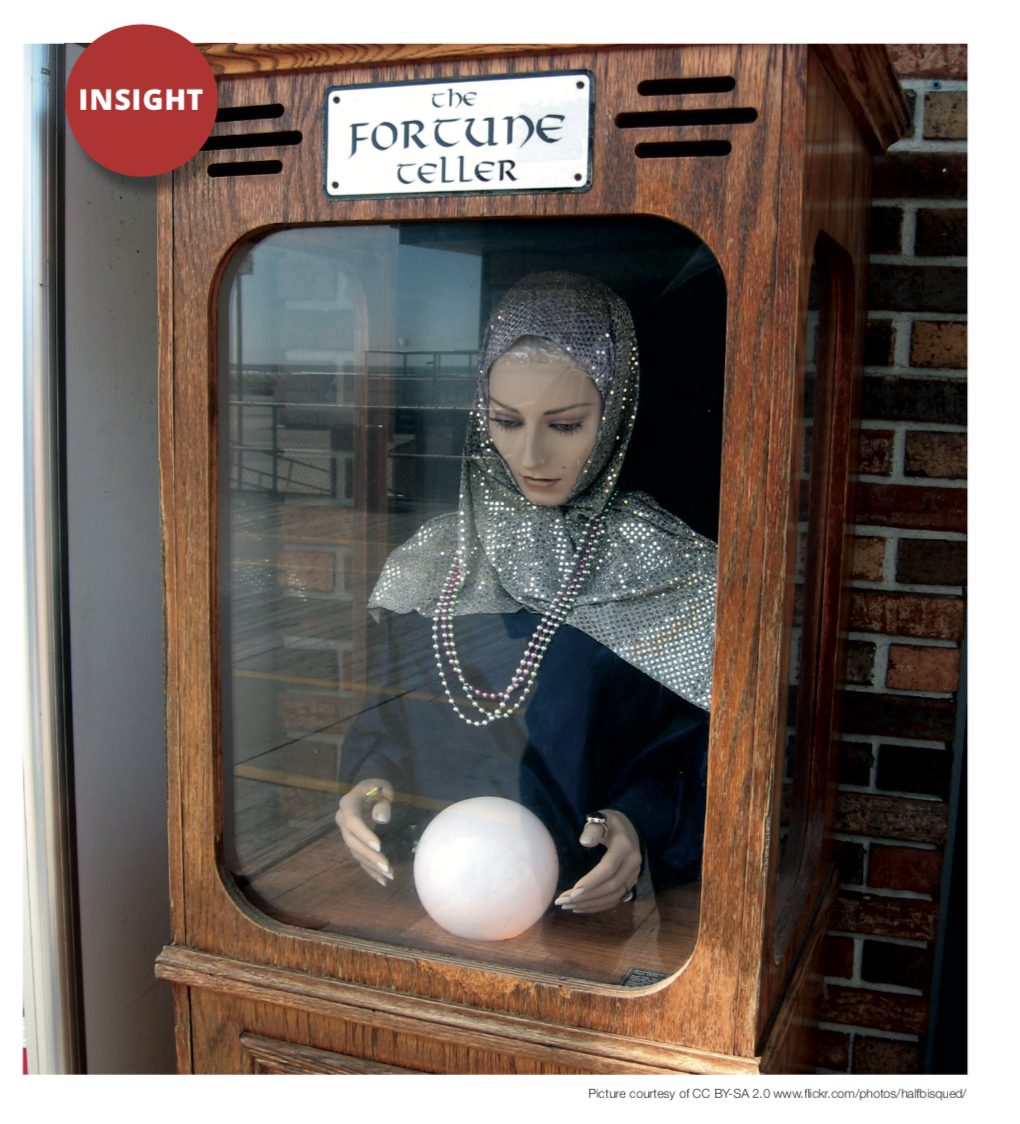
Picture of a mechanical fortune teller from CILIP's Information Professional Magazine, captioned with the word "insight"
Picture licensed CC BY-SA 2.0 from Flickr user halfbisqued

In this series, I’ll be looking at how we can push the boundaries of literacy in the 21st century, to encompass new areas of representation. What does it mean to read the future? To read risks? To read the forces that underpin our relationships and drive us psychologically? To read the signs and signals which exist in the natural world?

Join me, over four instalments in 2020, to explore some of these questions in the pages of Information Professional.

You can read the first column, which covers futures literacy and risk literacy, in this PDF download, or in the text below. Read more

Toronto iSchool, 6-7 June: Learning to Plan on Library Island

We can’t predict the future, yet we do it all the time. We have to: there are objectives to be set and met, projects to be devised and delivered, holidays to be booked, birthdays to celebrate, mouths to be fed, children to raise, dreams to be fulfilled.

Sometimes people and organisations anticipate the future based on what has gone before – but then we risk being blindsided by social and sectoral changes, financial crises, political upsets, natural disasters, and complex systemic challenges.

So, how do we prepare for futures characterised by turbulence and uncertainty?

What methods help information professionals to develop foresight, insight, and awareness that will support decisions made for their communities, teams, and institutions?

Welcome to Library Island.

This June, visit the University of Toronto’s iSchool – “Learning to Plan on Library Island” – to develop skills and awareness which will help you to deal effectively with potential threats, opportunities, and challenges.

This two-day event will feature speakers including Peter Morville, author of Planning for Everything; Stephen Abram of Lighthouse Consulting; and Rebecca Jones & Jane Dysart of Dysart & Jones. I’ll also be there to offer insights gathered from information professionals working with institutions, communities, and businesses around the world.

Experienced consultants and leaders in the information profession will share planning tips, tricks, and methodologies. Participants will explore and experiment with new ways to develop their strategy, vision, and mission, including sessions of the Library Island play-based activity.

It’ll be provocative, inspiring, practical, challenging, and fun. Visit http://www.thefutureoflibraries.org to see more about this June’s University of Toronto iSchool – we’d love to see you there.

The Norwegian Library Innovation Exchange @innovasjonnorge

How do you get a whole nation thinking about the challenges which lie ahead of it?

How can you help a community to solve seemingly intractable problems?

Which institutions need to be part of the discussion about society’s future directions?

I visited Norway this week to speak and run a workshop at the national library conference, #biblkonf2018. I asked these questions, and more, with a focus on how libraries might serve the innovation agenda articulated by Norway’s innovation agency, Innovasjon Norge. (You can see slides from the keynote here).

Today I want to focus on one idea, which comes from the work of the British innovation agency Innovate UK. Read more