How do you get a whole nation thinking about the challenges which lie ahead of it?
How can you help a community to solve seemingly intractable problems?
Which institutions need to be part of the discussion about society’s future directions?
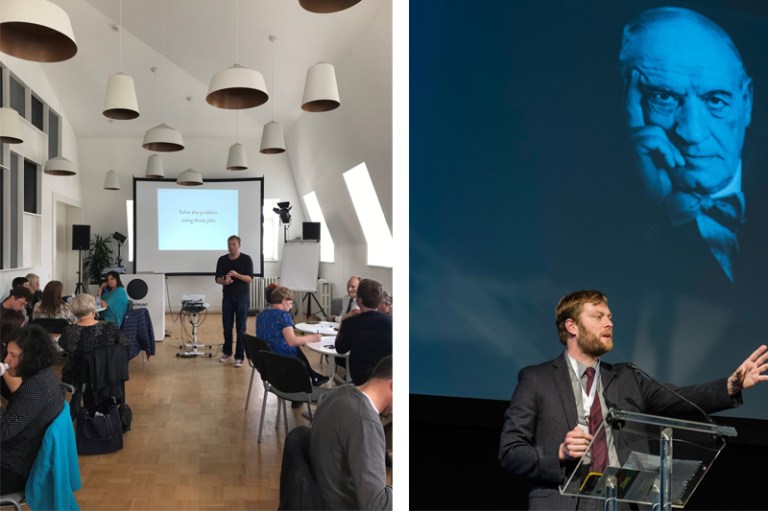
I visited Norway this week to speak and run a workshop at the national library conference, #biblkonf2018. I asked these questions, and more, with a focus on how libraries might serve the innovation agenda articulated by Norway’s innovation agency, Innovasjon Norge. (You can see slides from the keynote here).
How does your role contribute to discussions around youth engagement – and activities which bring young people together with different institutions and organisations?
In the last few years I’ve been involved in large-scale, cross sector engaged research initiatives that bring together young people, industry, community, policy and academic partners to collaboratively identify, design and undertake research on a range of issues such as youth mental health, engagement, employment and online safety.
In this work I’ve been a strong advocate for participatory approaches and thinking about how to be inclusive of young people’s views – from agenda-setting about what gets researched and the terms of inquiry, through to translation and application of research findings. I hope I’ve had some influence!
My most recent project has involved collaborating with eight colleagues at WSU to run a Young and Resilient Living Lab Foundation Project. We brought together 100 participants over five workshops to co-create a community and an agenda for engaged research to inform technology-based strategies to promote the resilience of young people and their communities.
Fo us, resilience should be understood as the capacities to transform the conditions of social life – achieved through ongoing processes of individual and collective receptivity and responsiveness. Read more →
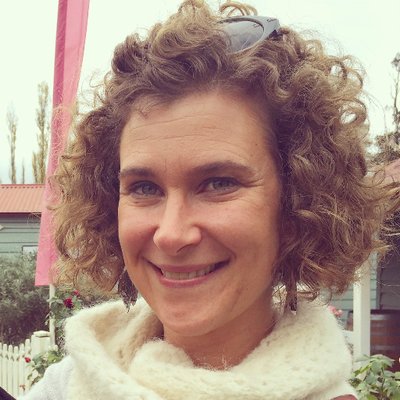
On the blog this week, I’m joined by Dr. Philippa Collin, a Senior Research Fellow at Western Sydney University’s Institute for Culture and Society. Philippa is a social scientist who previously worked at www.reachout.com, the world’s first online suicide prevention initiative aimed at young people. She researches the role of digital technology and media in young people’s lives, including a focus on political participation, identity, and exclusion.
Dr. Philippa Collin
I hear a lot of concern from public institutions about the notion of “making better citizens” right now. Political upsets, fear of ‘fake news’: the powers that be are concerned about the nature of citizenship in the digital age.
Institutions could adapt their structures to meet the needs of people they perceive as “disengaged”. Or, instead of the institution adapting, they might try to help people develop the skills & capacity to engage with existing structures.
What pitfalls are there for organisations seeking to engage the (apparently) disengaged?
I come from a community of scholars who have actively argued against the normative framing of ‘politics’ and ‘participation’. For example ‘politics is about what happens in parliament’ and the ‘good’ forms of participation are to vote, join a party or get involved with set activities or processes – usually all designed by adults! Read more →
A colleague working in a think tank faced a knotty challenge: how to lead a conversation about a team’s attitude to collaboration and teamwork, when she herself was a part of that team.
The activity formed part of an away day and the session was set to last ninety minutes. I worked with my colleague to devise activities that would prompt frank and constructive conversations, free her from the role of facilitator, and create space for imaginative new ideas to surface.
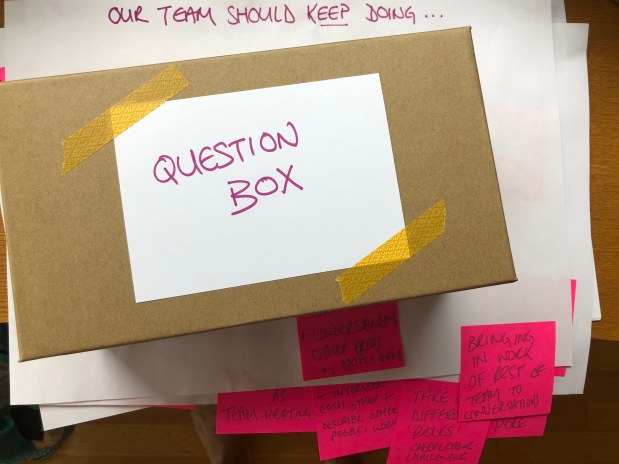
The Question Box
The core activity we came up with was a series of questions or challenges written on cue cards, to be drawn from a box. Like the Presenterless Workshops activity, this encourages participants to take charge of the discussion and gives them freedom in how they approach the topic.Read more →
Occupational therapists (OTs) are among my favourite professionals to work with. These allied health practitioners have a unique and often overlooked take on the world – the “occupational lens” – through which they understand human experience in terms of our occupations: the things we want, need, and have to do in our lives.
Today’s therapists and occupational scientists understand that human lives are comprised of occupations; that occupations can become dysfunctional and harmful; and that occupation itself can become a way of offering therapy and putting things right.
Bex (Rebecca) Twinley of Plymouth University is an occupational science researcher who coined the phrase “dark side of occupation”. Health professionals have traditionally and understandably focussed on occupations which they see as positive and productive for individuals, groups, and communities. Yet when we think of the total sum of human occupation, its many facets must include dark – meaning less explored – sides, too.
What happens when occupational science chooses not to look away from those facets, and instead pays attention to the darkness?
Bex:
Occupational therapy as a profession has always been focussed on links to health and wellbeing, identifying and supporting those occupations which are healthy to do.
The reality is that people don’t engage in positive occupations all of the time – yet these are not spoken about in our literature or explored in much of our practice. This limits the authenticity of the understanding between client and practitioner.
Matt:
I imagine that there is also some scope for debate about who gets to define health and wellbeing, and what institutional values are imposed by the health system. (It’s making me think of that Radiohead song, “Fitter Happier”).
What drew you to the notion of this “dark side” of occupation?
 matt finch / mechanical dolphin