Oxford Human-Algorithm Interaction Workshop 2025

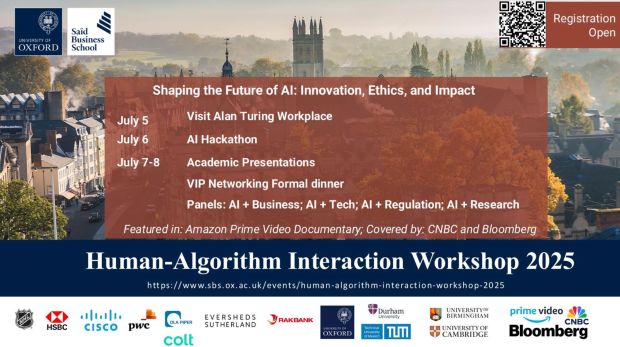
I’m pleased to be presenting at the University of Oxford’s Human-Algorithm Interaction Workshop 2025, on “Governing the futures you didn’t see coming: artificial intelligence scenarios“.

Do join us in Oxford, 5-8 July, for an interdisciplinary event delving into the complex and evolving relationship between humans and algorithms.

The annual workshop is a gathering of industry leaders, AI pioneers, and leading researchers who will explore the evolving role of AI in business, governance, and society. This year’s theme is “Shaping the future of AI: innovation, ethics and impact.”

Find out more and register here.

Scripturient: To Dream Like A Human

The world could always be otherwise than it is. Sometimes fate is only a failure of imagination. The trajectory of automation is not only uncertain, it is unwritten. The fundamental question is less about technical capacity than ethics, authority, and accountability: Who will create the future – and with what ends in mind?

In the latest instalment of ‘Scripturient’, my quarterly column for Information Professional magazine, I draw together comments from a few different thinkers on automation and art.

You can read ‘To Dream Like A Human’ here.

auDA Future of the Internet Scenarios Launch, 7 May 2024

How might global Internet governance change in times to come? What uncertainties surround our networked world, and how might they play out in ways that challenge the assumptions underpinning “business as usual” today?

Together with Australia’s auDA and a wide range of international stakeholders, I’ve worked to develop a set of scenarios for the future of the Internet in 2044.

They invite all of us who work with digital technologies to consider plausible, challenging, and relevant futures that offer fresh vantage points on the issues we face today.

Join auDA’s CEO Rosemary Sinclair AM, myself, and the team next month for the launch of these scenarios online. 7th May, 1pm AEST – with a recording to follow.

“An app is not going to solve our democracy; it’s something we have to solve ourselves.”

In the new issue of the journal Surveillance & Society, Oxford’s Carissa Véliz, sci-fi writer and aid worker Malka Older, and Capgemini Invent’s Annina Lux join me to talk about how future scenarios can inform discussion, debate, and decision-making about the relationship between artificial intelligence and surveillance.

Read “The Art of Strategic Conversation: Surveillance, AI, and the IMAJINE Scenarios” here.

IMAJINE: Digital Futures

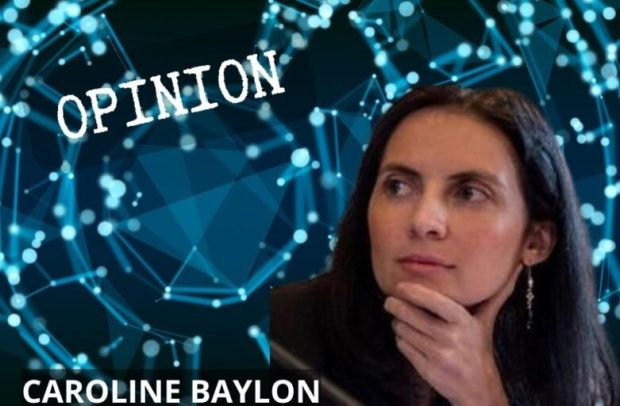
Citizens gaming artificially intelligent policy mechanisms, a telepresence Luddite movement, ecological damage from cyberattacks, corporations supplanting governments, & rights for intelligent software agents – Caroline Baylon of the UK’s All-Party Parliamentary Group for Future Generations explores potential implications for the digital world, cybersecurity, and AI in the IMAJINE scenarios.

You can read Caroline’s response to the scenarios at the IMAJINE website.

Poetry and information – A conversation with Helen Heath

The latest instalment of Scripturient, my column for Information Professional, is out now.

In this series, I’m looking at how we can push the boundaries of literacy in the 21st century, to encompass new areas of representation. What does it mean to read the future? To read risks? To read the forces that underpin our relationships and drive us psychologically? To read the signs and signals which exist in the natural world?

In the latest issue of Information Professional, I talk to writer Helen Heath from Aotearoa New Zealand about birdsong, technology, poetry, and the natural world.

What would change about your work if you read, or even wrote, a poem on waking up every morning? To what new things would you attend? What would you learn about information, and our relationship to it?

You can read the column in a PDF download here, or get your own copy of Informational Professional magazine here.

7 magic words to challenge the wisdom of systems: getting your head around Claudio Ciborra’s Labyrinths of Information

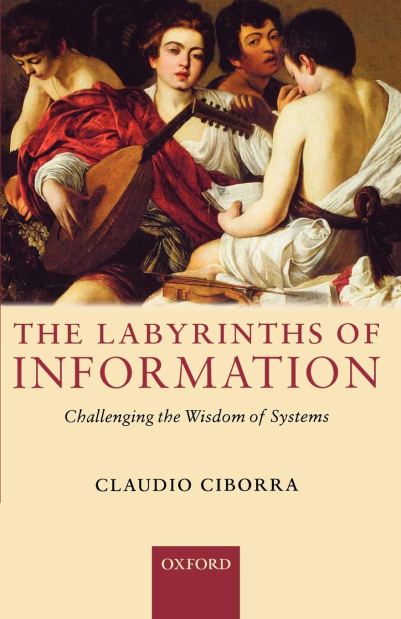
The late Claudio Ciborra (1951-2005) was an information systems researcher, organizational theorist, and Chair in Risk Management at the London School of Economics. Energetic, pioneering, unafraid to take a contrarian position, his work remains thought-provoking for readers today – even though he wrote on information, communication technologies, and organizational theory for a pre-smartphone age.

The Labyrinths of Information, published three years before Ciborra’s death, is a slim but densely written volume which sets out to “challenge the wisdom of systems”. It puts the complex and ambiguous realities of human existence and interaction at the heart of research into information systems and business processes.

Among other questions, Ciborra asks: Why are systems ambiguous? Why do they not give us more time to do things? Is there strategic value in tinkering even in high-tech settings? Are age-old practices valuable for dealing with new technologies? What is the role of moods and emotional concerns in influencing how we think and act?

As he reminds us, “the very definition of information systems as a set of technical […] and human resources devoted to the management of information in organizations spells out the composite nature of the field.” Humanity is always woven into the fabric of information systems.

Ciborra challenges our tendency to describe how information technology is used in terms of rationality and formal method. Academics, management consultants, journalists and other commentators tend to frame what is happening in business in terms of established concepts, neat little pigeonholes for the messy business of the world.

They tend to share basic assumptions: “there is a complex problem to be solved or a task to be executed; a corresponding strategy is deployed to achieve the goals and solve the problem; and a new structure is put in place to implement the solution.”

“To be sure,” Ciborra goes on to say, “decision makers would admit that day-to-day management is run in a more organic, ad-hoc fashion, and that textbooks and journal articles seldom seem to capture the intertwining of market events and managerial responses.”

Often rationalizations are brought in after the fact, and the “gap between what theoretical, ex post explanations and models can deliver and the actual garbage-can style of managerial choice is considered to be a fact of life by practitioners, and an unavoidable result of the limitations of any modelling approach[.]”

Yet Ciborra wants to move away from this approach, attending precisely to what he calls “the hidden or dark side of information systems […] focussing on the obvious, the workaday, and the very well known to any practitioner in the field.” He’s not excited by the latest management buzzwords or theories, and he’s disdainful of their “hospitality on PowerPoint slides by consultants and practitioners.”

Ciborra seeks improvisations, hacks, awkward real-life experiences, and the hard work involved in taking care of complex systems. He probes at the blank space papered over in presentations by phrases such as “You know no organizational model will fully capture the actual flow of events”, “The strategy was well laid out, but then, as you know, life is interesting because it is full of surprises”, and, simply: “You know what I mean.”

He builds his collection of essays around seven words, deliberately chosen for their unfamiliarity to English speakers – words that are meant to stop us in our tracks, shake us out of routine thinking, and apprehend the world of organizations and information systems anew.

No précis can fully do Ciborra’s rich, complex little book justice. But I can take you through a tour of those seven magic words to get you started. Magic for beginners, if you like.

Read more

Interview with Peter Morville: Planning for Everything in Times of COVID-19

Peter Morville is one of the pioneers of information architecture and user experience, working with clients including AT&T, Cisco, Harvard, IBM, the Library of Congress, Macy’s, the National Cancer Institute, and Vodafone. His books include Information Architecture for the World Wide Web, Intertwingled, Search Patterns, Ambient Findability and, most recently, Planning for Everything: The Design of Paths and Goals.

With a background like that – and more than a quarter of a century’s experience in helping people and organizations to plan – I was keen to talk with Peter about what he was learning from the turbulence of the COVID era. We spoke early in October 2020.

Peter Morville

A man writes a book called Planning for EverythingHow has this year affected your paths and goals?

2020 is a special year, in all sorts of terrifying ways, but I think that the trends towards unpredictability have been growing for us in recent years. It’s not just 2020, right?

In my book, Planning for Everything, one of the biggest encouragements is for people to be mindful of the balance that we strike between planning and improvisation. Even though it’s a book about planning, part of my message is that we should have humility when we think about the future, and our ability to predict or control it.

I remember several years back talking with a friend who was spending some time in Rwanda. She said that, when she was there, it was a country where it was harder to plan that it was in the United States. There were more unexpected things that happened, you couldn’t count on stability, even down to the level of deciding that next Wednesday was going to be a good day for your coffee date, because something might come up.

Stability has been unevenly distributed around the world, probably forever. In countries such as the UK and the United States, many of us have been fortunate to enjoy significant amounts of stability and predictability, where we can say, “I’m going to plan a vacation in three months, or a wedding in nine months.” Many of us have a lifetime of experiencing that the things we plan, happen! 

The last few years have really eroded our sense of confidence in our ability to plan for the future. I would say in the United States right now, I’ve never experienced a period where there’s so much uncertainty, whether that’s from COVID-19, climate change and wildfires, the upcoming presidential election, civil unrest…Planning a vacation three months from now seems a bit crazy!

Sometimes instability creates opportunity as well as jeopardy. Obviously one wouldn’t wish this pandemic on the world, but can you see opportunities arising from the current moment?

Read more

“The first, the fast, and the least reluctant to change will succeed”: Interview with Saskia Van Uffelen, Digital Champion for Belgium, Part 2

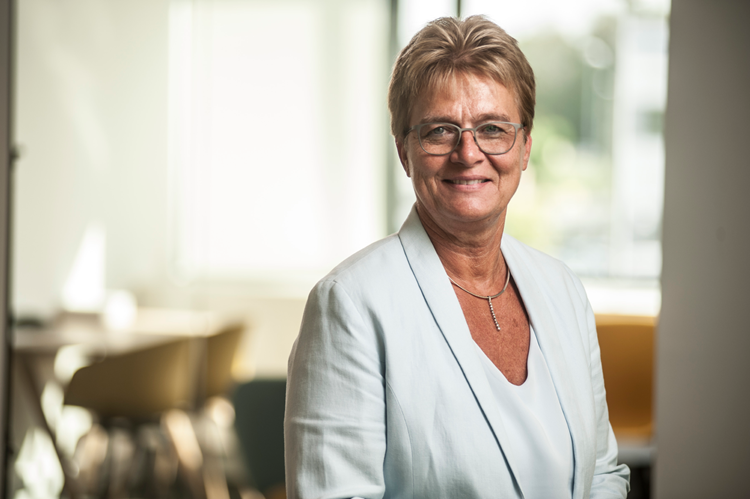
Saskia Van Uffelen is the Digital Champion for Belgium, tasked with promoting the benefits of digital society as part of the European Commission’s efforts to ensure every European citizen acquires the digital skills they need to remain productive, employable and enfranchised. After a career encompassing roles at Xerox, Compaq, HP, Arinso, Bull, and Ericsson, she is currently Corporate Vice President for the French group GFI, supervising developments in the Benelux countries. Saskia is also the author of Dare For Tomorrow: Leading, Working, Learning, and Living in a Digital World. You can read the first part of our interview here.

Image

As Digital Champion, you have an interest in the future of the public library, an institution which is also very dear to my heart. The social changes you’re describing will have an impact on our civic information institutions, and the context they operate in.

You’ve said elsewhere that, “If anything has remained the same in your organisation (culture, processes, eco-systems), it will simply not work anymore. You need to adapt your company and your culture. Adapt or die.”

Are libraries too prone to thinking about what used to work, instead of looking strategically to the future and to forces outside their sector?

Read more