Peat Hub Ireland Report including Peatlands 2050 scenarios

“What I liked most about the workshop was getting to experience a framework for discourse between different stakeholders where everyone was approaching challenging ideas with an amount of vulnerability and openness. Things like the icebreaker question and being pushed outside of our cognitive comfort zones led to a kind of shared sense of uncertainty and unease that made it much easier for conversation and creativity to happen.”

Words from a participant at the scenarios workshop I led as part of the Peat Hub Ireland initiative, funded by the Irish Environmental Protection Agency and delivered by UCD colleagues under the leadership of Florence Renou-Wilson, including David Wilson, Kate Flood, and Elena Aitova.

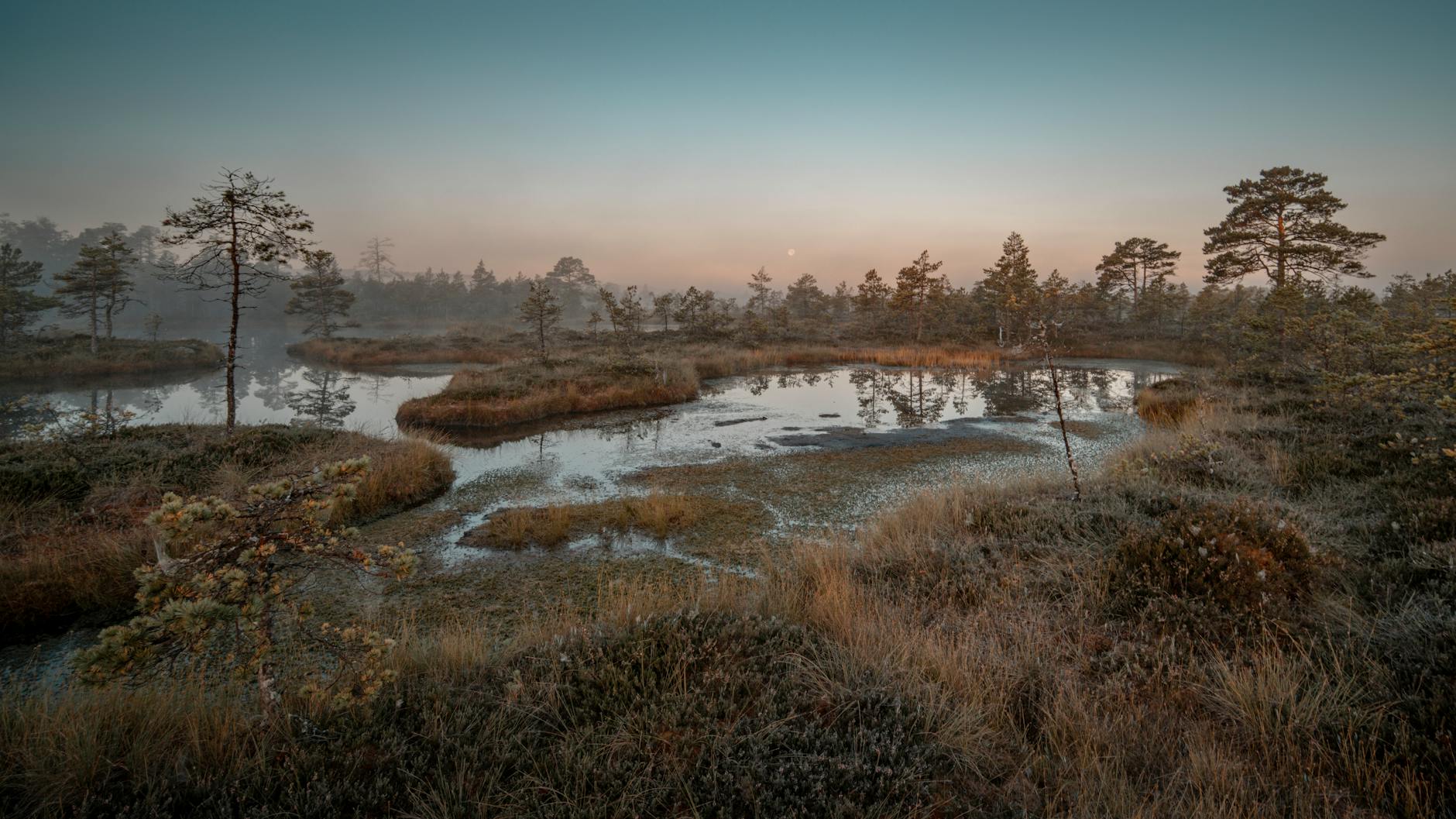
You can see the full report, including an appendix on the scenarios, at the EPA website. Thanks to all the colleagues and to the host of our scenario session at Tyrrellspass, County Westmeath – it’s a rare delight to run a scenario workshop with a ninety minute bog walk in the middle of it…

Peat Hub Ireland: 2050 Scenarios

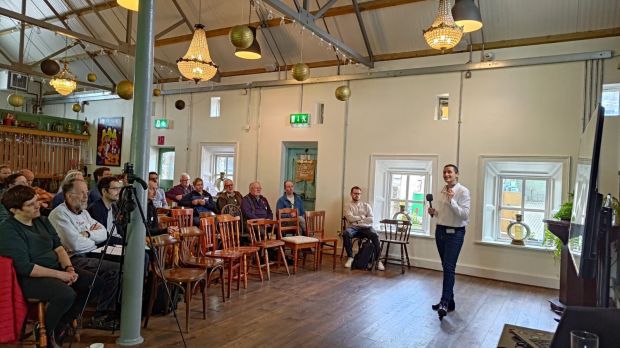
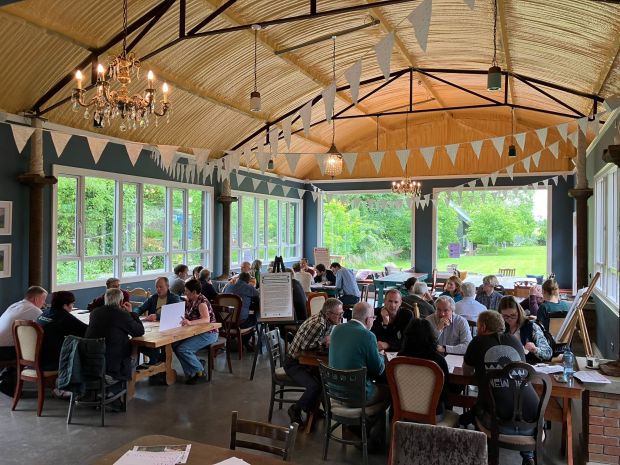
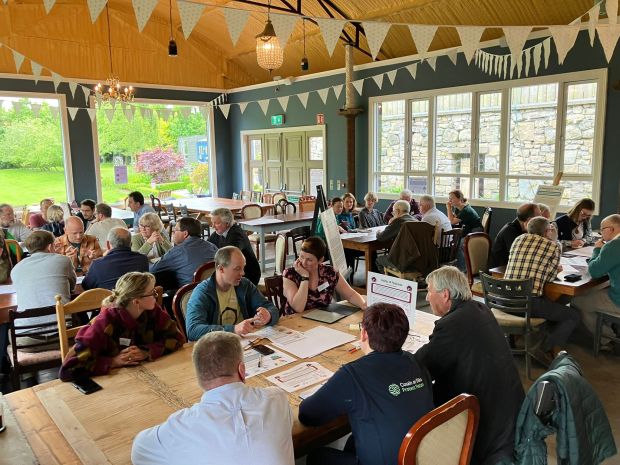
I’m just back from collaborating with the Peat Hub Ireland team on a scenarios workshop which invited participants from across the communities and institutions involved in Irish peatlands management to explore three visions of the world in 2050.

Historians, scientists, community members, officials, archaeologists, educators, researchers, activists, and businesspeople all gathered to find new ways to think about sustainability and custodianship, suitable for times of turbulence and unpredictability.

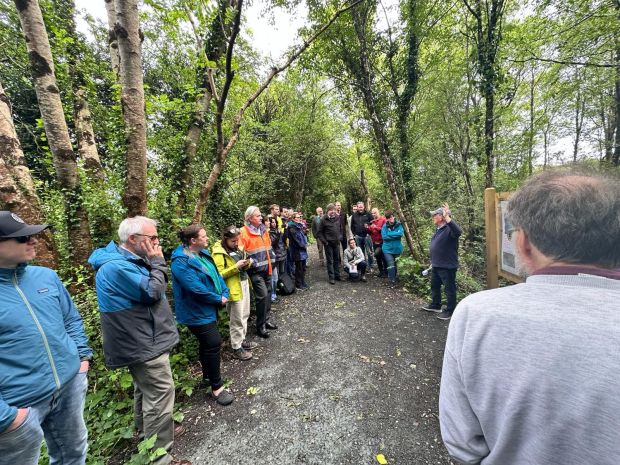
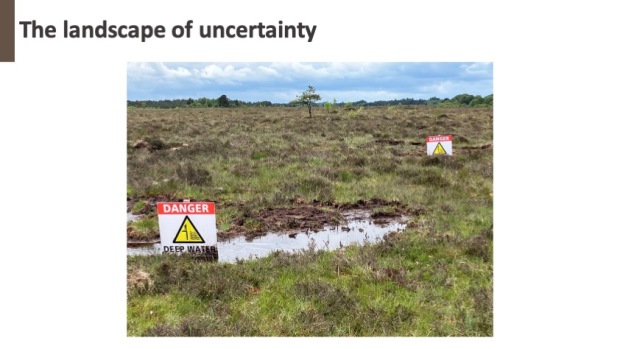
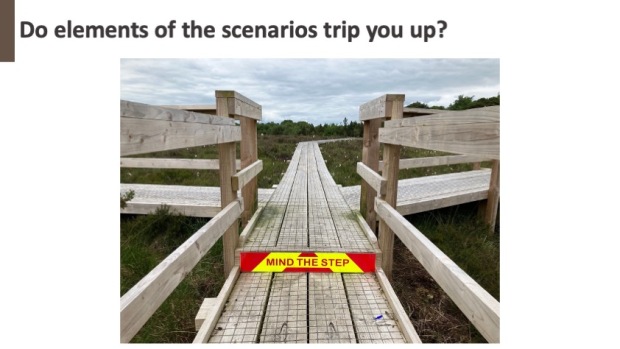
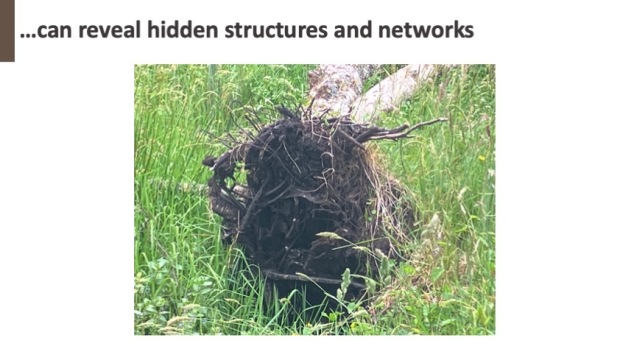
It was quite unique to run a scenarios day incorporating a two-hour break for a lunchtime country walk – but being out on the bog gave us a shared experience of the landscape whose future we were exploring, and some useful metaphors for dealing with conditions of uncertainty.

Our work built on the scenario elements of the Horizon Europe-funded IMAJINE project, which were led by the University of Galway’s Marie Mahon and myself. Peat Hub Ireland’s Florence Renou-Wilson, David Wilson, and Kate Flood worked with me to develop IMAJINE materials into a fresh set of scenarios for the world of peatlands management in 2050. We were supported in delivering the workshop by colleagues including Elena Aitova and Liz Bruton.

You can find out more about Peat Hub Ireland at their website – and there’s an account of the day from the Department of the Environment, Climate, and Communications’ Dave Dodd here. Stay tuned for more about the scenarios, too.

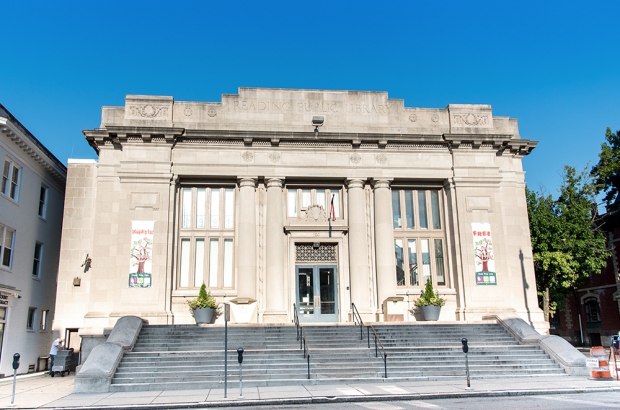
Reading Public Library: Scenarios to inform resilient strategy

“The flexibility of the plan in part helps us to present our goals and efforts, because those goals and efforts can reshape as real world events interfere with business as usual…It really leaves room for creativity and the flexibility to adjust to the real world.”

Melissa Adams, executive director of Pennsylvania’s Reading Public Library, interviewed by Nancy K. Herther of the University of Minnesota, explains how a COVID-era scenario planning process informs robust and resilient strategy for her organisation and community.

“Another advantage was experienced during the transition between executive directors. The plan was decidedly not the prior executive director’s plan, it was the organization as a whole body’s plan. This made it easier for me, as the incoming executive director, to keep the plan moving forward…the article we co-authored has helped me really take ownership of this strategic plan.”

Reading Public Library, Pennsylvania

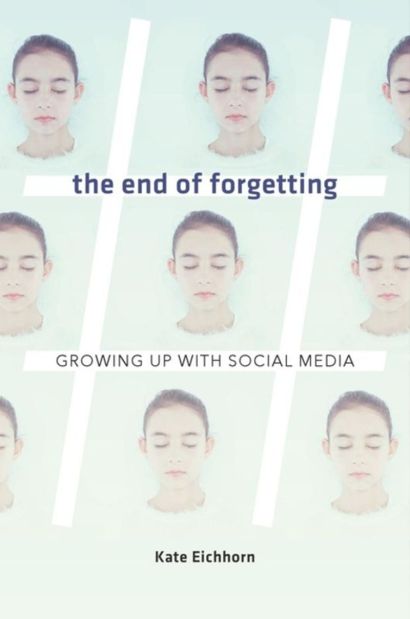
“What’s after archives?”: Kate Eichhorn and the End of Forgetting

I’m proud to present a Q&A transcript with the New School for Social Research’s Professor Kate Eichhorn, author of The End of Forgettting.

We spoke earlier this year to discuss who gets to tell their own story in the age of social media, what are the consequences to such stories being shared, and what power do we have to forget or be forgotten in this new digital era? This conversation formed the basis for an instalment of “Scripturient”, my column in Information Professional magazine, but now you can read a Q&A expanding on that text, below.

Matt: When did the idea for The End of Forgetting coalesce?

Kate: Prior to working on this book, I had been thinking about and writing about archives for many years. There was a moment when I literally asked myself, what’s after archives? I immediately thought, it’s forgetting. But all of my colleagues who work in archives were very quick to remind me that the archive and forgetting are inextricably linked. So, this book was a kind of natural extension of my earlier work on archives. But the book, while not a personal book, is informed by personal circumstances. On the one hand, when I started working on the book, my kids were maybe 11 and 13, so I was certainly thinking about the tween girls and their relationship to social media. As a parent, I also started to think about how different my life would have been had I been on social media when I was their age. I am almost certain that I would have either said or done things I would have regretted and that there would have been consequences. 

Read more

Scripturient: Data Ethicist Sam Nutt, London Office of Technology and Innovation

“People want to discover the future together, and that future, for us, is always a shared one.”

From the pages of Information Professional magazine, my most recent “Scripturient” column, featuring Sam Nutt of the London Office of Technology & Innovation (LOTI) on “doing data ethically” – going beyond research and compliance to help “practically discover what the values are which should be driving how we use data: not my values, but those of the organisation, of the city, and of the residents we serve.”

Human-Land Podcast: Spatial Justice and Realms of Citizenship

I joined the Swedish University of Agricultural Sciences’ Human-Land podcast to talk about social justice and foresight in spatial planning, and their links to environmental psychology.

As environmental psychologists explore the relationship between human beings and their environments – including how humans shape those environments and are shaped by them in turn – foresight work allows us to explore how that relationship might change in times to come, and how our ideas of what is fair or just in terms of access to different environments might also evolve.

Host Hannah Arnett and I spoke about the IMAJINE scenarios project and the possiblity of an approach to questions of space and justice that brings together a range of disciplines and perspectives on the common ground of the unwritten future.

You can listen to the episode now on Spotify and Soundcloud.

More than a Game: Scenario Planning, Imagination, and the Public Library’s Future

For Public Libraries Quarterly, Bronwen Gamble and Melissa Adams of the Reading Public Library co-wrote an article with me on our scenario planning journey through a leadership transition in the depths of the COVID-19 pandemic.

More than a Game: Scenario Planning, Imagination, and the Public Library’s Future” explores the use of frugal, online scenario planning methods during the pandemic and the benefits of a scenarios process in times of leadership transition.

It builds on Dale Leorke and Danielle Wyatt’s notion, expressed in their book The Library as Playground, of the library as “a space and institutional order innately imbued with playful qualities” to consider how libraries may be the perfect hosts for scenario processes which “play with expectations, hopes, fears, and desires, in a strategically consequential game of ‘What if?'”

Find out more about “frugal” scenario planning on the Oxford model from Rafael Ramirez and Trudi Lang at Saïd Business School, University of Oxford here.

Everyday resilience: Rural communities as agents of change

I’m very pleased to have played a small part in this work on the future of Irish peatlands: geographers Kate Flood, Marie Mahon, and John McDonagh of the University of Galway have published a new article on “Everyday resilience: Rural communities as agents of change in peatland social-ecological systems“.

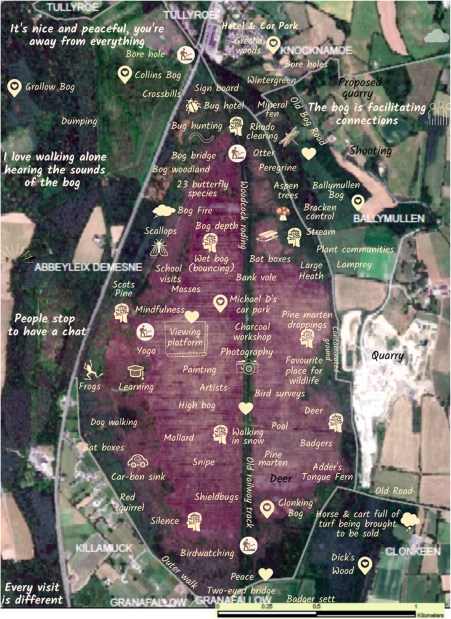
Their project included “Bog Scenarios” developed frugally with local communities. These used the past, present, and future of the peatlands to explore change through time including past events at the site; how the bog is currently changing; and hopes for the future.

Read more in the Journal of Rural Studies.

Community map of Abbeyleix Bog reflecting local knowledge and experiences

IMAJINE: Visions of the Rural in a Globalised World

In the latest response to the IMAJINE scenarios for the future of European inequality, Professor Esther Peeren of the University of Amsterdam explores the representation of the rural in each scenario, relating these visions back to concerns and challenges in the present day.

Drawing on Donna Haraway’s work, she reminds us that, “Rather than seeking to predict the future or escape from the present, these are ways of ‘staying with the trouble’ in the present, for the future.”

Esther highlights “the dangers inherent to the fantasy of the rural idyll as an isolated paradise shaped by a homogenous community, as well as underlining that such isolated worlds are not exclusive to the rural but may also exist in urban areas and online”; and she reminds us that even when the urban-rural divide seems to be overcome, its inequalities can be displaced “to the global and even interplanetary scale”.

Find Esther Peeren’s response to the IMAJINE scenarios here.

The full IMAJINE scenario set can be found here.

The RURALIMAGINATIONS project “Imagining the Rural in a Globalised World”, which Esther heads, can be found here.

X365: The Graphic Novel, by Neill Cameron

In early 2020, acclaimed comic creator Neill Cameron began to write and draw the one-panel-a-day comic X365: “No plan going in, no preparation. I’d just make a story up and see where it took me.”

When the pandemic hit, it reshaped the tale Neill was telling, of parallel worlds entwined.

The full story is now being produced in a collected edition on Kickstarter, including an interview I conducted with Neill about the project as it reached its conclusion.

See more at the Kickstarter project page for X365: The Graphic Novel.