How do you get a whole nation thinking about the challenges which lie ahead of it?
How can you help a community to solve seemingly intractable problems?
Which institutions need to be part of the discussion about society’s future directions?
I visited Norway this week to speak and run a workshop at the national library conference, #biblkonf2018. I asked these questions, and more, with a focus on how libraries might serve the innovation agenda articulated by Norway’s innovation agency, Innovasjon Norge. (You can see slides from the keynote here).
Matt Thanks for joining me, Rob. I got in touch for this chat after reading the section of Spedding’s book where he describes changing his approach while nursing a pint of beer:
“If thinking differently was going to make me a better runner, I could do it sitting in the pub. I smiled to myself and took another drink as I figured I was making myself a better runner right now.”
And I thought of you!
Rob
That is awesome! I am no runner, but I do get to thinking differently. Sometimes that happens whilst nursing a beer… sometimes it is over a coffee; or even descending the stairs… But a beer helps!
Often because it’s not at work, you’re in a different place, more relaxed and can take a longer, more considered, view of things and put 2 and 3 together better than when distracted by what goes on at work.
In a sense, it’s giving yourself permission to have some thinking time.
“If thinking differently was going to make me a better runner, I could do it sitting in the pub.”
Charlie Spedding missed a train, bought a beer, and changed his life.
The English marathon runner, a pharmacist by trade, found himself in a pub forty years ago, pondering how to make the big time.
“I had committed myself to running when I walked away from my father’s business, but I didn’t seem to know how I was going to fulfil whatever potential I had. All I had done was burn my bridges, and I felt unsure about how to make progress.”
All lives come to turning points, by choice or by chance or by decisions over which we have no control. So how do we make the most of them? What options are available to us?
I asked Justin Hoenke to join me for an online chat about community and libraries and a thousand other things. Justin is a highly accomplished, much-loved American library director who currently resides in rural Pennsylvania, where he leads the Benson Memorial Library while his family is restoring an old church as a community space.
Justin’s work reminded me of Philip Larkin’s poem Church Going – “A serious house on serious earth it is, In whose blent air all our compulsions meet” – so we each read that prior to our chat.
It made for a nice jumping off point into a long talk about service, legacy, academic vs. public libraries, and the ongoing dance of community engagement.
Matt
Hello! How are you?
Justin
Good sir, I am well. How are you? We’ve got a lovely spring morning with the birds singing songs. I plan on watering some plants after this. I think this is ideal.Read more →
Rich is an exceptional storyteller and advocate for libraries, and alongside his comms work he has created the Ann Arbor Stories podcast and a spinoff publication, The Book of Ann Arbor.
I began by asking Rich how he came to join the team at AADL.
The International Federation of Library Associations, IFLA, has released a new guide designed to help librarians and library advocates to tell compelling stories about library activities, projects and programmes, showing their impact on communities and people’s lives.
“Libraries and the Sustainable Development Goals” is a practical document and storytelling tool, linked to the United Nations goals which IFLA uses to demonstrate libraries’ global relevance.
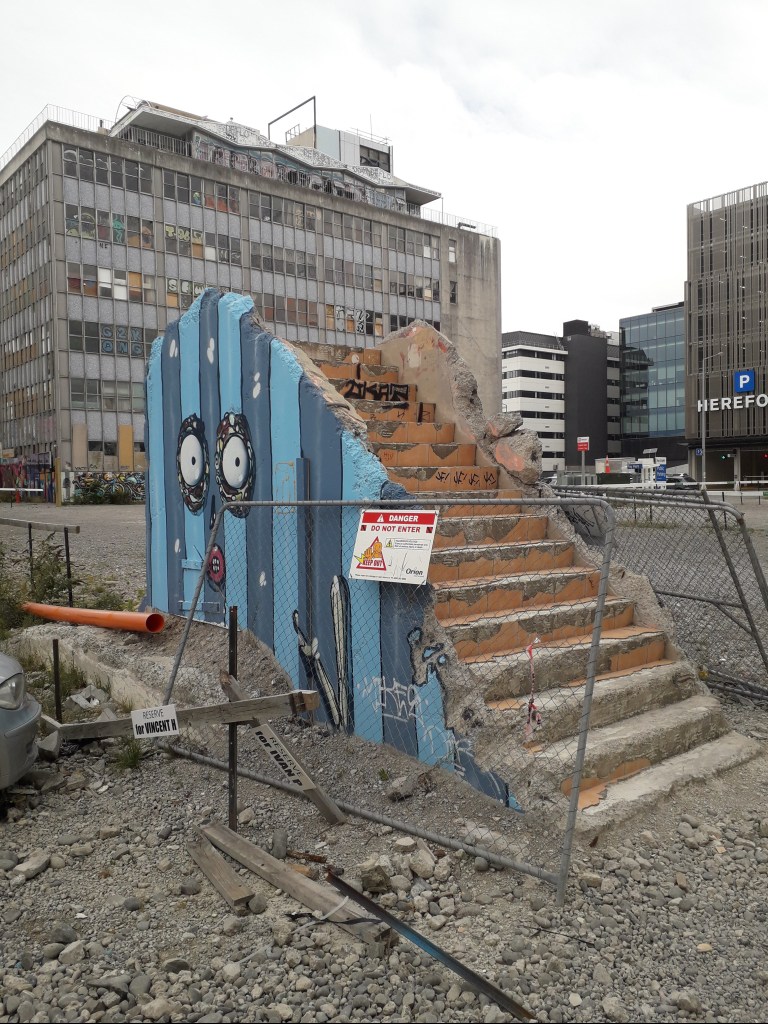
Recently I had the opportunity at work to attend a course on character strengths run by the Mental Health Education Resource Centre. It’s great that these opportunities for healthcare professional development are being opened up to librarians. Last year I went to one of their courses on grief. This was an incredibly valuable session where I learnt a lot; one thing that stood out to me was that we don’t just grieve for people, we also grieve for places and things, particularly in times of change. Sometimes these aspects are inextricably linked.
Because I work in the centre of Christchurch, I am surrounded by sites of memory and sites of mourning. Read more →