Humanities @ Oxford: Death, dying, and afterlife in the age of AI

Alongside my other duties, I’m pleased to take on a new role leading the project “Death, dying, and afterlife in the age of AI” at Oxford University – a collaboration between the Uehiro Oxford Institute and TORCH – The Oxford Research Centre in the Humanities.

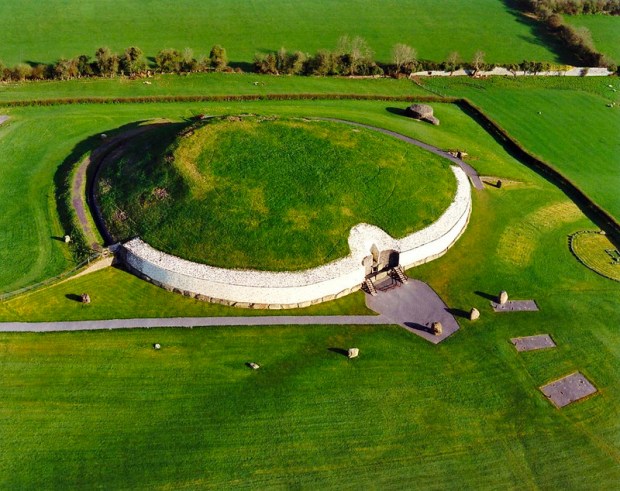
The prehistoric Newgrange mound, one of the world’s oldest extant funerary monuments, by Flickr user Ron Cogswell – CC BY 2.0

Emerging capabilities in artificial intelligence create the possibility of new relationships between the living and the dead.

After physical decease, what digital entities might live on in our stead? What agency will they have? How will the underlying technologies be developed, deployed, and managed? How will identity be authenticated?

What will be the impact on how individuals, families, communities, and societies approach the end of life, its associated rituals, and the ways in which we remember those who are gone?

Our team will use scenario planning to explore these questions and more, envisaging different future contexts for the relationship between AI and the afterlife, encompassing all aspects of memorial culture, funerary practices, and posthumous existence in the digital world.

Learn more at the TORCH website.

The Important Thing Is Elsewhere

The Family Tree

Before all this, I went to my grandfather’s house in Spain. I’d never really liked it. It wasn’t the house he’d lived in as I grew up, which was just down the road from the new place. That had been the house of memories, the place where my grandmother had died before I was born.

He bought the new place when it was time to find a smaller, more manageable property, as he entered his eighties and I my twenties. I worked with him on both houses, helping him to do up the old one and improve the new. I painted walls white and coated tiles with red rubber sealant; mixed cement and ferried endless wheelbarrows of it to wherever he was working that day. He chided me for my cement mixing technique, for the way I handled a paintbrush or a pickaxe, the way I clambered up and down ladders and scaffolding, fetching tools and materials. It was the happiest time.

He died, digging over the garden of the new property with a rotorvator, when I was 23. He’d have been glad to go that way; he’d always talked of “falling off his perch” rather than a dreaded slow decline, and even when we were working together on the new place, he’d still pull stunts like climbing into the tree he was pruning, clinging to the branch above him while standing on the one below, which he was sawing off, jumping up and down to speed the process.

Read more

Afterlives of Evidence: A Response from @katbhave

New Zealand-based librarian Kat Moody read my post on Afterlives of Evidence, archives, and grief last week. She offers this response, exploring military history, natural disasters, landscape and memory.

20180205_182124
Photograph by Kat Moody

Recently I had the opportunity at work to attend a course on character strengths run by the Mental Health Education Resource Centre. It’s great that these opportunities for healthcare professional development are being opened up to librarians. Last year I went to one of their courses on grief. This was an incredibly valuable session where I learnt a lot; one thing that stood out to me was that we don’t just grieve for people, we also grieve for places and things, particularly in times of change. Sometimes these aspects are inextricably linked.

Because I work in the centre of Christchurch, I am surrounded by sites of memory and sites of mourning. Read more

IFLA and Beyond: Afterlives of Evidence

Trigger warning for death, violence.

This week, I talked about building new partnerships and opportunities for libraries at the IFLA President’s Meeting in Barcelona – a global gathering of library leaders.

We looked at ways to identify fresh connections between libraries’ mission and the goals of other institutions and communities, with a special focus on healthcare.

Then I read about new research exploring whether it is beneficial for bereaved relatives to view crime scene materials after violent death.

This complex and sensitive topic is one which has potential to bring solace to grieving families – but it must be approached carefully.

An article in The Conversation on the benefits of viewing crime scene photographs also draws attention to growing public interest in forensic images, the preservation of those images as cultural artefacts, and their wider circulation in the digital age.

The Conversation quotes legal scholar Katherine Biber pointing out that “we lack a forum to think about…’the afterlives of evidence.'”

Yet the afterlife of evidence is one of the key fields of librarianship.

The issue raised is precisely the kind to which librarians bring useful expertise, experience, and values.

There are questions of archiving and access; of sensitive work with clients in difficult emotional circumstances; questions, too, about the media and context in which this material is shared.

All of this lies firmly within the territory of today’s librarians and the experience of knowledge workers like my friend and former Auckland Libraries colleague Natasha Barrett. Natasha, in addition to her library work, has held roles with the duty of repatriating Indigenous remains from cultural institutions.

So could librarians be leading this conversation with police, social workers, and representatives of the bereaved?

The Conversation authors also write that:

We need to move away from approaching grief as a medical event subject to diagnosis, and instead turn our attention to the diverse needs of family members as they comprehend the realities of death, and the meanings of that death in their own lives.

This, too, is a wider discussion to which libraries can contribute – as in a 2016 “death literacy” panel discussion which I ran for the State Library of Queensland. That event, recorded as a one-off library podcast, formed part of a “microfestival which explores, challenges, and celebrates our understanding of death, dying, and bereavement”.


These wider public engagements sit alongside the more sensitive work required to deal with individual forensic archives in the context of violent death, and alongside work with health practitioners as well as the general public.
screen-shot-2016-05-26-at-19-55-41

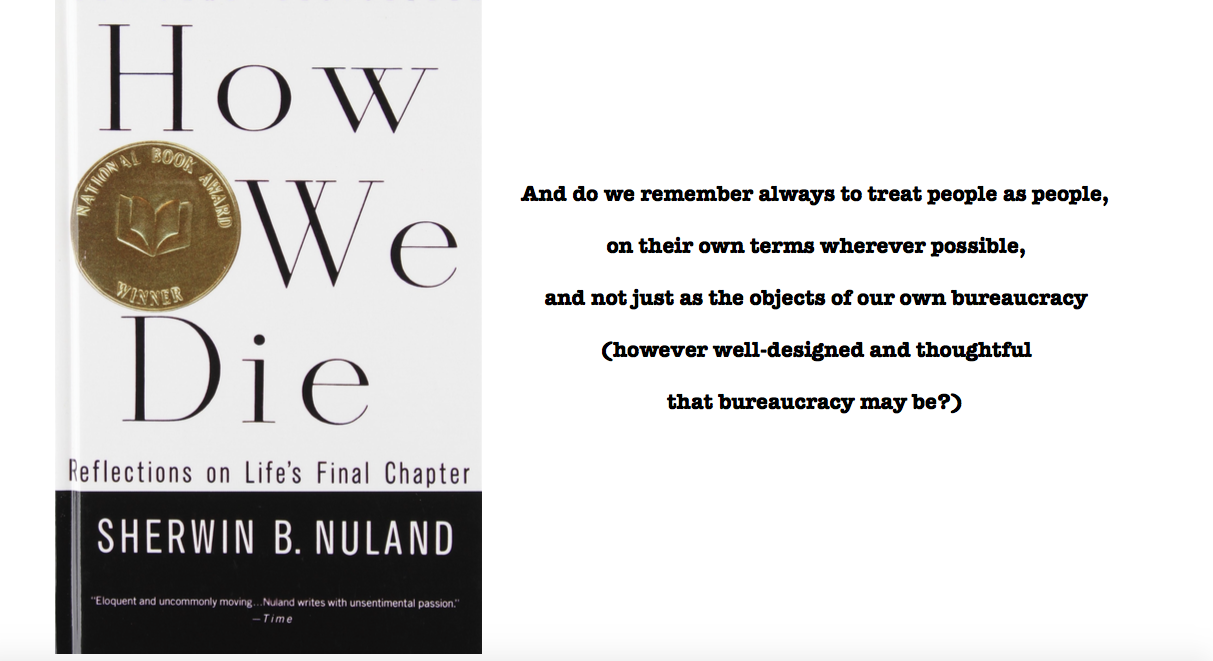
In both broad public engagement and private sharing of forensic media, there is a significant opportunity for brave, principled, and caring knowledge workers to enter this difficult terrain and bring their skills to bear on how families and communities deal with the end of life.
Becoming death literate – panel discussion

website-banner2

After Brisbane’s first Deathfest – a microfestival which explores, challenges, and celebrates our understanding of death, dying, and bereavement – I’m pleased to share a panel discussion which addressed grief, death, and end-of-life care in modern-day Queensland.

Joining me were Fiona Hawthorne, general manager at Hummingbird House, Queensland’s first children’s hospice; Ian Mellor, who manages body bequests for Queensland University of Technology; and Dr Sarah Winch, healthcare ethicist at the University of Queensland and author of Best Death Possible.

In an age when literacy has come to mean so many things – always with a sense of empowering people to read or make sense of some new terrain, topic, or experience – what would it mean for us to become truly “death literate”?

You can listen to the panel discussion now by clicking on this link or visit the State Library website.

This slideshow requires JavaScript.

For more on healthcare and wellbeing work during my Queensland residency, read  “On Health and Wellbeing” and “Giant Robots Need Therapy Too“.

For more on Deathfest, visit the Metro Arts website.