Open your eyes: strategy, scenarios, and artificial tears

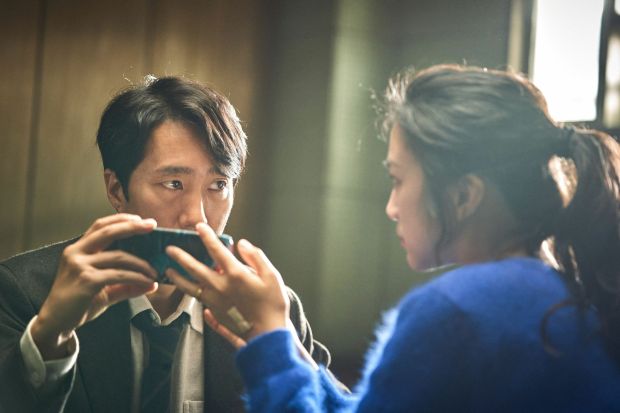
I recently watched Park Chan-wook’s tremendous new film Decision to Leave. Styled “a romantic thriller”, it deals with a detective who falls for a suspect in the murder investigation he is leading.

Hae-Jun, the insomniac detective, investigates the death of a former immigration officer in an apparent mountaineering accident. Suspicion falls on the officer’s Chinese wife, Seo-Rae, whom the cops think isn’t showing enough grief. As Seo-Rae and Hae-Jun become entangled beyond the scope of the investigation, the mystery deepens: who is snaring whom?

A 1960s song which recurs throughout Decision to Leave, “Mist” by Jung Hoon Hee, highlights some of the movie’s themes.

As director Park explains on the MUBI podcast:

The beautiful lyrics just hit my heart straight away, especially the part where it says, “Open your eyes in the mist.”

[…T]hroughout the song, you get this impression that the one that you love is leaving you, and you see them in silhouette, obscured in this deep fog; that’s the dominating image in the song.

And then, towards the end, you hear this lyric: “Open your eyes in the mist.” And that is a command to you, to open your eyes and take a straight look at that person.

So the command is, even though it’s misty, things are ambiguous, you have to make an effort to see clearly. Now, what is this song commanding you to take a look at straightforwardly? I think you can fill in the blank. It could be the person you love, or your own emotions, or just reality in general.

That was really the inspiration [for Decision to Leave]. It conjured the image of a detective, someone who always tries to take a clear look at his situation. And that’s when I decided to put in the scenes where the detective uses artificial tears. He always uses them to kind of clear his eyes, whenever there’s a decisive moment that he really wants to take a straightforward look at.

For so many of us in this era, we too find ourselves peering through the fog and mist of the so-called “TUNA conditions”, characterised by turbulence, unpredictable uncertainty, novelty, and ambiguity. No matter how hard we try to resolve these conditions, we cannot be fully sure of what is going on or what will happen next.

When I heard this interview with Park Chan-wook, I was intrigued by the story about the pop song which inspired the movie, but I was also startled by the term “artificial tears”. I’d never heard this phrase used to describe eye drops before. I loved it.

It made me think how, in TUNA times, we can look at the world around us, considering the uncertainties with the power to reshape our immediate environment, and create future scenarios to help us think about how those uncertainties might play out in times to come.

Those future scenarios are designed to challenge our assumptions – not to be dystopian or utopian necessarily, but to go beyond our already-existing expectations, hopes, and fears, so that we see from outside of our old frame of reference and, taking the vantage point of an imagined future, see our own here-and-now more clearly.
Read more

Fast, deep, and uncertain: the currents of thought and feeling

Big whorls have little whorls which feed on their velocity,
And little whorls have lesser whorls and so on to viscosity

Lewis Fry Richardson

These lines appear in Sarah Dry‘s tremendous book Waters of the World, a work of history which explores how scientists, researchers, and passionate amateurs gradually pieced together an understanding of our global climate system. The story spans continents and generations; some of its characters collaborate or compete, while others work alone, unaware of the wider context in which their endeavours might be received. Some don’t even live to see the difference that their research will make to the world. There are false starts and dead ends. Politics, from the sweep of colonialism to the pettiness of institutional squabbles, plays its part; and for all that this is a tale of systematic observation and theorisation, it’s no less deeply human for that. As one of Dry’s scientists, Joanne Simpson, put it:

“I think I am generally perceived as a pretty cool character. Nothing could be farther from the truth. To understand how a woman, or a man, for that matter, creates original work in any field, it is necessary to penetrate the emotional masks, and my masks have intentionally been hard to penetrate.”

Dry’s book, and particularly its chapter on “Fast Water”, exploring the currents of the ocean’s depths, makes me think of the ways that emotions can swirl around us and within us when we address difficult issues, alone or together.

Read more

The upside of inconvenience

As transport strikes over pension reform in France bring disruption to trains, planes, and the Paris Métro, I’m reminded of a piece of research conducted by the Universities of Oxford and Cambridge a few years back.

Drawing on anonymised data from London’s Oyster travel card, researchers explored the impact of transport strikes on individual commuters’ Tube journeys.

Researchers discovered that a significant fraction of regular commuters who changed their route because of the strike, stuck to the new route afterwards.

Though the proportion was small (around one in 20), a cost-benefit analysis of the time saved by those who changed their daily commute revealed that the strike actually brought economic benefit: the amount of time saved in the long run outweighed the inconvenience of time lost during the strike.

“The London Tube map itself may have been a reason why many commuters did not find their optimal journey before the strike,” notes a writeup of the research from the University of Oxford. Because the actual distances between stops are distorted by the map, travellers sometimes make inefficient choices; the strike, by forcing them to choose differently, revealed more efficient ways for them to make their daily commute.

Something similar can happen with strategic conversations. It can feel like a fuss, an imposition, or a distraction – when there is plenty of work to be getting on with in the here and now. We talk of “analysis paralysis” and our bias is towards doing something, rather than reflecting on our identity, our journey, or what might await us if we ever get to the far horizon.

But sometimes the very friction generated by these discussions is the source of new insights. Sometimes the journey we have to travel during such a conversation reveals that our current map was not best suited to achieving our goals. Changing the texture of our interactions in a workshop or discussion can give our minds fresh purchase on the fundamental questions of what we do and with whom, how we do it, and why.

Read more

Oxford Answers: Using scenarios to understand the changing face of Europe’s cities and regions

The landscape of our cities and regions today is characterised by turbulence, uncertainty, novelty, and ambiguity – the so-called ‘TUNA’ conditions. Forces that lie far beyond the places where we live and work influence choices close to home.

In our search for security and prosperity, where should we be looking when the future of our cities and regions is so uncertain?

For the Saïd Business School’s ‘Oxford Answers’ blog, Michael Woods, Marie Mahon, and I wrote about using the IMAJINE scenarios to explore the changing face of Europe’s cities and regions.

Planning for 2023: Black Box Organizations

A living organism can survive only by exchanging materials with its environment: by being an open system.

Vega Zagier Roberts

Every year, around this time, I like to share a tool which can help with your planning.

Though the shift from 2022 to 2023 is just a quirk of the calendar, the arrival of a new year tends to focus our attention on what’s coming. People make resolutions, use the holiday season to take stock and decide where they want to go next, or treat January 1st as a turning point for their lives at work or home.

This year, I want to share a tool which I created after reading Vega Zagier Roberts’ essay “The Organization of Work“. It explores organizations of all kinds – from projects to families, from teams to institutions – as “black boxes” with inputs and outputs.

It gets us to reflect on the pressures which are placed on us from within and without when we try to manage undertakings. It can form the basis for useful questions and reflections at the outset of a project, whether you carry out the task alone or with others. And it can also give insights into the state of a system which is already in place.

To start off, choose an organization, project, or undertaking which you want to reflect on. If you’re doing this task with others, you may each like to draw your boxes and follow the steps separately, or you can work together on, say, a shared whiteboard.

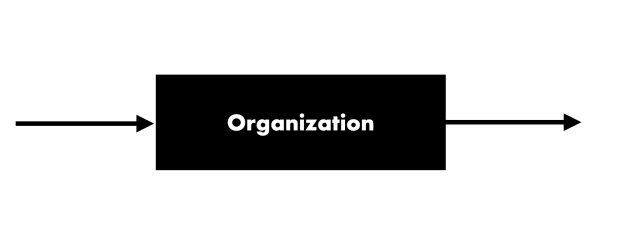
Draw a box like the one below, with an arrow going into it and an arrow coming out:

We can imagine that systems are boxes like these: something is put into them, they do their work, and as a result of this process, something emerges on the other side.

Read more

More than a Game: Scenario Planning, Imagination, and the Public Library’s Future

For Public Libraries Quarterly, Bronwen Gamble and Melissa Adams of the Reading Public Library co-wrote an article with me on our scenario planning journey through a leadership transition in the depths of the COVID-19 pandemic.

More than a Game: Scenario Planning, Imagination, and the Public Library’s Future” explores the use of frugal, online scenario planning methods during the pandemic and the benefits of a scenarios process in times of leadership transition.

It builds on Dale Leorke and Danielle Wyatt’s notion, expressed in their book The Library as Playground, of the library as “a space and institutional order innately imbued with playful qualities” to consider how libraries may be the perfect hosts for scenario processes which “play with expectations, hopes, fears, and desires, in a strategically consequential game of ‘What if?'”

Find out more about “frugal” scenario planning on the Oxford model from Rafael Ramirez and Trudi Lang at Saïd Business School, University of Oxford here.

Scenarios: Their Ends, Art, and Agency

Occasionally, I write a post in the spirit of “showing your working”: playing with one or more concepts, seeing how they fit together, what use can be made of them.

In today’s long read, I’m looking at the work of Alfred Gell, an anthropologist whose book Art and Agency explored the social efficacy of art: the way that artworks and the process of making them influences the thoughts and deeds of others.

If we take scenarios and other strategic artefacts as art-objects, what can Gell tell us about their making, their use, and impact?

Read more

Everyday resilience: Rural communities as agents of change

I’m very pleased to have played a small part in this work on the future of Irish peatlands: geographers Kate Flood, Marie Mahon, and John McDonagh of the University of Galway have published a new article on “Everyday resilience: Rural communities as agents of change in peatland social-ecological systems“.

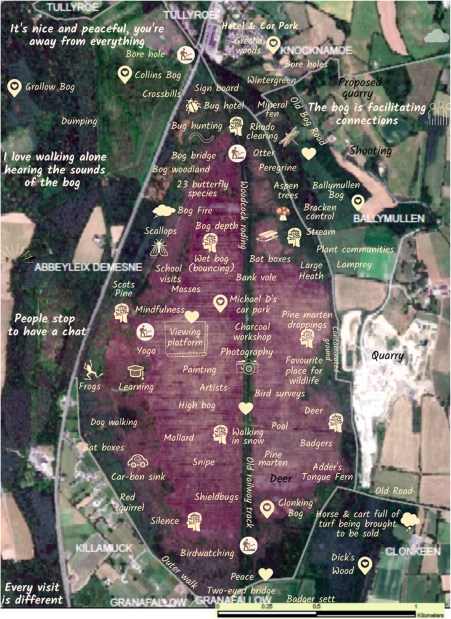
Their project included “Bog Scenarios” developed frugally with local communities. These used the past, present, and future of the peatlands to explore change through time including past events at the site; how the bog is currently changing; and hopes for the future.

Read more in the Journal of Rural Studies.

Community map of Abbeyleix Bog reflecting local knowledge and experiences

Hopper/Vermeer: Things that never quite were

New York’s Whitney Museum is currently hosting an exhibition on Edward Hopper’s New York, which I visited on a recent trip.

As the exhibition blurb puts it, for Hopper “New York was a city that existed in the mind as well as on the map, a place that took shape through lived experience, memory, and the collective imagination.”

The show is especially satisfying for its use of newly acquired archives, showing how Hopper and his wife Josephine Nivison Hopper collaborated in a lifetime of artistic production.

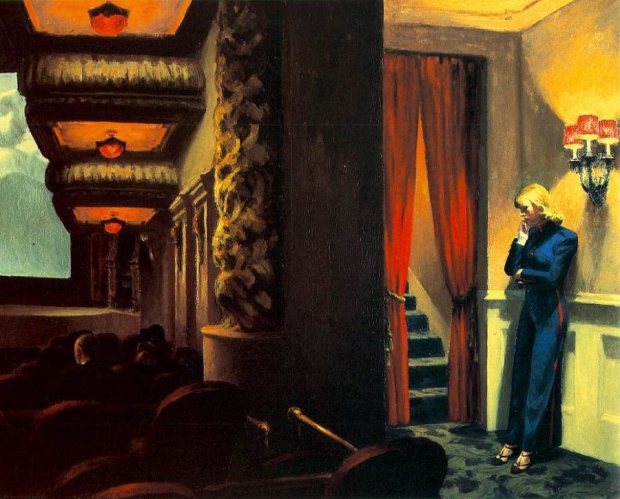
Works like New York Movie are exhibited alongside preparatory studies and sketches as well as photographs from some of the real-life locations the artists visited as part of their creative process.

We see just how fictive Hopper’s New York was: scenes created from amalgamation of multiple locations, with imaginary additions or even omissions, creating a city-that-never-was which is nonetheless powerfully evocative of New York specifically and a certain quality of mid-twentieth-century American life more generally.

I’m always seduced by sketches; I love it when people show their working. You can see the traces of their choices, the possibilities they pursued and then abandoned, especially when the artist is “thinking through drawing”.

Read more

Life after trends

In the memorable phrase of Ged Davis, a trend is a trend until it bends…or breaks.

For many of us, the pandemic era has been a reminder of this, as the course of events has not always followed the trajectory we were expecting.

Today, we sometimes hear talk of “megatrends”, too; Stefan Hajkowicz of Australia’s Data61 told me you could compare these to the powerful rip currents which pull swimmers out to sea.

Sometimes such currents are hard to spot, and researchers put dye in the seawater to make them visible. Savvy surfers can use rips to swiftly travel out from the shore to the point where they can catch a wave.

Perhaps thinking in terms of trends can work this way, too: using foresight to make a previously unseen tendency visible, using strategy to take advantage of it.

But what happens when the perceived tendency, mega or otherwise, bends or breaks? Our expectations are thwarted and we are reminded that a trend is a projection from the past into times yet to come. The ghost of yesterday’s future haunts our thinking in the here and now.

It’s not that tendencies don’t ever endure – sometimes they do. But it doesn’t always tell us much about what is coming next. After all, we can’t gather one shred of evidence or data from events which haven’t happened yet.

Read more