Scripturient: Handover

After five years, I’m passing ‘Scripturient’, my column at Information Professional magazine, over to the National Library of Australia’s brilliant Barbara Lemon.

Barbara joined me for a special handover edition of the column, looking back one last time – and taking a glance at what’s to come.

Read the latest ‘Scripturient’ as a PDF download here.

Reading Public Library: Scenarios to inform resilient strategy

“The flexibility of the plan in part helps us to present our goals and efforts, because those goals and efforts can reshape as real world events interfere with business as usual…It really leaves room for creativity and the flexibility to adjust to the real world.”

Melissa Adams, executive director of Pennsylvania’s Reading Public Library, interviewed by Nancy K. Herther of the University of Minnesota, explains how a COVID-era scenario planning process informs robust and resilient strategy for her organisation and community.

“Another advantage was experienced during the transition between executive directors. The plan was decidedly not the prior executive director’s plan, it was the organization as a whole body’s plan. This made it easier for me, as the incoming executive director, to keep the plan moving forward…the article we co-authored has helped me really take ownership of this strategic plan.”

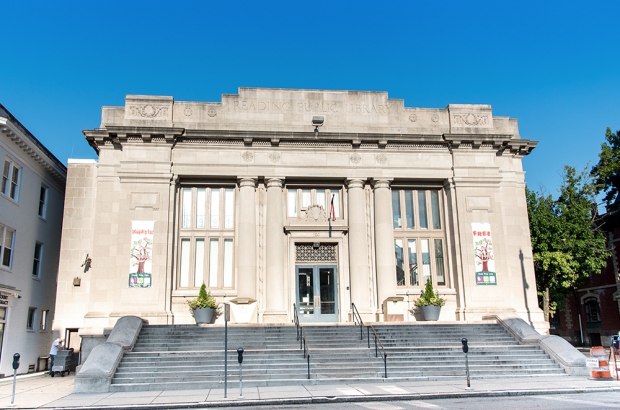
Reading Public Library, Pennsylvania

“What’s after archives?”: Kate Eichhorn and the End of Forgetting

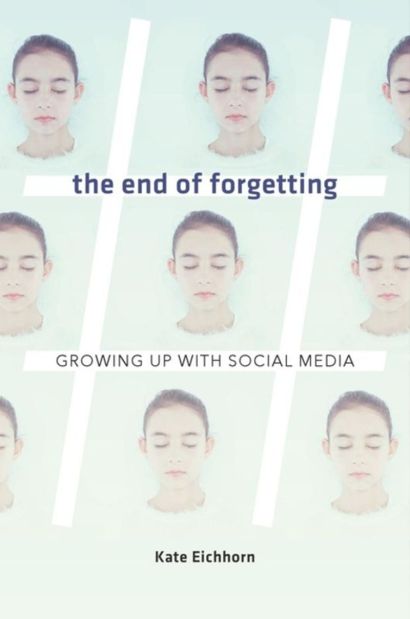
I’m proud to present a Q&A transcript with the New School for Social Research’s Professor Kate Eichhorn, author of The End of Forgettting.

We spoke earlier this year to discuss who gets to tell their own story in the age of social media, what are the consequences to such stories being shared, and what power do we have to forget or be forgotten in this new digital era? This conversation formed the basis for an instalment of “Scripturient”, my column in Information Professional magazine, but now you can read a Q&A expanding on that text, below.

Matt: When did the idea for The End of Forgetting coalesce?

Kate: Prior to working on this book, I had been thinking about and writing about archives for many years. There was a moment when I literally asked myself, what’s after archives? I immediately thought, it’s forgetting. But all of my colleagues who work in archives were very quick to remind me that the archive and forgetting are inextricably linked. So, this book was a kind of natural extension of my earlier work on archives. But the book, while not a personal book, is informed by personal circumstances. On the one hand, when I started working on the book, my kids were maybe 11 and 13, so I was certainly thinking about the tween girls and their relationship to social media. As a parent, I also started to think about how different my life would have been had I been on social media when I was their age. I am almost certain that I would have either said or done things I would have regretted and that there would have been consequences. 

Read more

More than a Game: Scenario Planning, Imagination, and the Public Library’s Future

For Public Libraries Quarterly, Bronwen Gamble and Melissa Adams of the Reading Public Library co-wrote an article with me on our scenario planning journey through a leadership transition in the depths of the COVID-19 pandemic.

More than a Game: Scenario Planning, Imagination, and the Public Library’s Future” explores the use of frugal, online scenario planning methods during the pandemic and the benefits of a scenarios process in times of leadership transition.

It builds on Dale Leorke and Danielle Wyatt’s notion, expressed in their book The Library as Playground, of the library as “a space and institutional order innately imbued with playful qualities” to consider how libraries may be the perfect hosts for scenario processes which “play with expectations, hopes, fears, and desires, in a strategically consequential game of ‘What if?'”

Find out more about “frugal” scenario planning on the Oxford model from Rafael Ramirez and Trudi Lang at Saïd Business School, University of Oxford here.

Scripturient: Computing Taste – Interview with Nick Seaver

For the latest issue of Information Professional magazine, my Scripturient column features an interview with Nick Seaver, Assistant Professor of Anthropology at Tufts University.

Nick’s new book Computing Taste uses ethnographic fieldwork to explore how the makers of music recommendation algorithms understand and go about their work – from product managers thinking about their relationship with users to scientists theorising the act of listening itself as a kind of data processing and engineers for whom the world of music is a geography to be cared for and controlled.

You can read the latest Scripturient column featuring Nick as a PDF download here, and there’s a full transcript of our conversation, digging even deeper into these issues and other elements of Nick’s research, below.

Read more

Library Journal: COVID-era scenarios for Reading, Pennsylvania

“It was clear we should not wait out COVID-19. We needed a vision for where our services were headed, even if we couldn’t fully see what lay in store.”

In Library Journal, Bronwen Gamble of the Reading Public Library in Pennyslvania writes with me about our experience developing COVID-era scenarios to inform strategy for one of the United States’ oldest public libraries.

You can read our piece “Change the Scene” at the Library Journal website.

Scripturient: Information and Exformation

For years you think talking means finding, discovering, understanding, understanding at last, being illuminated by the truth. But no: when it takes place, all you know is that it is taking place; it’s there, you’re talking, you’re writing: talking is only talking, simply talking, writing is only writing, making the shapes of letters on a blank piece of paper.

– Georges Perec

How do you talk about a thing without talking about it? What is concealed by our efforts to make ourselves understood?

The latest Scripturient column for Information Professional is an experiment with “exformation” – the negative space of information.

Islands in the Sky at RLUK22

Last year, I worked with a team at the UK’s Open University to develop Islands in the Sky, a planning tool to help the university’s Learner & Discovery Services team navigate the challenges of the pandemic and design their future hybrid working environment.

At this year’s RLUK22 conference, “Mapping the New Open for Research Libraries”, the Open University’s Anne Gambles and the Bodleian Libraries’ Ruth Mallalieu will run an “Islands in the Sky” session to support participants in navigating these turbulent times.

Find out more at the RLUK22 website, and there’s more on Islands in the Sky from my original presentation of it with Monika Flakowska at the IA21 Information Architecture conference, here.

“Que sera, sera?” — anticipating change in a time of uncertainty

For the “One Thing” library thought leadership series convened by my colleague Brendan Fitzgerald, I wrote a piece on how libraries & information institutions can use scenario planning to address conditions that are turbulent, ambiguous, novel, or unpredictably uncertain.

Albert Bierstadt, A Storm in the Rocky Mountains, Mt. Rosalie

“Libraries are an institution with a long and storied global history, but their context is transforming too. Our societies’ relationships to fundamental notions of information and trust are subject to change. The social, economic, and political orders within which libraries have survived or thrived are not set in stone.

Library leaders seeking to make sound judgments need to be able to anticipate futures beyond those currently expected or predicted. By stretching our sense of what awaits, we can gain insights from the future before it arrives – rather than having to “learn the hard way” from the brutal audit of real crises and changes.”

Read more from my piece here.

New strategic plan for Reading Public Library, Pennsylvania

The new strategic plan for Reading Public Library, Pennsylvania has just been published.

I supported the Reading team through the early months of this year to devise a set of scenarios for the library’s future operating context, and use these scenarios to inform a new strategy. You can read about the process in my paper for the New Librarianship Symposium, “Mapping the Future: Scenario Planning for the Post-Pandemic Library“.

Reading is a fascinating library service which has a proud tradition of negotiating complex strategic circumstances; there’s a reason why the 1971 chronicle of its existence is called The Library That Would Not Die: The Turbulent History of the Reading Public Library. The challenges of COVID-19 and Pennsylvania’s hotly contested politics were only the latest to be faced in its 250-year history. It was my privilege to support the current team in planning for the next four years.

Reading Public Library’s Executive Director, Bronwen Gamble, writes:

“Creating a new strategic plan for RPL was overdue. Our 2013-2018 plan was modified for two years but the process for creating a new one met several obstacles. Enter the COVID-19 pandemic and virtual meetings. I attended the Pennsylvania Bureau of Library Development’s series of workshops facilitated by Matt Finch and was introduced to his Scenario & Foresight Planning process. Our Board of Trustees and library staff feel very fortunate we were able to engage Matt to lead us through our own library’s scenario and foresight planning with Matt in London and the library team in Reading, PA.

Using a mural app, and Zoom sessions, Matt facilitated our conversations around the collaborations, services, and transactions, which shape our work at every level. Matt acted as a guide, making suggestions and providing alternatives rather than telling us what to do or how to proceed. Our team members were enthusiastic and active participants. Imagination was encouraged and everyone had buy-in. Matt’s scenario & foresight planning process is much different than the usual SWOT analysis, and number crunching. We had fun and lively sessions!

Looking back, I believe it is a good thing our old strategic plan was allowed to languish.  The changes brought about by the pandemic would have made a strategic plan created in 2019 obsolete in 2020.  Our team has ownership of the Reading Public Library’s Scenario & Foresight Planning to Strategic Plan 2021-2025. We looked into the future, found three plausible outcomes, and crafted a plan that works for today and is flexible to accommodate whatever happens in the next five years. Thank you, Matt, for giving us the tools to move forward with confidence!”