The collective hero?

In Uncanny magazine, Ada Palmer and Jo Walton write about “the protagonist problem“. In stories, who has “the power to save the day, make the difference, solve the problem, and change everything?” Who possesses that quality which makes them the one to lead the action, to advance the plot?

“Think of the formula for an action team,” they write. “There might be five characters: the smart one, the strong one, the kid, the love-interest, and…the protagonist, whose distinguishing feature may be described as courage, or a pure heart, or determination, but really comes down to writing, that they’re the one who always lands the final blow.”

(One of the ways we know that Mad Max: Fury Road is the story of Charlize Theron’s Furiosa is that she is the one to kill the principal villain. Max, imprisoned as the start of the film as a “blood bag” for his valuable universal donor’s Type O blood, serves the same purpose at the film’s end, when his transfusion prevents Furiosa’s hard-won victory from costing her life).

Palmer and Walton argue that it’s “harmful when people see themselves as not protagonists, and differently harmful when people see themselves as protagonists.”

If we feel that we are not protagonists in a world which has them, we may experience

imposter syndrome, feelings of powerlessness, inaction, cynicism, and despair. It leads to the belief that if you personally don’t resemble a protagonist (if you falter, have undramatic setbacks, mundane problems, job hunting, laundry, rent) then you can’t be one of the special few whose actions matter.

This feeling also causes us, Palmer and Walton argue, to believe that mundane activities such as grassroots organising and even voting lack the power to truly change things, as they do not seem “heroic”. To believe real life has protagonists is to succumb to talk of heroes and villains, the conspiracy theorist’s belief that some secret plan underpins the state of the world, and the notion that acting like a character in a book, film, or videogame is the right way to address the world’s problems.

For those who not only accept that there are real-life protagonists, but believe themselves to be cast in that role, the consequences can be even more troubling: “recklessness, power trips, and […] the expectation that breaking rules is okay so long as it’s you.” Palmer and Walton give the example of people who were not COVID deniers yet felt that their gathering wouldn’t be the one to cause a problem; the rules didn’t apply to them.

Read more
Scripturient: Information and Exformation

For years you think talking means finding, discovering, understanding, understanding at last, being illuminated by the truth. But no: when it takes place, all you know is that it is taking place; it’s there, you’re talking, you’re writing: talking is only talking, simply talking, writing is only writing, making the shapes of letters on a blank piece of paper.

– Georges Perec

How do you talk about a thing without talking about it? What is concealed by our efforts to make ourselves understood?

The latest Scripturient column for Information Professional is an experiment with “exformation” – the negative space of information.

IMAJINE: “Levelling up” and the future of media

The British government has announced its “levelling up” plan to address regional inequalities across the UK.

The IMAJINE project, delivered by a consortium of 16 institutions across 13 countries, investigates questions of inequality and injustice within and between Europe’s nations and regions.

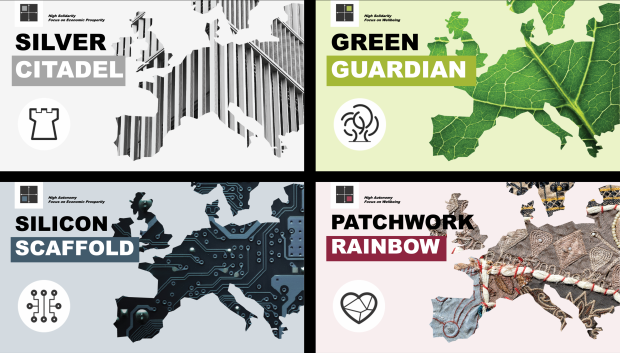
To give us a unique vantage point on what “fair treatment” means for different parts of Europe, the team worked with stakeholders to develop four scenarios for Europe in 2048 (PDF download): SILVER CITADEL, GREEN GUARDIAN, SILICON SCAFFOLD, and PATCHWORK RAINBOW. The scenario set includes responses from experts at the OECD, European Trade Union Institute, Capgemini, UK Space Agency, and many other institutions, exploring the implications for a range of sectors.

One key insight of this process was that it’s never sufficient to merely “run the numbers” when it comes to questions of what is fair or just between regions. We define justice through the stories we tell about what matters to us. Addressing regional inequality is not merely a case of measuring the difference between today’s “haves” and “have-nots”, then seeking to narrow the gap according to today’s metrics. It’s also about understanding what, where, and who we will value, now and in times to come.

The scenarios provide one way of reflecting on those questions of value, and how things are changing compared to the past. SILVER CITADEL sees regional policymakers lobbying centralised bodies for their fair share of an economic “pie” carved up by artificial intelligence. GREEN GUARDIAN explores a climate-ravaged future where Europeans have given up on consumer values and choose to live by new measures of sustainability and wellbeing. In SILICON SCAFFOLD, tech corporations dominate and the nation-state is on the wane, in a world where almost all of our daily life has migrated to privatised virtual spaces. And in PATCHWORK RAINBOW, Europe fragments into a jigsaw of regions with wildly different cultural and social values.

Since the scenarios’ publication in October 2021, we’ve received additional expert commentary from Madeleine Gabriel at Nesta on sustainability implications, the Danish Design Center’s Oskar Stokholm Østergaard on the future of design, and Belgium’s EU Digital Champion Saskia Van Uffelen on how “digital society” might develop in each scenario. And there’s more to come.

The latest expert response, published today, is from Cardiff University’s Caitriona Noonan, and explores what the IMAJINE scenarios mean for the future of media production in Europe. Who will make the content that appears on our screens? How will it be distributed? Caitriona notes that we are at a critical moment for the future of Europe’s film and television sector. IMAJINE’s scenarios offer a unique viewpoint into how that moment is going to play out.

Find out more about IMAJINE at www.imajine-project.eu.

Islands in the Sky at RLUK22

Last year, I worked with a team at the UK’s Open University to develop Islands in the Sky, a planning tool to help the university’s Learner & Discovery Services team navigate the challenges of the pandemic and design their future hybrid working environment.

At this year’s RLUK22 conference, “Mapping the New Open for Research Libraries”, the Open University’s Anne Gambles and the Bodleian Libraries’ Ruth Mallalieu will run an “Islands in the Sky” session to support participants in navigating these turbulent times.

Find out more at the RLUK22 website, and there’s more on Islands in the Sky from my original presentation of it with Monika Flakowska at the IA21 Information Architecture conference, here.

“Imagination Infrastructure”: Interview with Oskar Stokholm Østergaard, Danish Design Center

As part of the IMAJINE project using scenarios for the year 2048 to explore European regional inequality, I interviewed the Danish Design Center’s Oskar Stokholm Østergaard to find out what the scenarios might imply for the future of design.

Our conversation covered “design as diplomacy”, digital transition, moving from human-centred design to a planetary-level focus, and the notion of “imagination infrastructure” — among other topics.

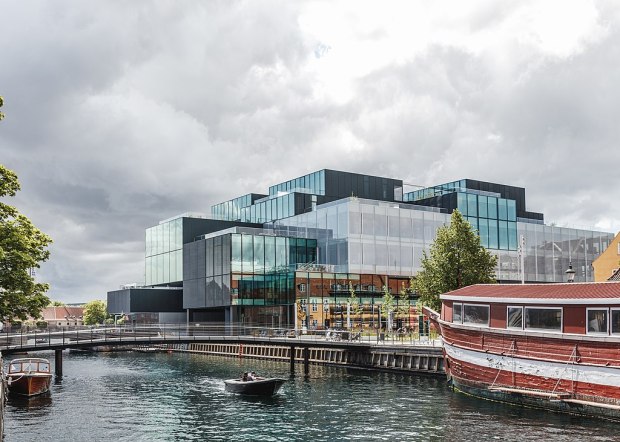
Danish Design Center, Copenhagen

You can read our full conversation at the IMAJINE website and find the complete scenario set as a PDF download here.

“Que sera, sera?” — anticipating change in a time of uncertainty

For the “One Thing” library thought leadership series convened by my colleague Brendan Fitzgerald, I wrote a piece on how libraries & information institutions can use scenario planning to address conditions that are turbulent, ambiguous, novel, or unpredictably uncertain.

Albert Bierstadt, A Storm in the Rocky Mountains, Mt. Rosalie

“Libraries are an institution with a long and storied global history, but their context is transforming too. Our societies’ relationships to fundamental notions of information and trust are subject to change. The social, economic, and political orders within which libraries have survived or thrived are not set in stone.

Library leaders seeking to make sound judgments need to be able to anticipate futures beyond those currently expected or predicted. By stretching our sense of what awaits, we can gain insights from the future before it arrives – rather than having to “learn the hard way” from the brutal audit of real crises and changes.”

Read more from my piece here.

Sustainability, Scenarios, and Spatial Justice: IMAJINE at Resilience.org

Over at Resilience.org, the blog of the Post-Carbon Institute, Marie Mahon of the National University of Ireland Galway, David Robertson of Monash Sustainable Development Institute, and I discuss the sustainability implications of the IMAJINE scenarios for the future of European regional inequality.

I especially valued David’s comments on the Metaverse-like SILICON SCAFFOLD scenario, where “Near-infinite virtual geographies undermine the notion of ‘limits’ or ‘planetary boundaries’[…and t]he resources we use as we navigate digital worlds are hidden from us.” Will notions of sustainability be fundamentally recast and reframed by the generations which succeed us? How will future circumstances cause those frames and the values which define them to change?

The mission of Resilience is to “envision a world of resilient communities and re-localized economies that thrive within ecological bounds.”

Read more about IMAJINE’s contribution to that discussion here.

New strategic plan for Reading Public Library, Pennsylvania

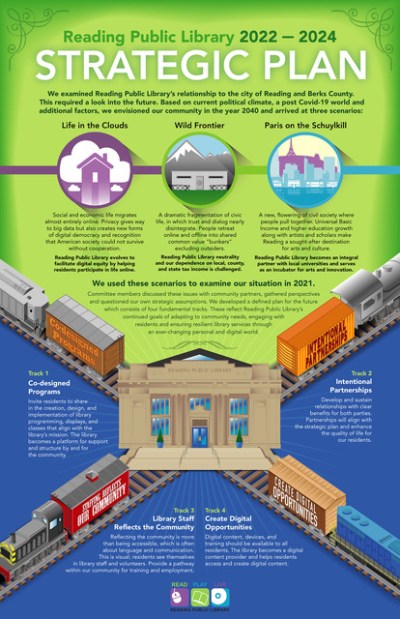
The new strategic plan for Reading Public Library, Pennsylvania has just been published.

I supported the Reading team through the early months of this year to devise a set of scenarios for the library’s future operating context, and use these scenarios to inform a new strategy. You can read about the process in my paper for the New Librarianship Symposium, “Mapping the Future: Scenario Planning for the Post-Pandemic Library“.

Reading is a fascinating library service which has a proud tradition of negotiating complex strategic circumstances; there’s a reason why the 1971 chronicle of its existence is called The Library That Would Not Die: The Turbulent History of the Reading Public Library. The challenges of COVID-19 and Pennsylvania’s hotly contested politics were only the latest to be faced in its 250-year history. It was my privilege to support the current team in planning for the next four years.

Reading Public Library’s Executive Director, Bronwen Gamble, writes:

“Creating a new strategic plan for RPL was overdue. Our 2013-2018 plan was modified for two years but the process for creating a new one met several obstacles. Enter the COVID-19 pandemic and virtual meetings. I attended the Pennsylvania Bureau of Library Development’s series of workshops facilitated by Matt Finch and was introduced to his Scenario & Foresight Planning process. Our Board of Trustees and library staff feel very fortunate we were able to engage Matt to lead us through our own library’s scenario and foresight planning with Matt in London and the library team in Reading, PA.

Using a mural app, and Zoom sessions, Matt facilitated our conversations around the collaborations, services, and transactions, which shape our work at every level. Matt acted as a guide, making suggestions and providing alternatives rather than telling us what to do or how to proceed. Our team members were enthusiastic and active participants. Imagination was encouraged and everyone had buy-in. Matt’s scenario & foresight planning process is much different than the usual SWOT analysis, and number crunching. We had fun and lively sessions!

Looking back, I believe it is a good thing our old strategic plan was allowed to languish.  The changes brought about by the pandemic would have made a strategic plan created in 2019 obsolete in 2020.  Our team has ownership of the Reading Public Library’s Scenario & Foresight Planning to Strategic Plan 2021-2025. We looked into the future, found three plausible outcomes, and crafted a plan that works for today and is flexible to accommodate whatever happens in the next five years. Thank you, Matt, for giving us the tools to move forward with confidence!”

Scripturient: Sanchita Balachandran on Conservation through Generations

In the latest instalment of Information Professional‘s ‘Scripturient‘ column, guest writer Sanchita Balachandran tells the story of meeting her late maternal grandfather for the first time among the collections of a colonial archive.

Born in Nagercoil, South India and trained in forest management at the University of Edinburgh in the early 1930s, her grandfather’s journey is part of a wider network of relationships spanning the generations, and stretching from the Indian state of Travancore to Baltimore and beyond.

In her column, Sanchita explores the resonances between her grandfather’s work as a conservator of forests and her own role as Associate Director of the Johns Hopkins Archaeological Museum; she reflects on the necessary, mundane, often invisible work of cultural heritage professionals; and she considers the complex emotions experienced when “harm and recovery, disconnection and reunion” are entangled in our experience of the colonial archive.

What do we owe to the families and loved ones of the long deceased? How do objects bear witness to our lives, and how is that act of witnessing complicated by questions of power, justice, and belonging?

You can read ‘Conservation through Generations’ (PDF download) here.