UNESCO Prospects Journal: Scenarios and the future of education

The question for teachers, learners, and the various organizations and communities in which they participate becomes “How will we adapt, evolve, and thrive even if uncertainties play out in ways for which we had not initially prepared?”

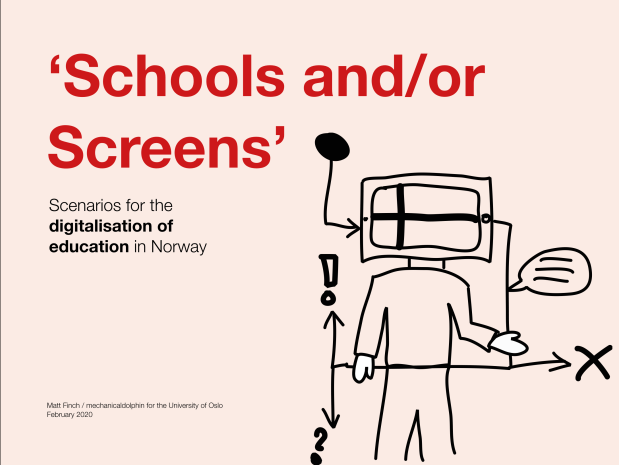
In the UNESCO International Bureau of Education’s journal Prospects, the University of Oslo’s Steffen Krüger, the University of Agder’s Niamh Ní Bhroin, and I discuss the “Schools and/or screens” scenario project for the digitalisation of education in Norway.

UNESCO Headquarters sign. (C) Matt Finch, 2023

We show how challenging issues raised in the context of distant imagined futures proved to be immediately pertinent in the developing Covid-19 pandemic, and, as a wide range of actors explore the possibility of a new social contract for education, we reflect on how future scenarios can provide fresh perspectives on issues that are difficult or even impossible to resolve within current frames of reference, including questions of equity and justice that may be construed differently in times to come.

Read “Unlearning, relearning, staying with the trouble: Scenarios and the future of education” at Prospects online.

Strategizing across organizations

“Capitalizing on big opportunities and solving systemic problems will require organizations to come together to develop strategies as a group.”

Together with Rafael Ramírez, Trudi Lang, Gail Carson, and Dale Fisher, I have a new piece in MIT Sloan Management Review exploring scenario-based strategy for networks of organizations addressing large-scale challenges, drawing on experiences during the COVID-19 pandemic with the Global Outbreak Alert and Response Network (GOARN).

You can find “Strategizing across organizations” at the MIT Sloan Management Review website.

You can also find the accepted version of the paper at Oxford University’s online ORA resource.

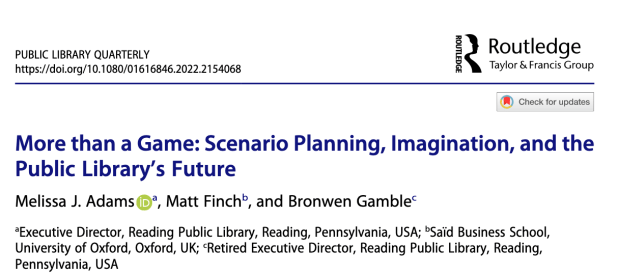
More than a Game: Scenario Planning, Imagination, and the Public Library’s Future

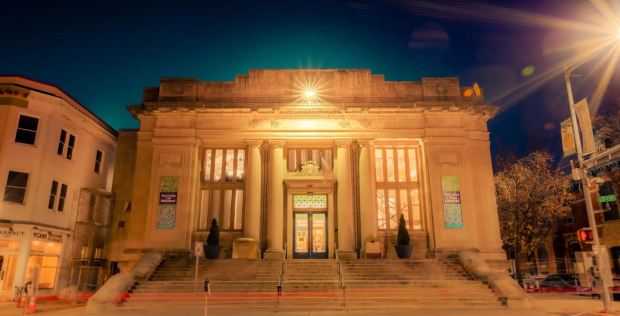
For Public Libraries Quarterly, Bronwen Gamble and Melissa Adams of the Reading Public Library co-wrote an article with me on our scenario planning journey through a leadership transition in the depths of the COVID-19 pandemic.

More than a Game: Scenario Planning, Imagination, and the Public Library’s Future” explores the use of frugal, online scenario planning methods during the pandemic and the benefits of a scenarios process in times of leadership transition.

It builds on Dale Leorke and Danielle Wyatt’s notion, expressed in their book The Library as Playground, of the library as “a space and institutional order innately imbued with playful qualities” to consider how libraries may be the perfect hosts for scenario processes which “play with expectations, hopes, fears, and desires, in a strategically consequential game of ‘What if?'”

Find out more about “frugal” scenario planning on the Oxford model from Rafael Ramirez and Trudi Lang at Saïd Business School, University of Oxford here.

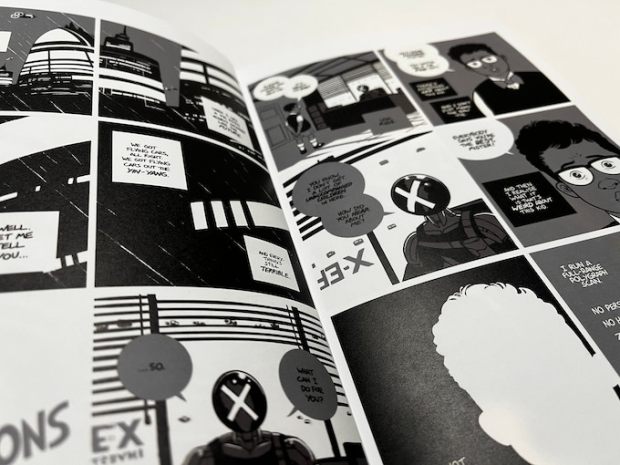
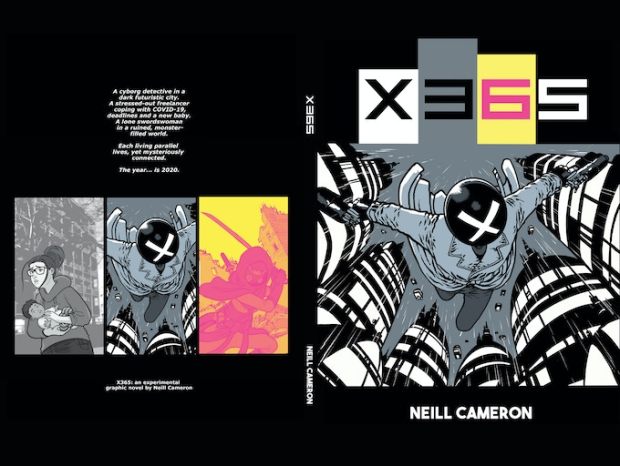
X365: The Graphic Novel, by Neill Cameron

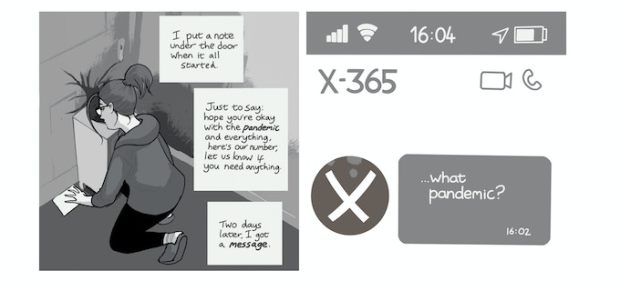
In early 2020, acclaimed comic creator Neill Cameron began to write and draw the one-panel-a-day comic X365: “No plan going in, no preparation. I’d just make a story up and see where it took me.”

When the pandemic hit, it reshaped the tale Neill was telling, of parallel worlds entwined.

The full story is now being produced in a collected edition on Kickstarter, including an interview I conducted with Neill about the project as it reached its conclusion.

See more at the Kickstarter project page for X365: The Graphic Novel.

Foresight & The Environment of Democracy @ 2022 Council for European Studies Conference

I’m presenting twice at the online portion of the Council for European Studies’ conference in June.

First, National University of Ireland, Galway’s Marie Mahon, Monash Sustainable Development Institute’s David Robertson, and I will talk about “Reimagining Environmental Futures” based on the IMAJINE scenarios for the future of European regional inequality.

Then Malka Older of Arizona State University and I will present a paper on “Agency, Accountability, and Imagined Futures: Exploring Democracy and Environmental Stewardship Through Speculative Fiction and Foresight”.

Early bird registration continues until April 11th and the last day to register is May 10th. Find out more at the conference website.

Library Journal: COVID-era scenarios for Reading, Pennsylvania

“It was clear we should not wait out COVID-19. We needed a vision for where our services were headed, even if we couldn’t fully see what lay in store.”

In Library Journal, Bronwen Gamble of the Reading Public Library in Pennyslvania writes with me about our experience developing COVID-era scenarios to inform strategy for one of the United States’ oldest public libraries.

You can read our piece “Change the Scene” at the Library Journal website.

Dancing through the pain

I turned my ankle walking in the park the other day, which is good going for someone who used to hike at every opportunity and now, in lockdown, barely gets more than a block from his house.

It hurt a little, but the more notable thing is that it revived some memories.

Ten years ago, I broke my leg quite badly. It required surgery, and they screwed the bone back together with bits of metal.

It never really gives me problems these days, but any injury to the same leg gets me wondering and even worrying: Have I done something to the screws? Am I going to have to go through all of that again?

I dealt with my park injury as I usually would, but the real problem was the sensation of “having done something to my leg”. Every bit of sensory information coming from that part of my body now goes through the lens of history, memory, and emotion. Does it feel weird? Does it feel different? Is there a problem there? I have to try and separate out my historic feelings from the present experience – not rejecting them, but recognising them for what they are.

Pain is a great source of information, if only you know how to process it.

The great choreographer Twyla Tharp wrote that:

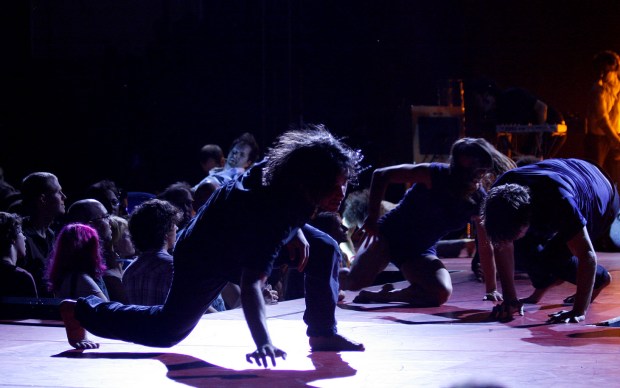
“The dancer learns early to take pain for granted and that there is great freedom in choosing how to respond to its appearance. The thing NOT to do is deny pain. It must be acknowledged. Sometimes the right way of moving forward will be to push through pain. Your choices determine who you will be, who the world will see[.]”

Ultima Vez / Wim Vandekeybus + Mauro Pawlowski: “What’s the Prediction?” (ImPulsTanz Vienna 2010)
Read more

“2050 was last year”: Times of COVID-19

Together with the University of Oslo’s Dr. Steffen Krüger, I’ve written a short piece on the Norwegian education scenarios, set thirty years hence, which we published at the start of this year – plus how the COVID-19 pandemic both confirmed some of our insights and challenged our perceptions.

Seeking an imagined future that would threaten a data-driven, corporatised health and care system, we created a world with distinct similarities to Norway’s coronavirus experience in 2020. In the essay, we talk about our scenarios, the cabin fever of homeschooled lockdown days, and how to bring the stuff of dystopian sci-fi into the realm of plausible policy discussion.

You can read “2050 was last year”, at the Times of COVID-19 blog.