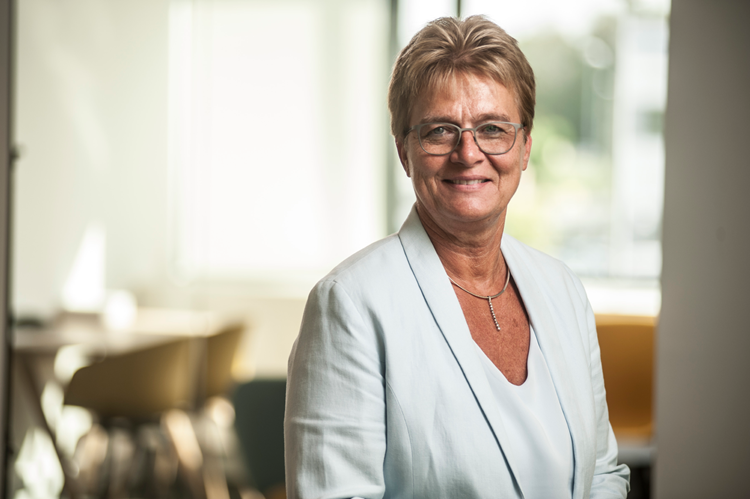
Saskia Van Uffelen is the Digital Champion for Belgium, tasked with promoting the benefits of digital society as part of the European Commission’s efforts to ensure every European citizen acquires the digital skills they need to remain productive, employable and enfranchised. After a career encompassing roles at Xerox, Compaq, HP, Arinso, Bull, and Ericsson, she is currently Corporate Vice President for the French group GFI, supervising developments in the Benelux countries. Saskia is also the author of Dare For Tomorrow: Leading, Working, Learning, and Living in a Digital World.You can read the first part of our interview here.
As Digital Champion, you have an interest in the future of the public library, an institution which is also very dear to my heart. The social changes you’re describing will have an impact on our civic information institutions, and the context they operate in.
You’ve said elsewhere that, “If anything has remained the same in your organisation (culture, processes, eco-systems), it will simply not work anymore. You need to adapt your company and your culture. Adapt or die.”
Are libraries too prone to thinking about what used to work, instead of looking strategically to the future and to forces outside their sector?
Saskia Van Uffelen is the Digital Champion for Belgium, tasked with promoting the benefits of digital society as part of the European Commission’s efforts to ensure every European citizen acquires the digital skills they need to remain productive, employable and enfranchised. After a career encompassing roles at Xerox, Compaq, HP, Arinso, Bull, and Ericsson, she is currently Corporate Vice President for the French group GFI, supervising developments in the Benelux countries. Saskia is also the author of Dare For Tomorrow: Leading, Working, Learning, and Living in a Digital World.
The crises of 2020 have moved many aspects of our lives online, not always without complications. I started by asking what this year looks like from the perspective of Belgium’s Digital Champion.
As part of the OECD’s Government After Shock project, I’m working with a team from their Observatory of Public Sector Innovation, interviewing public sector leaders & practitioners for a podcast series exploring their perspective on the crises of 2020, and the implications for the future of government worldwide.
This week, Petra Nilsson Andersen of the Norwegian Digitalisation Agency joins me for a brief chat about COVID’s test of the Nordic social model, how to balance the physical & digital, and what 2020 teaches us about preparing for future crises.
My keynote will launch the Okoberfest’s Strategy & Innovation summit with a two-hour session on Wednesday, October 7 at 10:00 a.m. Pacific Time.
The highly participatory session will help attendees to develop skills in strategic foresight and decision-making, suitable for the uncertainties of 2020 and beyond. Tried and tested practical tools will be accompanied by international examples and case studies, including the current IMAJINE project examining the future of the European Union at a regional level.
The conference’s wider offer will also enable attendees to explore issues including creative placemaking, equity & anti-racism, efficiency, and happiness in local government.
On September 23rd, at 09:30 AM Eastern Time, I’ll be joining Erik Boekesteijn at the online CIL & IL Connect 2020 conference for a quick chat about foresight and futures for information professionals, their institutions, and the communities they serve. Erik is running a daily interview strand with a range of information professionals and their allies as part of the event.
As part of the OECD’s Government After Shock project, I’m working with a team from their Observatory of Public Sector Innovation, interviewing public sector leaders & practitioners for a podcast series exploring their perspective on the crises of 2020, and implications for the future of government worldwide.
Early in August 2020, I ran two workshops as part of a three-day masterclass for emerging leaders at ASPAC, the Asia Pacific Network of Science and Technology Centres.
39 participants from across the Asia Pacific joined me for a day exploring the future environment for the region’s science and technology centres, and the use of design tools to create effective strategies.
This slideshow requires JavaScript.
Working together across the timezones, we produced mini-scenarios to explore uncertainties which might prove challenging or opportune in the future, and explored ways to structure and test our thinking when it came to new initatives for ASPAC and its member institutions.
“In August 2020, we asked Matt to conduct two workshops as part of a masterclass for 40 emerging leaders in our Asia-Pacific network of science centres. The two workshops were ‘reimagining the future of science engagement’ and ‘redesigning science centres’, respectively.
Matt laid out very clearly and very generously how the participants were going to reimagine and redesign. The workshop was supremely engaging and Matt’s approach strongly motivated the participants to follow the process. The breakouts which were prompted by Matt’s questions allowed for heightened collaboration!
The “tributes” from Masterclass participants showed that they overwhelmingly felt Matt’s workshop made them push boundaries that they had not even previously acknowledged, or were afraid to cross. This was especially relevant during this pandemic and will be for a long, long time, if not forever. We have more courage now among our emerging leaders.”
National and State Libraries Australia (NSLA), the peak body for Australia’s national, state, and territory libraries, has just published its new strategic plan.
I was pleased to work with the NSLA team on diagnosing the challenges and opportunities they face, then devising a guiding policy and coordinated actions to lead NSLA and its members into the future.
Big thanks to @DrMattFinch for getting the engine running on this for @NSLA, bringing a load of professionalism and an excellent sense of humour regardless of the (usually ridiculous) time of day. Hats off. https://t.co/JyPDQKWp64
You can watch NSLA Chair Marie-Louise Ayres and Deputy Chair Vicki McDonald introduce the new plan in this video, and download the new plan here.
“NSLA represents the national, state and territory libraries of Australia – we’ve been running as a collaboration since the 1970s, but it’s always a challenge to strategise for nine different institutions.
We approached Matt to help us shape up a new strategic plan just as the outbreak of COVID-19 was reaching its crescendo around the world. Matt already has a strong reputation and following among our libraries, with deep knowledge of the Australian landscape. With face to face workshops no longer an option, we decided that he was the right person to help us clarify our thinking at a distance, in a context that was changing as quickly as we could verbalise it.
Matt worked one-on-one via Zoom with the NSLA Executive Officer in Melbourne, and facilitated online workshops with the NSLA Chair and Deputy Chair in Canberra and Brisbane. Despite the unfriendly time zone for London, he cheerfully and skilfully shepherded us to find consensus on a series of priorities that could resonate with nine libraries around Australia – all the while asking us why, how, and what if. Matt’s approach was refreshingly accessible and jargon-free. We were reminded through this process that a strategy is much more than a collection of unconnected aspirations, and that the whole is only as strong as its parts.
Matt has been delightful to work with. In a relatively short time, he left us well placed with a strong draft plan to present to our full committee of nine library CEOs, as well as a series of resources and ideas for measuring impact in libraries – all managed from the opposite side of the globe.”
In 1992, a consignment of around thirty thousand bath toys was lost from the Ever Laurel, a container ship bound from Hong Kong to Tacoma, Washington. During a storm in the North Pacific Ocean, several containers were washed overboard, including one bearing “Friendly Floatees”. These Chinese-made toys took the form of red beavers, green frogs, blue turtles, and yellow ducks, and when the container holding them broke open, the Floatees were free to travel the oceans.
Ten months after the spill, most of these bath toys arrived on the beaches near Sitka, Alaska, but not all of them shared this fate. A number spent the winter of 1992-93 frozen in the ice of the Bering Sea. Some floated back into the North Pacific, and yet others made their way through the Arctic Ocean to the North Atlantic. Oceanographers eagerly studied their unexpected trajectories, which revealed previously unknown information about ocean currents.
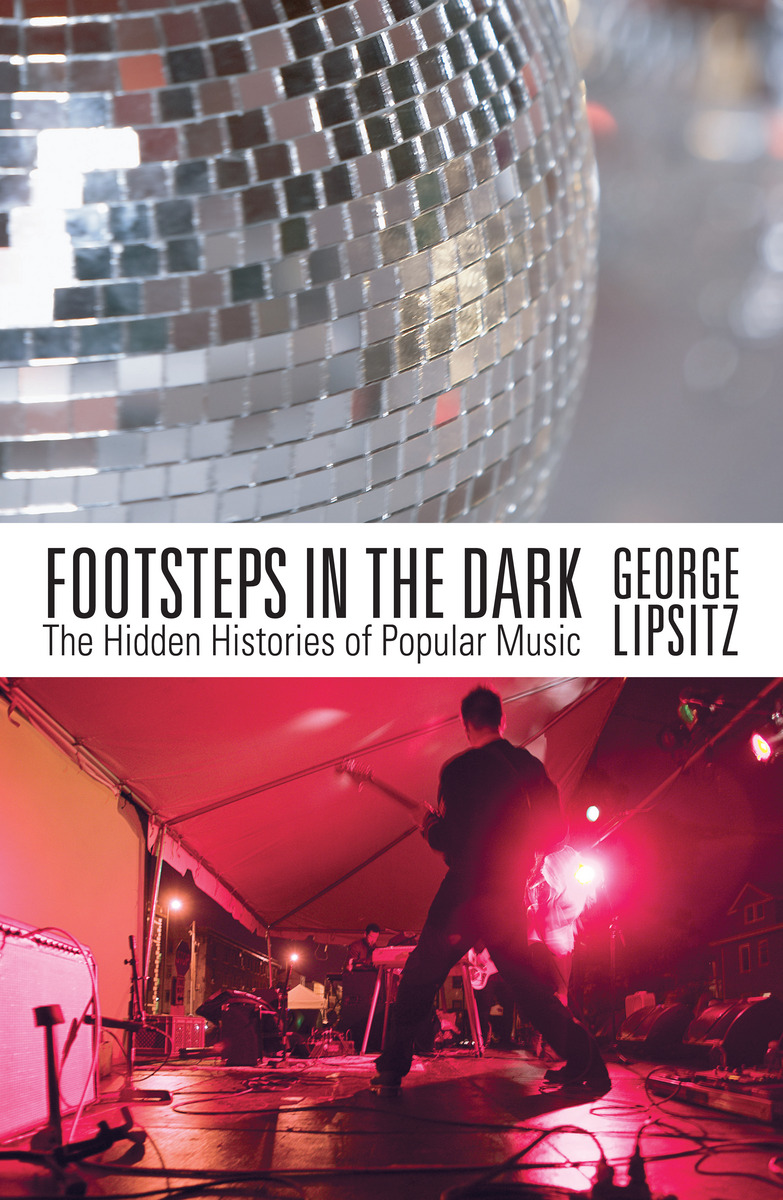
In his book Footsteps in the Dark, the American historian George Lipsitz uses this event to explore how cultural phenomena such as pop music also circulate via hidden currents, finding new life and new uses in different times and different places around the world.
He describes how KC and the Sunshine Band found their sound by combining influences from Pentecostal Christianity, doo-wop, Santería drumming and Bahamian “junkanoo” carnival music; how the infectious beat of Dion’s “The Wanderer” has its roots in the Italian tarantella; how a composition by George Clinton of Parliament owes its “operatic” quality to synagogue chanting which Clinton heard in childhood at a schoolfriend’s bar mitzvah.
Lipsitz also attends to the social uses of such music. Analysing the Isley Brothers number which gives his book its title, he considers it an account of 1970s Black American experiences which were neglected by journalists and historians:
“As far as we know, the Isley Brothers did not intend to be historians of these changes or even to create a historical record of them with their music. They never chose to present an empirical accounting of events organized in chronological order, nor did their songs speak directly about politics, laws, or leaders. The Isley Brothers did not do research in traditional archives filled with government documents, personal records, or diaries of famous people. Yet they displayed extraordinary familiarity with and knowledge of what we might call the alternative archives of history, the shared memories, experiences, and aspirations of ordinary people, whose perspectives rarely appear in formal historical archival collections.”
Lipsitz gives us the tools to look not only at the past, but also the future, through lenses we might have previously neglected: sifting pop culture for overlooked clues to social change, examining cultural movements to understand the hidden currents which drive them, and making meaning from the “Friendly Floatees” which have drifted away from the course prescribed by the dominant social, political, and economic order.
“My hope,” he writes, “is that reading popular music as history and interpreting history through popular music will help us to hear the footsteps in the dark, to see how history happens and why music matters.” I believe that Lipsitz’s book also has much to teach us about the way we look at the future. Read more →
“Something is broken in today’s organizations…The pain we feel is the pain of something old that is dying…while something new is waiting to be born.”
Frederic Laloux, Reinventing Organizations
So much of organizational life is onerous and frustrating these days. For many of us, the day job is characterised by aggravation and a sense of soullessness: a “cold, mechanical approach” which trades agency and responsibility for box-checking accountability and loss of control.
That’s what Frederic Laloux argues in his 2014 book Reinventing Organizations, which explores alternative models for those institutions and businesses willing to dissolve hierarchies and pursue new management paradigms.
Laloux’s case studies include the Dutch healthcare organization Buurtzorg, which delivers community care in leaderless self-organizing teams of ten to twelve nurses, and FAVI, a French automotive supplier which has divided itself into self-managing “mini-factories” whose teams operate without executive management. These businesses and institutions, Laloux argues, resemble living systems more than the organisations of old. They are evolving beyond previous, rigid ways of bringing people together to achieve a goal: the army, the university, the corporation…even the organized crime syndicate.
Laloux presents a practical vision for a world where “no one is the boss of anyone else”, and our organizations begin to take on an organic character.
The approach is intended to work across many sectors, with examples including highly regulated industries such as the energy industry and food processing. I thought I’d spend some time thinking about what it would mean for information organisations – archives, libraries, and other entities which create, store, share, and manage information – to explore Laloux’s approach. What would it take for us to reinvent the Information Organization? Read more →


 In his book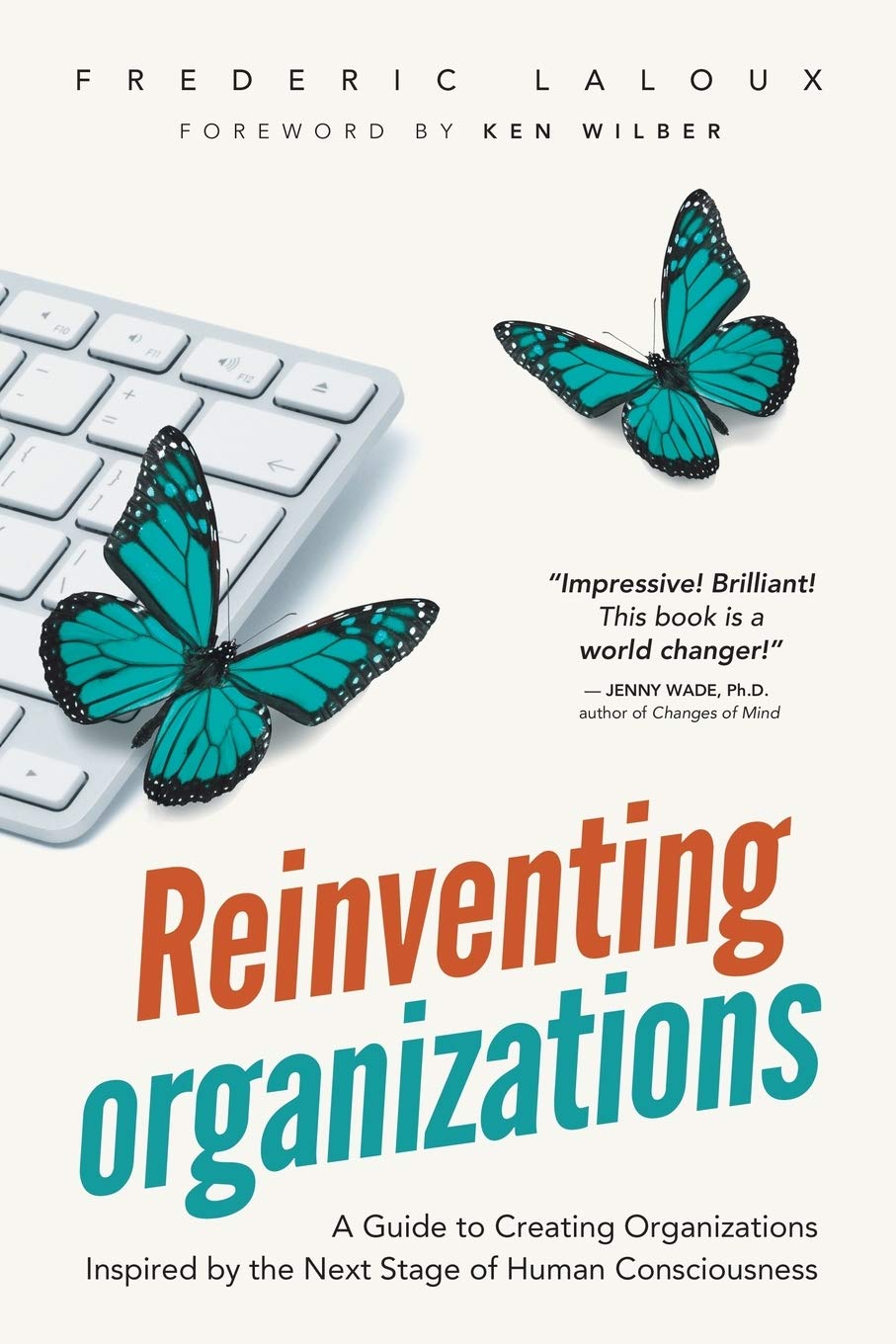
 matt finch / mechanical dolphin
.jpg)