Was there ever really one normal? Discussion with Murray Cook and Brendan Fitzgerald

Today’s blog features a discussion between two colleagues, Murray Cook and Brendan Fitzgerald.

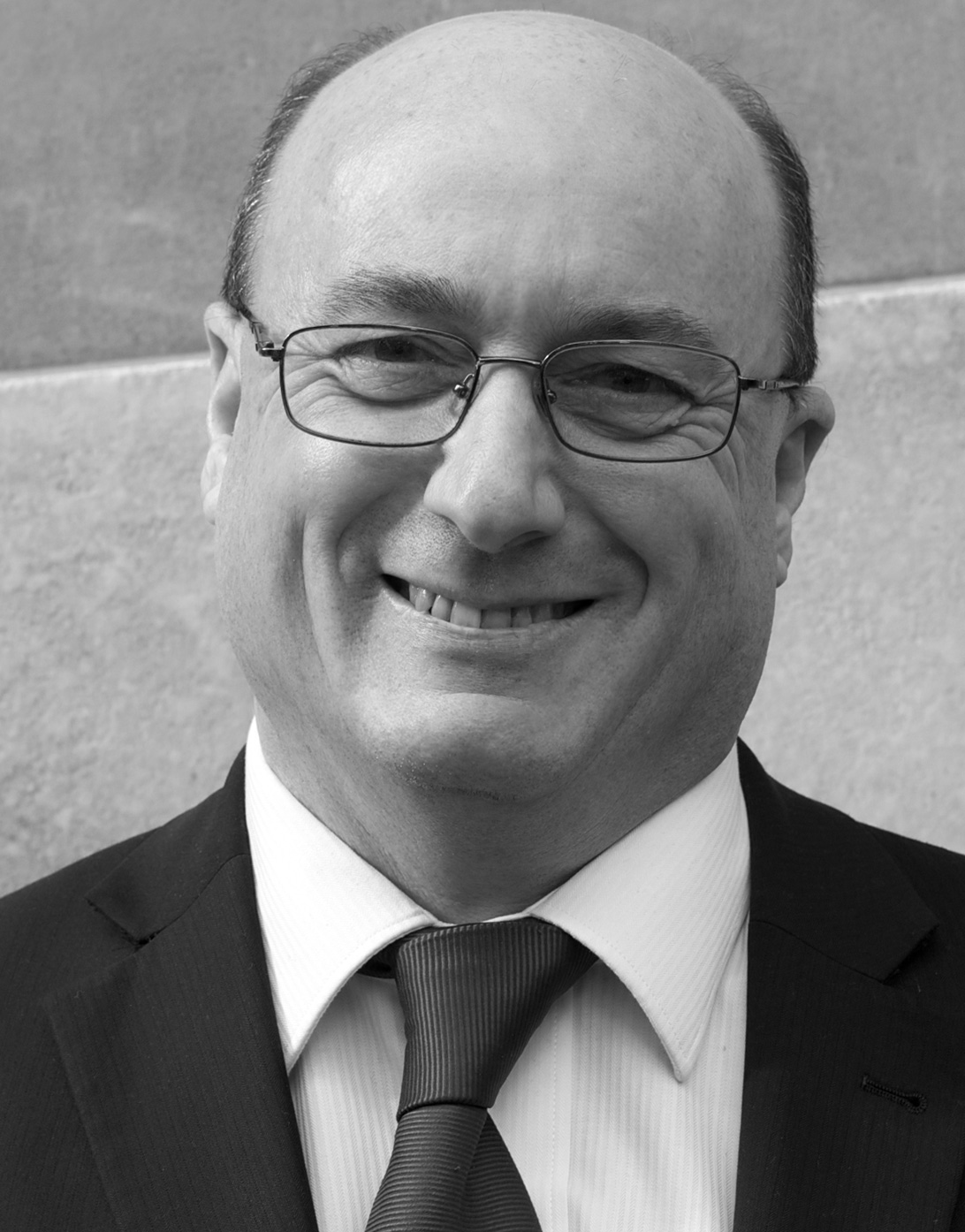
Murray helps organisations and leaders in the use of scenario planning to explore the future and its impacts upon current strategy.  He works on understanding disruption, detecting early signals of the emerging future, and developing responses to the changing environment.  Alongside his consulting work, Murray also works in executive education, most recently at Saïd Business School, and has previously led large, complex transformation programmes.

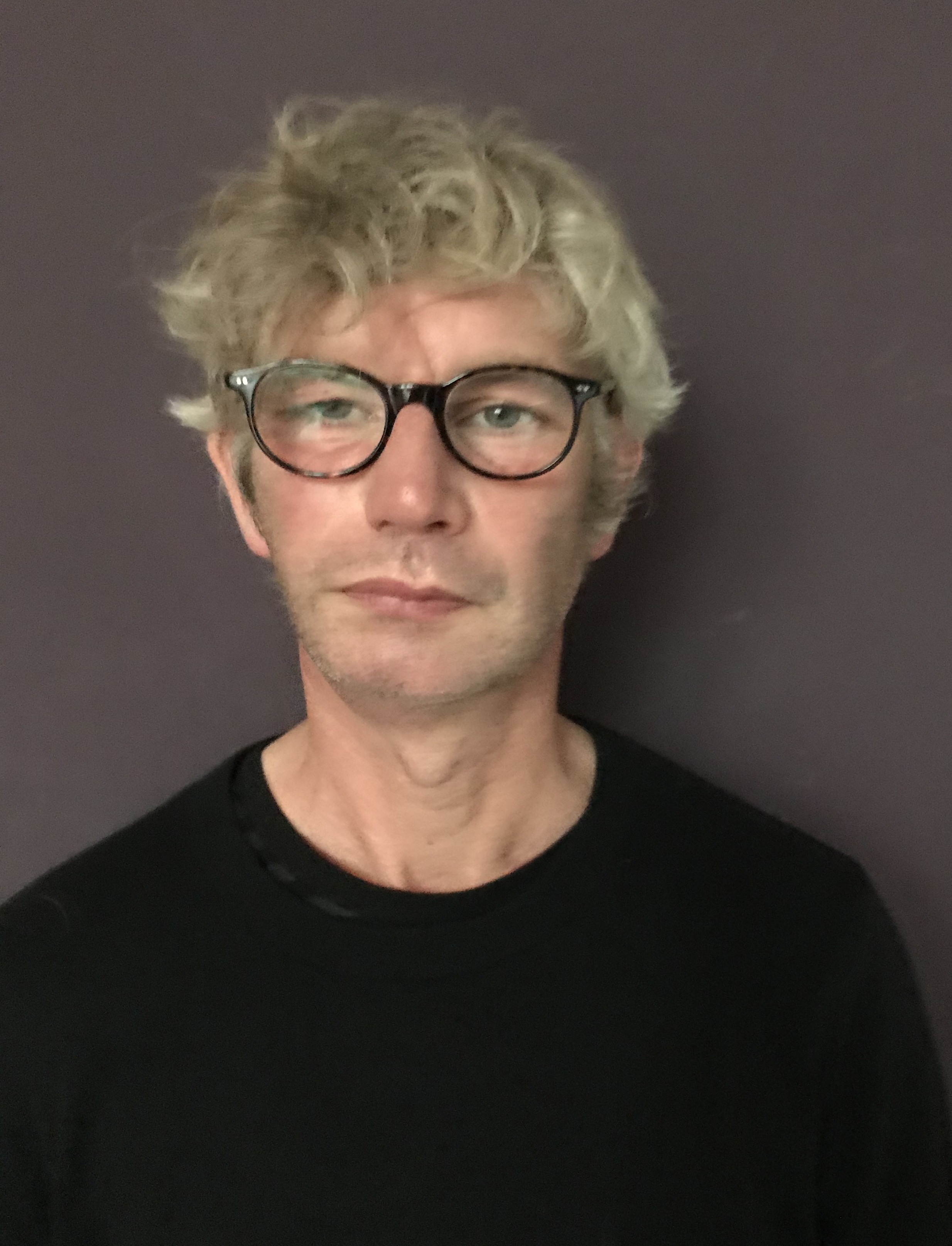
Brendan, director of 641 DI, works to build capacity for the library, government, and not-for-profit sectors in Australia and New Zealand. Formerly Manager of Digital Inclusion at Infoxchange, his focus is digital & social inclusion, its ability to reduce social isolation and loneliness in community. Working with clients across Australia and New Zealand including Hitnet, Grow Hope Foundation, State Library of New South Wales, LIANZA, City of Newcastle Libraries, and the Victorian Department of Jobs, Precincts and Regions, 641 DI delivers research and project evaluation services, digital inclusion planning and practice, as well as strategic consultation.

Last month, Murray & Brendan got together for a wide ranging discussion covering foresight, localism, their experiences in different sectors on opposite sides of the world, and even the nature of change itself.

Murray: 

Some topics we might discuss: How things are changing, how change itself has changed, and how we might use scenarios to attend to things we haven’t looked at before. There are never any facts in the future – but that’s more apparent than ever now, isn’t it?

Brendan:

I think it’s also important to look back; to consider those things in the past that you bring with you into the present – or leave behind. One of the things I know we’ve both been pondering: was there actually a “normal” in the first place?

Read more

Learning from Acknowledgments of Country

“I’d like to begin by acknowledging the traditional custodians of the land that we’re on, and paying my respects to elders past, present, and emerging.”

That’s the form of words as I say them now; the current evolution. I learned to say them on the lands of the Turrbal and Jagera people in what is now Brisbane, and the lands of the Jarowair and Giabal people in what is now Toowoomba. “Custodians” has recently replaced “owners”, at the suggestion of Chris Lee; “emerging” replaced “future” a while back, although I’m not sure entirely why, I just noticed that some people I respected used that word rather than the other.

The saying, as a whole, is an Acknowledgement of Country; a form of recognition and respect for Aboriginal and Torres Strait Islander people and their relationship to the land which is often spoken at the beginning of a gathering in Australia. These days, I say it when hosting online meetings and workshops on Zoom or other platforms. Although I’m currently in London, and might be speaking with people anywhere in the world, I usually choose the Australian form of words if I’m working in a multinational space, because Australia was where I first became aware of the need to acknowledge Indigenous peoples’ custodianship of the land, and of a formalised protocol which could guide us in doing so.

Read more

“Just Waiting for the Locusts, Really”: OECD Government After Shock Interviews with Innovation Norway & National Library of Australia

“Smoke, fire, hail, and pestilence…we’re just waiting for the locusts, really” – the wry and insightful Marie-Louise Ayres, who heads the National Library of Australia in Canberra, talked to me about guiding her unique federal institution through the many challenges faced by the Australian capital in 2020.

You can hear what Marie-Louise had to say on the OECD’s Government After Shock podcast.

I also spoke with Håkon Haugli, CEO of Innovation Norway, a state body which promotes sustainable growth and exports for Norwegian businesses through capital and expertise. Håkon talks about moving to a digital workplace, the struggle to preserve multilateralism, and embracing the messy nature of innovation. His episode of the podcast can be found here.

OECD Government After Shock Podcast with Robert Hoge, Queensland Health

As part of the OECD’s Government After Shock project, I’m working with a team from their Observatory of Public Sector Innovation, interviewing public sector leaders & practitioners for a podcast series exploring their perspective on the crises of 2020, and implications for the future of government worldwide.

First up, Robert Hoge of Queensland Health talks about strategic health communications in a time of pandemic, coping with misinformation & disinformation, and lessons learned from the COVID-19 experience in Australia’s Sunshine State.

New strategic plan for National & State Libraries Australia

National and State Libraries Australia (NSLA), the peak body for Australia’s national, state, and territory libraries, has just published its new strategic plan.

I was pleased to work with the NSLA team on diagnosing the challenges and opportunities they face, then devising a guiding policy and coordinated actions to lead NSLA and its members into the future.

You can watch NSLA Chair Marie-Louise Ayres and Deputy Chair Vicki McDonald introduce the new plan in this video, and download the new plan here.

“NSLA represents the national, state and territory libraries of Australia – we’ve been running as a collaboration since the 1970s, but it’s always a challenge to strategise for nine different institutions.

We approached Matt to help us shape up a new strategic plan just as the outbreak of COVID-19 was reaching its crescendo around the world. Matt already has a strong reputation and following among our libraries, with deep knowledge of the Australian landscape. With face to face workshops no longer an option, we decided that he was the right person to help us clarify our thinking at a distance, in a context that was changing as quickly as we could verbalise it.

Matt worked one-on-one via Zoom with the NSLA Executive Officer in Melbourne, and facilitated online workshops with the NSLA Chair and Deputy Chair in Canberra and Brisbane. Despite the unfriendly time zone for London, he cheerfully and skilfully shepherded us to find consensus on a series of priorities that could resonate with nine libraries around Australia – all the while asking us why, how, and what if. Matt’s approach was refreshingly accessible and jargon-free. We were reminded through this process that a strategy is much more than a collection of unconnected aspirations, and that the whole is only as strong as its parts.

Matt has been delightful to work with. In a relatively short time, he left us well placed with a strong draft plan to present to our full committee of nine library CEOs, as well as a series of resources and ideas for measuring impact in libraries – all managed from the opposite side of the globe.”

– Dr. Barbara Lemon, Executive Officer, NSLA

Public Libraries, Police Abolition, and Serving Your Community in a Time of Change

If we abolish the police and reimagine the ways in which our societies cope with disorder, violence, and transgression, what else will have to shift? How radically could public libraries change, if we reimagined the institutions of information as profoundly as we might reimagine the institutions of justice?

I led strategy workshops last month with some very senior librarians in Australia, and at the beginning of these sessions, we gave an Acknowledgment of Country, acknowledging the Traditional Custodians of the land we were on and paying our respects to Elders past, present, and emerging.

We didn’t just speak these words as a formula and then move on. We talked about what it meant to acknowledge country in digital space, when each of us was in a different location, from Australia to the UK. We talked about acknowledging the histories which have led us to a world in which I could speak the traditional language used for generations in the place where I was born, and not make any effort to adapt the way I speak for audiences in Australia, Aotearoa New Zealand, the US, Canada, or many other nations.

We talked about what it would mean for the institutions represented in the workshop not just to acknowledge these histories, or to carry out the work of recognising and remedying them through diversity and inclusion efforts, acts of reconciliation and decolonisation, and so on. We talked about what it would mean for these institutions to become explicitly antiracist.

It was important to talk about this, because for some public institutions, it proves hard to take a stand against injustice. The political environment in which public library services and other organisations operate is shaped by the elected governments which determine their funding and policies, and this can make it challenging for institutions to do the right thing. Read more

Strategy and Impact Workshops at State Library of New South Wales

Following a successful engagement last year at the State Library of New South Wales, I’ll be returning to Sydney with colleague Brendan Fitzgerald for two workshops in early May.

In our “Library Leaders Workshop Day” on May 4, Brendan & I will help senior library staff to explore a range of strategic tools and techniques. These will help teams think about changing wants and needs in their communities, building the capability to respond with creative local strategies.

Then, on May 5, we will explore ways of defining, measuring, and sharing the difference that public libraries make to their communities, in “Next-generation Measures and Metrics for Public Libraries“.

Join us for one or both of these sessions in May – we’re looking forward to seeing you.

Scenarios for the Australian Energy Sector: Futures of Heat, Light, and Power

The scenarios I created for Energy Consumers Australia’s 2020 Foresighting Forum, Futures of Heat, Light, and Power – are now publicly available.

In four visions of Australia in 2050, we presented future contexts that challenge current assumptions about how the energy sector works and where it’s headed, with a focus on the experience of the Australian consumer.

In each scenario, we join Josie and her daughter Hannah at their breakfast table, to explore how they live their lives – and how Josie’s role as an energy worker changes – from one future to the next.

You can download the full scenario report (PDF) via the Energy Consumers Australia site, or watch a series of videos based on the scenarios as a YouTube playlist.

Imperial College London’s Dr. Jeff Hardy led a panel discussion unpacking the implications of the scenarios at the Forum, which you can also see on YouTube.

At a critical moment in Australia’s energy future, these scenarios help us to think differently about the world which might await us thirty years from now, and explore both the challenges and opportunities which may exist.

See more from the Energy Consumers Australia 2020 Foresighting Forum at their site.

Scenario Planning: Interview with Stefan Hajkowicz

Stefan Hajkowicz is a principal scientist in strategic foresight at the Australian science organisation CSIRO, leading its Data61 foresight team. I interviewed Stefan for my recent piece on scenario planning in Australia’s magazine for civil servants, The Mandarin – and the full interview is included here.

Stefan Hajkowicz standing outdoors, facing the camera
Stefan Hajkowicz of Data61

I began by asking Stefan: What should readers know about Data 61?

We take data driven approaches to strategic foresight, using AI and machine intelligence to analyse data and turn it into stories that help you to make choices.

On an issue like climate change, for example, the science might be well and truly settled, but the social and cultural aspects of our response to the issue are still uncertain – and depending on these choices, we’ll come to inhabit very different futures. Scenarios help us to think through these outcomes.

Both reason and intuition have a part to play, and the best decisions combine both – though no model is 100% perfect. History is our dataset for the future. Although, to quote Mark Twain, history doesn’t repeat itself, it does rhyme. If we can gain the ability to look ahead twenty years, and bring the future forward to now, we can make better informed choices.


Read more

Scenarios of Heat, Light, and Power @ Energy Consumers Australia Foresighting Forum 2020

This week sees the 2020 Foresighting Forum hosted by Energy Consumers Australia (ECA).

The event brings together stakeholders from across the Australian energy sector, plus international guests, to talk about what lies in store for Australians and their future relationship to energy.

As part of this year’s forum, I’ve worked with ECA to create four scenarios set in the year 2050. Each offers a radically different vision of the Australian relationship to heat, light, and power, intended to enrich current assumptions and strategies by indicating new opportunities and unexpected challenges which may await.

The event takes place on 19 and 20 February at the University of Technology Sydney, and I’ll be contributing video presentations for attendees – but you can also follow along on social media via the hashtag #TakeCharge20.

The scenario documents and materials will be released publically following the event on ECA’s website – stay tuned for more information.