In 2017, I spent six months developing special community engagement projects for the University of Southern Queensland (USQ).
I had a wide remit to find new ways to connect with the local community, pilot external partnerships, and encourage innovation in line with a new service model being rolled out across the university’s Scholarly and Information Services division (SILS).
This week saw the announcement of another project coming to fruition: a partnership between staff on the university’s Toowoomba campus and Cobb+Co Museum, the local site of the Queensland Museum Network.
Cobb+Co’s Learning Officer Tony Coonan worked with SILS’ Zoe Lynch and Shane Gadsby to develop a browser-based version of Burguu Matya, a traditional game attributed to the Wiradjuri people.
The game had been available to play in physical form at Cobb+Co’s Binangar Gallery, dedicated to Aborginal and Torres Strait Islander peoples. Zoe and her team of media designers, invited to explore external partnerships, proposed developing an online version which could be played on devices both within the museum and statewide.
The successful small-scale pilot tested the SILS in-house media design team’s capacity for work with external clients, strengthened relationships between the university and its local community, and explored the opportunities for USQ to enrich the cultural and learning offer for both the people of Toowoomba and users of the wider Queensland Museum Network. The future relationship between the university and the museum will be structured and enhanced by a memo of understanding.
The collaboration, between @CobbandCoMuseum / @qldmuseum and @usqedu’s Office for the Advancement of Learning and Teaching, is part of a wider move to share the university’s expertise and resources with the local community. Read more from @USQNews here https://t.co/cpjmAYX7KT
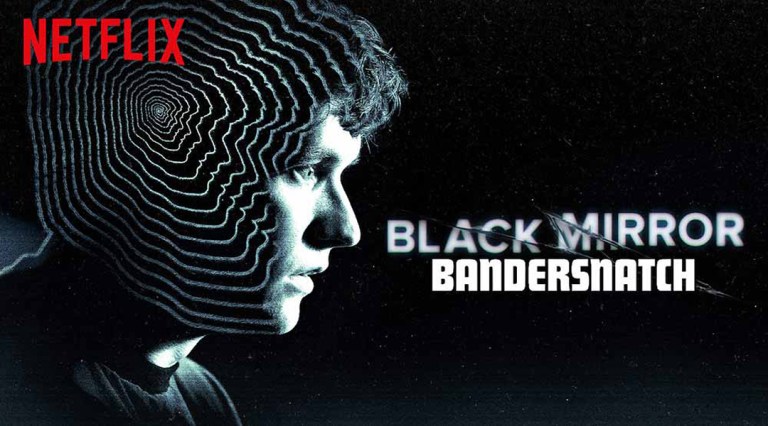
Over at The Cultural Gutter, there’s a thoughtful piece about Netflix’s recent interactive film, Black Mirror: Bandersnatch.
The choose-your-own adventure film allowed viewers to shape the story of a young programmer trying to develop a computer game in 1984. Presented with either-or choices to make via their TV’s remote control, someone watching Bandersnatch can influence the outcome of the narrative – but as the story develops, the choices are increasingly unpalatable and the question of who is controlling whom becomes increasingly prominent.
The Cultural Gutter’s Alex Macfadyen writes:
What watching Bandersnatch felt like to me was entrapment. A choice between two terrible things is still a choice, but I often didn’t agree with any of the available options. There also seemed to be no way to avoid making some of the choices because you just got brought back to them after the other options resulted in a dead end. The writers clearly had a very specific moral direction they wanted the story to go, and the viewer is ultimately corralled into creating the narrative they want.
Part of that narrative was the construction of me, the viewer, as the person forcing the character to make bad choices and lose his mind, but the viewer also only has access to the paths that the writers dictated for them so it’s more an illusion of choice. There is no path that leads to a good outcome, but you have to follow them all to find that out. In the end, I think the only choice you could make that would resolve the ethical conflict they’ve posed would be to refuse to participate and stop watching altogether.
Playing Bandersnatch, and reading Macfadyen afterwards, reminded me of a British Library Labs event I attended a couple of years back.
Jon Ingold, who has made several great choose-your-own adventure games including the subtle and troubling World War 2 drama The Intercept, spoke about the relationship between players and authors of such adventures.
Rejecting the language of “empowering players” or “co-creating game narratives together”, Ingold described adventure games as puzzles where the author attempts to lure the player into a trap of their own choosing – a trap to which the player must then find a brilliant escape. The player is never in control of the story, any more than the rat who turns left or right at a given corner is in control of the maze.
These problems of choice and control lie at the heart of the workshops I’ve been running over the past couple of years. To what extent can we allow participants in an event to surprise us?
The challenge for me has always been – how can you let people surprise you?
Choose-your-own adventures, from Bandersnatch to Ingold’s more sophisticated offerings, are ultimately more like mazes which one can only choose to run or not run. (The promo art for Bandersnatch helps to make this clear).
In activities like Library Island, I’ve been trying to devise opportunities for people to tell their own stories and genuinely shape the outcome of a collective narrative – the benchmark for this being whether the players were able to do something the author didn’t see coming.
Library Island players have brought fraud, civil unrest, and workers’ rights issues to sessions – helping us to address the most serious challenges to a community within the safer space of a playful, fictional setting. In the very first pilot for the game, a character stole a plane which they had illegally bought using government funds – something I definitely hadn’t accounted for – and an event which led on to serious discussion of scrutiny, oversight, and accountability for the use of public money.
Since then, players have only made the problem worse — delightfully worse.
A fictional scenario (library island) lets us talk about tough situations in a freer, less scary way; and helps unleash creativity and imagination about the future. @DrMattFinch#alamw18
Games which genuinely let people contribute to the outcome of a story also have the potential to change the way we look at the future.
Too often, when planning for the months and years to come, we see our options as constrained, like the forking but pre-written paths of Bandersnatch and its kin, railroading us towards a limited number of possible futures.
This can sap our ability to imagine a better world than the one we expect, but it can also make us vulnerable to harmful futures we didn’t see coming; financial crises, political upsets, and environmental disasters, for example.
In a turbulent era, finding ways to allow many voices to offer their story and participate in constructing plausible future scenarios help us to prepare for the world which is to come – a world which has not been pre-written by a game designer, and which therefore denies us both the safety and constraint of someone else’s narrative.
Last year, I was invited to give a keynote speech at Aotearoa/New Zealand’s national library conference, LIANZA 2017.
I wanted to realise a long-held dream and present a collective keynote with a number of Australian & New Zealand colleagues sharing the stage, but it wasn’t practical for LIANZA to fly a whole group of us across the Tasman Sea.
In the end, we contrived a way to deliver a unique collective keynote – by taping my mouth shut and inviting members of the audience on stage in an hour-long series of creative, constructive, collaborative activities.
In October, US librarian Justin Hoenke approached me to co-nominate Rachael for the American Library Journal‘s annual Movers & Shakers Award, highlighting professionals who have done exceptional work in libraries around the world.
Today, Rachael was announced as a winner of the 2018 Movers & Shakers Award and her friends & supporters worldwide are justifiably celebrating. From her days back in suburban Auckland to current international glory, including her own individual library keynote in Edinburgh, Rachael is one of the greatest heroes of public librarianship in 2018.
Voices like hers deserve to be elevated. Look her up. Learn from her. Change the world for the better.
The project explored ways for the university to engage a wider audience and connect with the community beyond recruitment, research, teaching and learning.
USQ’s resident Eurovision expert, humanities lecturer Jess Carniel, was joined by Neil Martin of the USQ Digital Life Lab and Lee McGowan, who researches the history of women’s football at a neighbouring institution, Queensland University of Technology.
Their conversation ranged from the history of women’s football to Aristotle’s views on “eudaimonia” and a life well-lived, politics, performance, and the fate of Katy Perry’s Left Shark.
The University of Southern Queensland (USQ) has piloted a new podcast at the end of a six-month community engagement project with their School of Information and Learning Services.
The chatshow-style podcast offers a new medium to bring university experts together with a wider audience, to explore new ways of sharing knowledge, and to stimulate conversations between USQ staff and peers in other institutions.
Staff and students from USQ’s radio school joined forces with REDTrain, the university’s Researcher Development and Training Team, to identify USQ researchers who could speak to contemporary issues for a wide audience. We then partnered USQ speakers with peers in museums, the arts, sciences, and other universities to broaden the conversation and stimulate debate.
It’s the final edition of Curious, Mysterious, Marvellous, Electrical today – the newsletter I’ve used to capture stories and secret histories from Australasia and beyond over the last two years.
Pop stars at the fall of Communism. A man who builds imaginary tools to solve problems that never were. A mining engineer who made a ten-tonne truck disappear through a metre-wide tunnel.
Approaching the end of the year and the final instalments of Marvellous, Electrical, we’re joined by two humble figures with secret artistic careers.
Andy MacDonald, factory supervisor at Queensland’s Cobb + Co Museum, recounts a life spanning mining, sculpture, stage design, and jet fighter maintenance in Part 1 of The Fitter And The Handyman.
Well, that’s it for the current stint in Australia. We’ve achieved so much at the State Library of Queensland (SLQ) and University of Southern Queensland (USQ) since I came over for the initial 12-month residency in January 2016.
I’ve a few more gigs in London before Christmas, and then some exciting announcements to make going into 2018. Watch this space.
Hard to pick out highlights from the past two years, but among them I’d say:
creating Library Island and using it with libraries, universities, and healthcare providers,
boosting the number of Fun Palace events in Queensland from 9 in 2015 to over 60 in 2016,
The Writing Platform has published my three-part series on the work of Australia’s Digital Life Lab, an academic unit at the University of Southern Queensland exploring our experiences of the digital world.
Part 1 in the series, “Mums“, looks at fake news, parenting decisions, and the information world of new mothers on social media, as researched by social scientist Kate Davis.
Part 2, “Dogs“, follows researcher Ann Morrison’s investigations into animal-computer interaction, teasing out the implications of a world where animals and digital devices interact without a human intermediary.
Finally, part 3, “Inmates“, looks at digital engagement in remote communities – principally the Australian prison population – through the lens of two projects: the Shakespeare Prison Project and Digital Life Lab’s ‘Making the Connection’ initiative, led by Professor Helen Farley.






 matt finch / mechanical dolphin