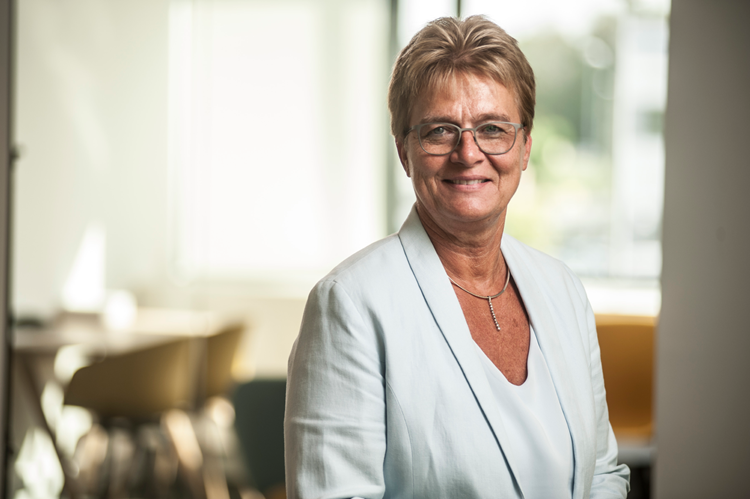
Interview with Betty Sue Flowers, Part 1: From Rhythmic Systems to Scenarios as Theatre

Betty Sue Flowers, Ph.D., is a writer, editor, and international business consultant, Emeritus Professor at the University of Texas, and former Director of the Lyndon Baines Johnson Library and Museum.

Betty Sue Flowers

She has been a consultant for NASA and the CIA, Visiting Advisor to the Secretary of the Navy, Public Director of the American Institute of Architects, and editor of scenarios for organisations including Shell International, the OECD, the University of Oxford, and the World Business Council for Sustainable Development.

She has written scholarly works on Robert Browning, Adrienne Rich, and Christina Rossetti among others, as well as serving as a consultant to television series including PBS’s Joseph Campbell and the Power of Myth. You can see more of her work and her extensive publication history here.

In September 2020, I talked with Betty Sue about her career, her accomplishments, and her understanding of the diverse fields she’s worked in, from foresight and healthcare to poetry, literary studies, and library leadership.

The interview will run in three parts on this blog, but you can also read the full transcript now as a PDF download.

You’ve had such a varied and accomplished career, it’s hard to know where to start. Then I saw one of the earliest and most curious entries on your CV: you were a lab assistant at something called the Rhythmic Systems Laboratory?

I started life off as a scientist. I put my way through college working in a zoology lab. I’m still in touch with my mentor, who went on to the University of Virginia. My love of poetry took me away from that path – I just kept following it in another direction.

Read more

“Just Waiting for the Locusts, Really”: OECD Government After Shock Interviews with Innovation Norway & National Library of Australia

“Smoke, fire, hail, and pestilence…we’re just waiting for the locusts, really” – the wry and insightful Marie-Louise Ayres, who heads the National Library of Australia in Canberra, talked to me about guiding her unique federal institution through the many challenges faced by the Australian capital in 2020.

You can hear what Marie-Louise had to say on the OECD’s Government After Shock podcast.

I also spoke with Håkon Haugli, CEO of Innovation Norway, a state body which promotes sustainable growth and exports for Norwegian businesses through capital and expertise. Håkon talks about moving to a digital workplace, the struggle to preserve multilateralism, and embracing the messy nature of innovation. His episode of the podcast can be found here.

The Enemy They’re Searching For: Interview with John R. Parsons

Australian anthropologist John R. Parsons researches what he calls “the interplay between morality, narrative, violence, and human-nature relationships”. From 2017-2018 he spent eleven months conducting fieldwork with border militias in the Southern United States. “How,” he asks, “in an area where thousands have perished, did the volunteers enjoy what one described as ‘hunting humans?’”

I interviewed John about his research and the time he spent with border militias in the US, work covered by his article “Experience, Narrative, and the Moral Imperative to Act” for the Journal of Extreme Anthropology. Trigger warning for mentions of violence and sexual violence in this discussion.

I began by asking John what drew him to anthropology.

I used to be involved in historical re-enactments for a long time, working with groups that were focussed on Scandinavian and English societies from around the 950s. I was curious about how people lived, how they experienced the world. Re-enactment involves learning about a culture through performing an idea of what that culture would be. You learn about the materials people used in the past, then try to figure out how they would have used them in real life.

Anthropology provided a space where it wasn’t a hobby, but a discipline with theory behind it and conversations around it; a more formalised version of the things I was already interested in.

Read more

Post-Pandemic University, 21st October: Scenario Planning for Digitalised Education

How can we explore or shape the future of higher education when the times are so turbulent and uncertain?

The forthcoming “Digital Technology and the Post-Pandemic University” conference explores the new realities faced by higher education, and the part digital technology will play in those realities. I’ll be presenting a short paper on the use of scenario planning to explore future contexts for digitalised education.

You can read my paper – “Scenario Planning for Digitalised Education: Managing Uncertainties Through the Pandemic and Beyond” – at the Post-Pandemic University website. If you’d like to join us on Wednesday 21st October, 9am-6pm BST, you can register for the online conference here.

Image
Photo by Katie Moum on Unsplash

Fandom & Information Literacy: Discussion with Ludi Price

Sometimes – often – the most interesting ideas comes from the margins. The status quo is best challenged from the borderlands and fringes, the shadows, anywhere that is overlooked.

In our digitalised world, new ways to create, manage, and share information are emerging all the time. The most innovative and rewarding approaches might not come from the institutions that are longest established, have the best trained staff, or the most substantial budget.

They might come from places where people are driven by passion to experiment with something new.

I recently sat down for a chat with Dr. Ludi Price, China & Inner Asia Librarian at London’s School of Oriental and African Studies, and an Honorary Visiting Fellow at City University’s School of Library & Information Science. Her research has focussed on fan information behaviour: the ways in which communities of people with a shared passion for pop culture have managed, organised, and distributed information relating to their fandom.

What can information professionals, the institutions and communities they serve, learn from the way that fans deal with the same challenges and opportunities faced by those who deal with information for a living? Ludi has some answers.

PSICC 2020: Celebrating Public Sector Information Professionals

Next Monday, 28th September 2020 is International Right to Know Day – a global event raising awareness of our rights to access government information, promoting freedom of information as a fundamental of democracy and good governance.

Lake Louise, Banff – Image via Wikipedia, public domain

In Canada, the Public Service Information Community Connection (PSICC), a membership-based social enterprise, supports teams and individuals tasked with meeting public institutions’ obligations around open government, freedom of information and protection of personal data. Their contribution to Right To Know Day 2020 is a weeklong online event addressing issues relevant to public sector information professionals. PSICC’s Dustin Rivers joined me for a brief chat in advance of the event.

Read more

Workshop – Cones, Grids, and Timelines: A Visual Approach to Scenario Planning

As part of the online Thinking Through Drawing 2020 symposium, October 16-18 2020, I’ll be presenting a 45-minute workshop “Cones, Grids, and Timelines”, exploring how future scenarios can be devised and represented visually. You can see a short video outline of the session below.

If you’d like to join me, and a vibrant community of researchers, artists, visual communicators, and educators, find out more at the TTD website.

Laboratorios Ciudadanos Distribuidos: Questions of Public Value

Spanish speakers can now watch a short public video from my contribution to the Laboratorios Ciudadanos Distribuidos course developed by the Spanish Ministry of Culture & Sport and MediaLab Prado.

The recording offers a brief overview of new approaches to public value. It outlines a number of practical tools that allow you to map the value created by your organisation or team, then consider ways to transform the value and impact you offer to the community you serve.

Find out more about the full Laboratorios Ciudadadnos Distribuidos course here.

OECD Government After Shock Podcast with Saskia Van Uffelen

Following our recent two-part discussion on this blog, you can hear Saskia Van Uffelen, Belgium’s Digital Champion, speaking with me on the OECD’s Government After Shock podcast in this week’s discussion.

During our interview, Saskia explores communication, leadership, and adaptation beyond crisis. If we pull on the “elastic” of our society and its institutions too far, it will break. Are we ready to fashion a new, more resilient world as the crises of 2020 demonstrate the old one’s limitations?

“The first, the fast, and the least reluctant to change will succeed”: Interview with Saskia Van Uffelen, Digital Champion for Belgium, Part 2

Saskia Van Uffelen is the Digital Champion for Belgium, tasked with promoting the benefits of digital society as part of the European Commission’s efforts to ensure every European citizen acquires the digital skills they need to remain productive, employable and enfranchised. After a career encompassing roles at Xerox, Compaq, HP, Arinso, Bull, and Ericsson, she is currently Corporate Vice President for the French group GFI, supervising developments in the Benelux countries. Saskia is also the author of Dare For Tomorrow: Leading, Working, Learning, and Living in a Digital World. You can read the first part of our interview here.

Image

As Digital Champion, you have an interest in the future of the public library, an institution which is also very dear to my heart. The social changes you’re describing will have an impact on our civic information institutions, and the context they operate in.

You’ve said elsewhere that, “If anything has remained the same in your organisation (culture, processes, eco-systems), it will simply not work anymore. You need to adapt your company and your culture. Adapt or die.”

Are libraries too prone to thinking about what used to work, instead of looking strategically to the future and to forces outside their sector?

Read more